Quantified Self: What Tracking Gives You, and What It Quietly Costs
The quantified self is the practice of tracking parts of your own life with devices, apps or notes, then reading the record back to understand yourself better. It is also the name of the community built around that practice. People track sleep, mood, steps, food and much else, usually to answer a question of their own.
What the quantified self movement actually is
The term covers two things at once. One is the practice: people measuring parts of their own lives and looking at what they collected. The other is the community of users, makers and researchers who share what they find.
The Wikipedia entry describes it as both the cultural phenomenon of self tracking with technology and a community of users and makers who share an interest in self knowledge through numbers. That last phrase is the movement's motto. It is also a neat summary of the promise: if you can see the numbers, you can see yourself more clearly.
The practice overlaps with lifelogging, the broader habit of recording daily life with technology. Lifelogging leans toward capturing everything. The quantified self leans toward measuring something specific. Researchers often call the same ground personal informatics.
What people track varies wildly. Sleep hours, resting heart rate, steps, screen time, coffee, headaches, mood, money, reading, and hours spent in meetings all show up. The tool matters less than most people assume. A watch counts. So does a paper notebook or a note on your phone.
Community is a real part of it. Meetups and show and tell talks are where people present what they tracked and what happened next. Hundreds of those talks sit on quantifiedself.com.
What the movement asks people to do, in its own words
The movement's own front page frames tracking as something you do for a reason. It says that if you are self tracking for any reason, to answer a health question, achieve a goal, explore an idea, or simply because you are curious, you can find help and support there. Every one of those is a question or an aim. None of them is "forever".
The site's What is Quantified Self page is more direct still. It says most Quantified Self projects are driven by individual questions. It adds that since 2012, leaders in the community have worked with public health experts, policymakers and research scientists on access to data.
Read that once more: projects, driven by questions. A project has a start and an end. A question can be answered, and once it is answered you are allowed to stop.
Most tracking products quietly dropped the question and kept the dashboard. What the movement described as a bounded experiment became, in software, a permanent feed of charts that never resolves. The screen does not ask you anything. It waits for tomorrow's number.
You can see both ends of that spectrum today. quantified-self.io is a training dashboard that pulls workout history together from Garmin, Suunto, COROS and Wahoo, so an athlete can see years of training in one place. That is a fair use of a dashboard. It is simply a different shape from a three week question about your own evenings.
What tracking genuinely gives you
Memory is a poor archive. It edits. A rough week can repaint the month behind it, and one good Friday can quietly erase a hard Wednesday. A written record does not do that. It sits there, plain and unhelpful to your story, and it will happily disagree with you.
That disagreement is most of the value.
It settles arguments you are having with yourself. "I never sleep well on Sundays" is a belief. Six weeks of notes turn it into a yes or a no. Either way you can put the question down. For a first look, a mood and sleep tracker lines up to seven nights of sleep beside how the next day felt, without claiming one caused the other.
It turns vague into specific. "Lately I have been off" is hard to do anything with. A record can narrow it: the last three weeks, mostly evenings, mostly on days that ran long. Now there is something to look at rather than a mood about a mood.
It catches patterns that feeling alone would miss. Say you keep a short note about your evenings for a month. Reading it back, the roughest evenings cluster on days with back to back calls. Not all of them, and a cluster is not a cause. But it is visible on the page, and it was not visible from the inside.
None of this needs much data. It usually needs a little data, read once, with attention. The 2016 Hospital Pharmacy commentary by Fox and Felkey calls this little data in action: individuals focusing on themselves and collecting the data readily available to them. The scale is small on purpose. That is the point of it.
The costs that never appear on the dashboard
Nothing here is an argument against paying attention to your own life. It is an argument about what a permanent measurement habit asks of you, in small amounts, every day.
The upkeep tax
Tracking is a chore, and chores grow. One field becomes three. A daily log becomes a thing you owe. Each instance is tiny and it never stops, so the total is easy to underestimate. Missed days start to feel like a failure rather than a Tuesday. This is where self tracking fatigue usually begins, long before anyone decides to quit.
Scorekeeping creep
A record starts out as a description. Give it a chart and a few months, and it becomes a verdict. A day turns into a number you can pass or fail. You start reading your own week the way you would read a report card.
The streak trap
Streaks are very good at protecting streaks. They are not good at protecting the practice underneath. Once a streak is long enough, you check in to keep the number alive rather than because you wanted to notice anything. When it finally breaks, plenty of people stop entirely, because the thing they were really maintaining is gone. A streak is a design choice, and whether you want one is worth deciding when choosing a journaling app.
Measurement pressure
Once a thing is scored, people manage the score. That is not weakness. It is simply what scores do to us. With steps you walk a lap of the kitchen at 11pm. With a rating out of five you round up, because a low number looks bad sitting in a row with the others.
Data you never look at
Collecting is easy and reviewing is not. Collecting takes three seconds on a phone. Reviewing takes a quiet half hour and a willingness to be contradicted. So most trackers end up holding years of records they have never read. The reading was the entire point, and it is the part that gets skipped.
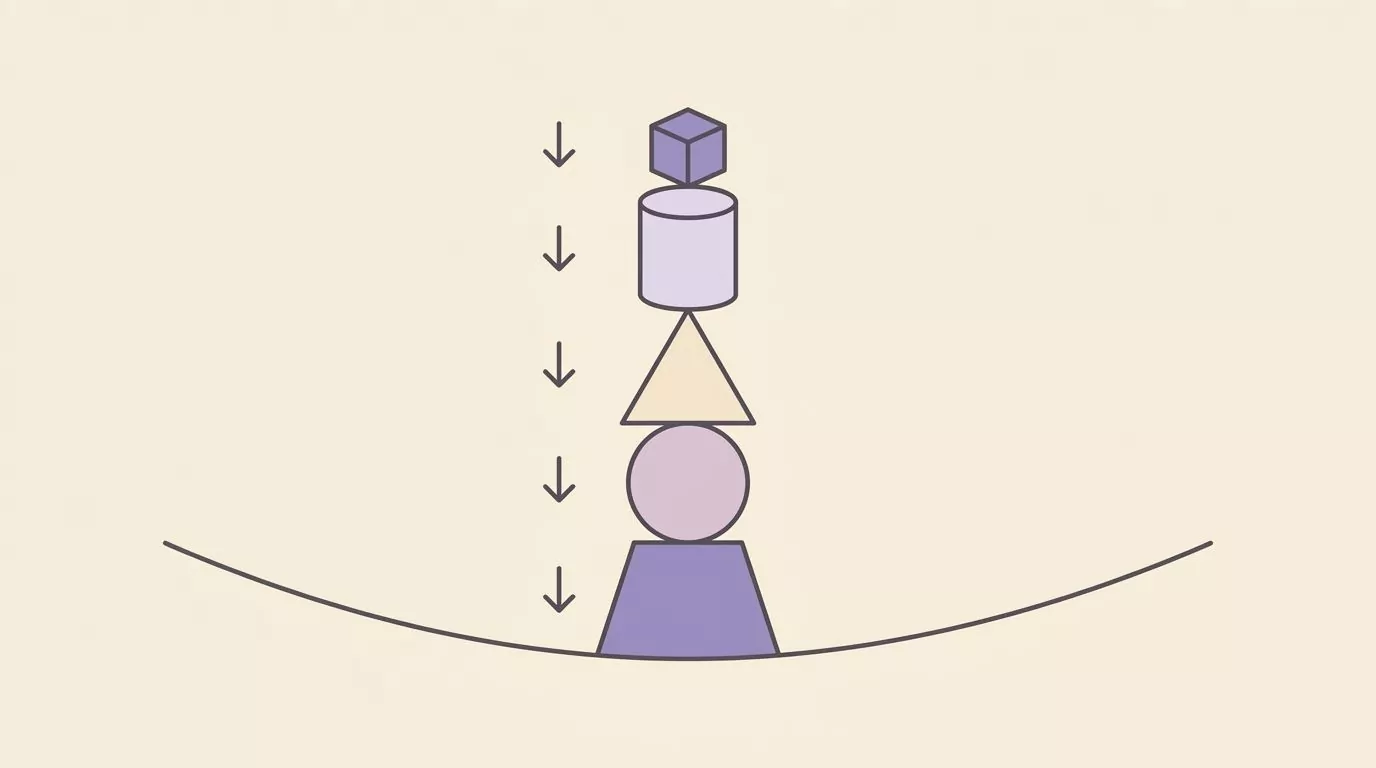
Those costs are not inevitable. They come from one particular shape: open ended, scored, and never read back.
| What you are doing | A dashboard version | A question shaped version |
|---|---|---|
| The goal | Keep the record complete and current. | Answer one question you actually have. |
| The timeframe | Open ended. It runs until you quit. | A set window, usually two to four weeks. |
| What a missed day means | A hole in the data and a broken streak. | A day you did not log. The question survives it. |
| What success looks like | A full grid and a line going the right way. | You can answer the question, even if the answer is no. |
| When you stop | When you give up, usually with some guilt. | When the window ends and you have read it back. |
The definition problem: measuring changes the thing
There is a Quantified Self show and tell talk on quantifiedself.com called "My Headaches From Tracking Headaches", by Jakob Eg Larsen. He set out to track his headaches, starting with the question of what even counts as one.
That question is where a record stops being neutral.
A headache is not a tidy event with edges. There is the dull pressure behind one eye at four in the afternoon. There is the ache that fades after coffee. There is the one that takes the evening.
Before you can count them, you have to draw a line, and the line is a choice. Draw it tightly and you have three a month. Draw it loosely and you have twelve. Nothing about the body changed. The definition did.
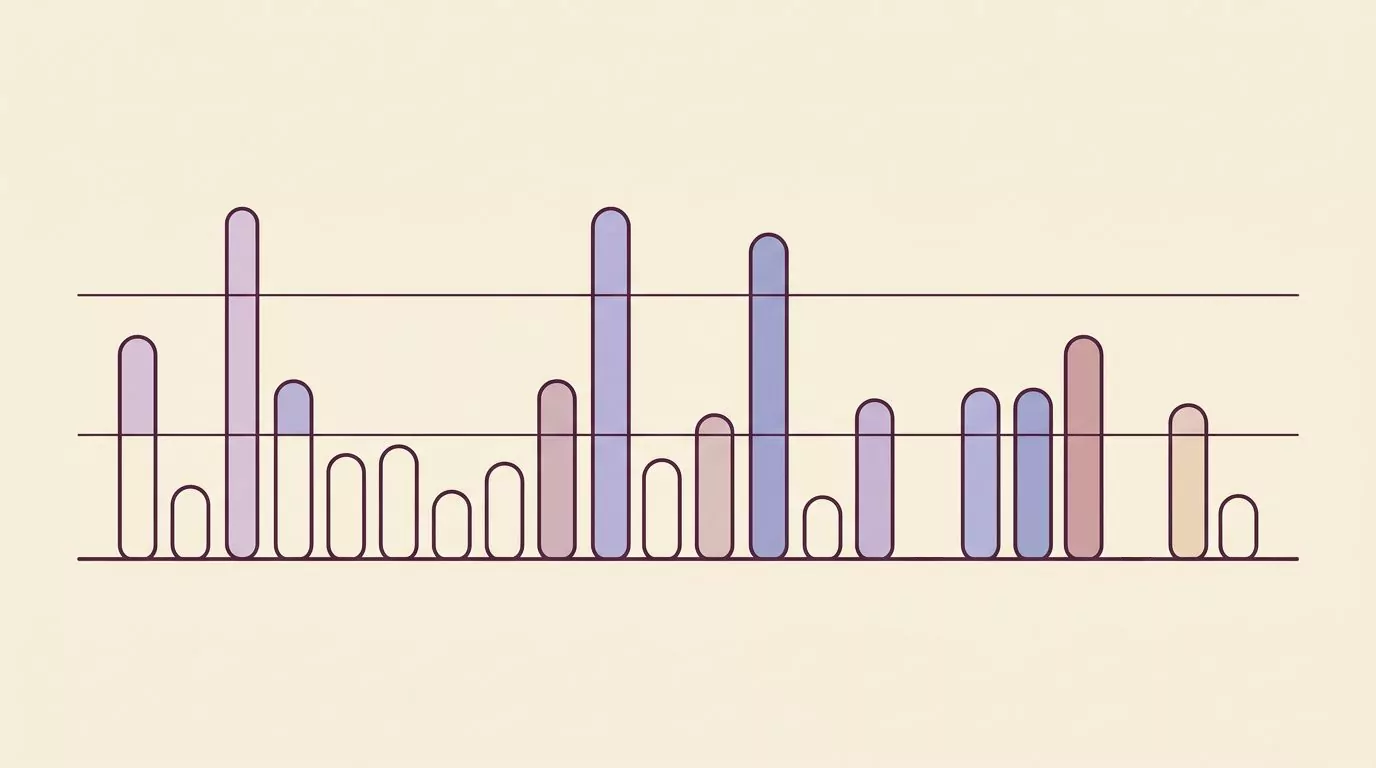
Then it gets stranger, because the definition starts working backwards. Once you decide what counts, you notice the things that count and stop noticing the things that do not. The measure quietly edits your attention.
Feelings do this too, and harder. Suppose you rate your days out of five. Tuesday is a 3. Friday is a 3.
Tuesday was flat, slightly bored, and completely fine. Friday held two good hours and one hard conversation, and it averaged out. Same number, two different days. A year later the record cannot tell them apart, and neither can you. The scale did not lose that by accident. Losing detail is what a scale is for.
How reliable is the data you are collecting
There is a second question worth asking before you trust a chart: has the thing producing it ever been checked?
In that same 2016 Hospital Pharmacy commentary, Fox and Felkey noted that only a small share of consumer tracking tools have been through US Food and Drug Administration approval or been clinically validated to give accurate and reliable readings. That is a limitation of consumer tools, stated plainly. The number on your screen is made by a product, and the product may never have been tested against anything.
This matters most where the display looks most convincing. A sleep stage graph with coloured bands looks precise. Precision and accuracy are different things, and a confident graphic can be neither.
The same commentary gives a sense of how common these tools already were a decade ago. It reported that 1 in 3 US households with a broadband connection had some type of connected health device, that more than 20 percent of smartphone owners had downloaded medical applications, and that 17 percent of smartphone users used a health related app at least once a week. Those are 2016 figures and are best read as a snapshot of that moment rather than as today's numbers.
There is research on the wider subject as well. A 2021 systematic review in the Journal of Medical Internet Research, How Self-tracking and the Quantified Self Promote Health and Well-being, examined the empirical literature on self tracking and the quantified self in relation to health and wellbeing.
None of this means the record is worthless. It means the numbers deserve a looser grip than the interface invites. Treat a figure from a device as one opinion in the room, not the transcript.
Numbers are not the only kind of record
The alternative to a metric is not nothing. The alternative is a sentence.
A named feeling, one line of context and the date will beat a bare rating when you read it back a month later. Not because words are nobler than numbers, but because a word carries the situation and a lone number does not. "Tense, third late meeting this week" still means something in a year. "2" does not.
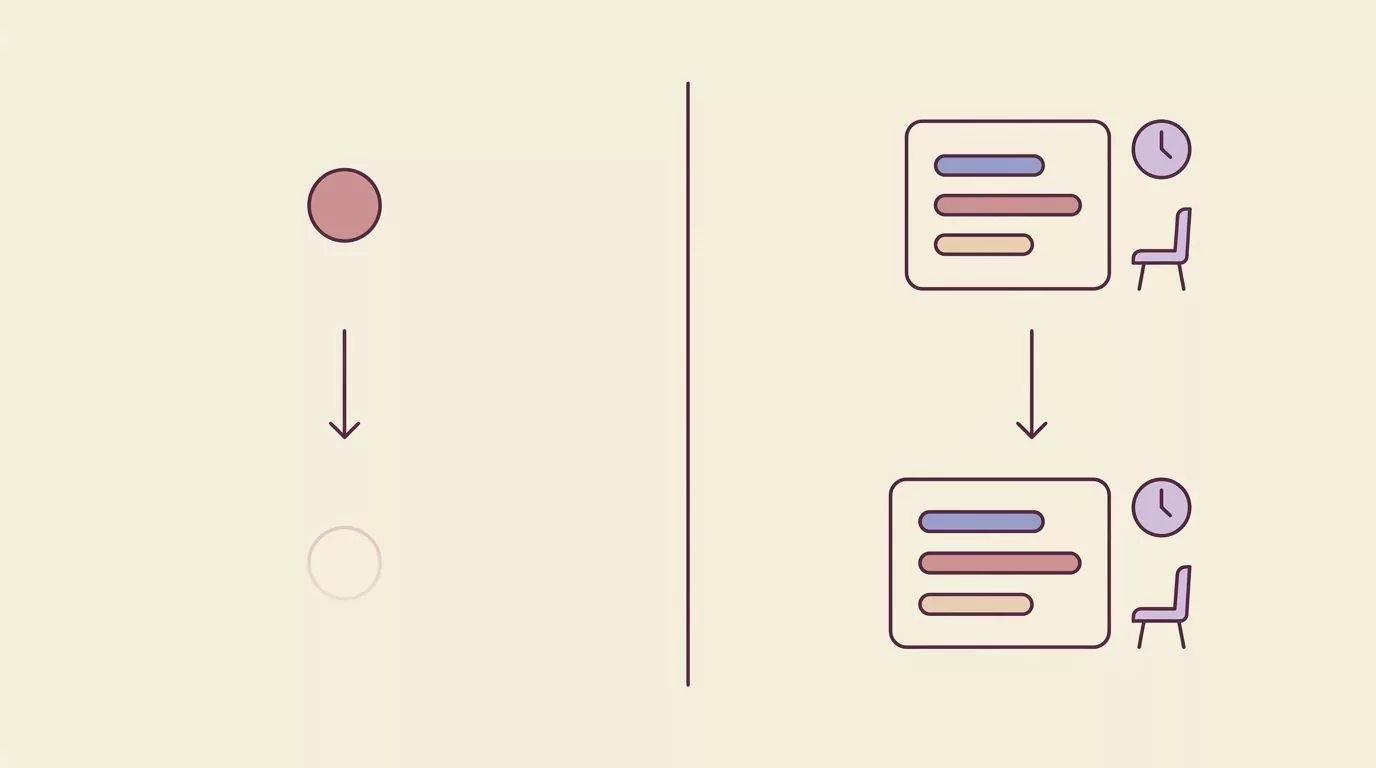
Be precise about where the problem actually sits. It is not that a tool offers you a short list to pick from. Choosing quickly from a few named moods is fine, and it is fast, which matters most on the days you have nothing left to give. The problem is a bare number recorded on its own, with no word and no situation attached to it.
Naming asks for a slightly wider vocabulary than most of us carry. Plenty of people run on four or five words, and "fine", "stressed" and "tired" end up covering very different days. A feelings wheel is one way to go looking for a more exact word when the obvious one does not fit.
Context is the other half, and it is cheap. One line about what was around the feeling. Who you saw, how the day ran, whether you slept, what happened at three. It costs a sentence, and it is the part that will still make sense to you later.
| What you recorded | What the number keeps | What only a word keeps |
|---|---|---|
| A 2 out of 5 day | The day sat at the low end. | Flat all morning, then a hard call at four that stayed with you. |
| A 4 out of 5 day | The day sat at the higher end. | Steady and unremarkable, which is exactly why it worked. |
| 7.2 hours of sleep | You were in bed about seven hours. | You woke at three and lay there until five. |
| 11,400 steps | You moved a lot. | Most of it was pacing during one difficult phone call. |
| A weekly average of 3.4 | The week was middling. | Two lovely days and two rough ones, cancelling each other out. |
A smaller way to practise personal science
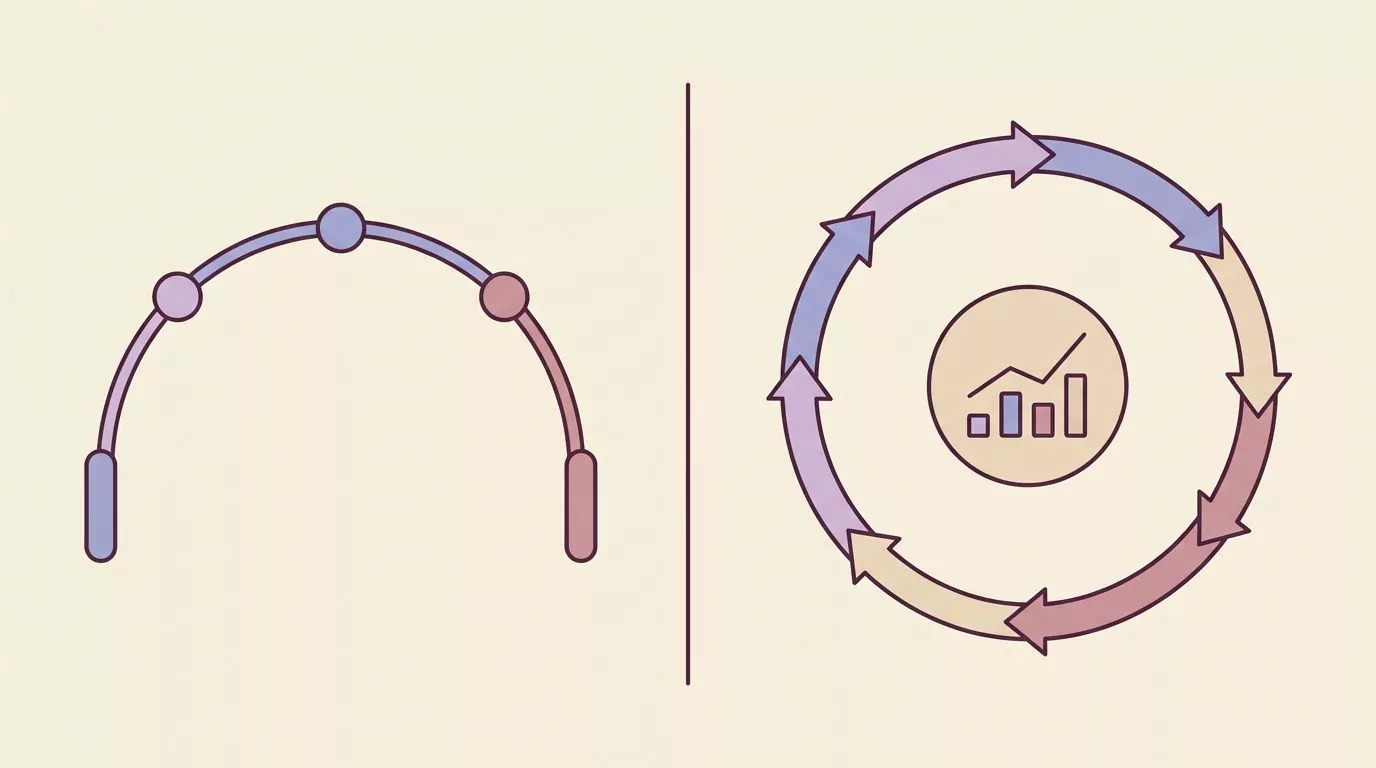
If a project is a question with an end date, then the small version of it is genuinely doable in a normal week.
-
Start with a question you actually want answered. One sentence, specific enough to be wrong. "Am I okay?" is not a question a record can answer. "Do late meetings actually make my evenings harder?" is. Write it down before you record anything, because the question decides what you need to keep and, more usefully, what you can leave out.
-
Pick the smallest record that could answer it. Usually that is a mood plus one piece of context, not a spreadsheet of variables. If the question is about late meetings, you need how the evening felt and whether the day ran long. That is two things. Adding sleep, caffeine, steps and weather feels more rigorous and mostly means you stop by day nine. A mood and activity tracker is about the smallest honest way to hold both halves, how you felt next to what you did, without pretending the pairing proves anything.
-
Give it an end date. Two to four weeks, written somewhere you will see it. The end date is what turns this from a habit into a project, and it is the one thing almost no tracking app offers you. Knowing it stops in nineteen days changes how a missed day feels. It becomes a gap in a short experiment rather than a crack in a permanent record.
-
Read it back once, in one sitting. This is the step everyone skips and the only step that pays. Sit down at the end with the whole thing in front of you. Look for clusters, not causes. Then decide: keep going, change the question, or stop. Stopping is a legitimate outcome. If the question is answered, the project is finished, and finishing something is not the same as quitting it.
The four steps on a real question
The question: do late meetings actually make my evenings harder, or does it only feel that way? The record: at the end of each evening, one mood, one line of context, and a yes or no for whether the day ran past six. The window: three weeks, ending on the 24th. The read back: on the 24th, in one sitting.
Here is one way that lands. Eleven of the sixteen rougher evenings followed a long day, and so did four of the easier ones. That is not proof, and it was never going to be. What it gives you is one specific thing worth trying: move a single late meeting and see what the following fortnight looks like.
Here is the other way it lands. The rough evenings scatter across the calendar with no pattern at all, and the belief you had been carrying around turns out to be wrong. That is a good result too, and a cheap one. It cost three weeks and roughly ten seconds a day, and now you can stop wondering about it.
Signs a tracking habit has stopped serving you
- You check in to protect the streak. The counter has become the point. You are maintaining a number, not noticing anything.
- You feel worse after logging than before. A record that reliably leaves you flatter than it found you is not doing the job you gave it, whatever the chart says.
- You have never once read it back. Months of entries and no reading means you have a collection, not a record. The value was always in the reading.
- You have started rounding your entries. Marking a 3 when it was a 2, because a run of low numbers looks bad. Once the record starts managing your impression of yourself, it has stopped describing anything.
- The tracking has replaced the thing you were tracking. Logging the walk is now more reliable than the walk. Logging the reflection has become the reflection.
- You feel guilty on the days you miss. Guilt is a strange price to pay for a voluntary note about your own life.
If several of those are true, you are allowed to stop. Not pause, not begin again on Monday with a better setup. Stop.
Stopping well takes about twenty minutes. Read the record back once, from the beginning, in a single sitting. Write down the one thing you learned, in a sentence. Then let the rest go. The entries were never the value. The sentence is.
A gentler check in you can try today
Here is what a low pressure check in looks like in practice.
It takes a few seconds. You pick the mood that is closest, without ranking it and without thinking too hard. You add one piece of context if there is one: the meeting, the walk, the phone call, the cold you are getting over. If a sentence wants to be written, you write it. If it does not, you close the page and the entry is still complete.
Then nothing happens. No score, no streak, no verdict on your week.
The restraint is the feature. Tracking without streaks means there is no number to protect, so there is nothing to round up. With no chart, a run of tough days stays a run of tough days instead of becoming a downward trend. Weeks later the entries read like short notes from someone who was actually there, because they are.
Mood Check-In is built along those lines: five named moods, optional context, an optional note, and a calm history you can look at when you feel like it. Journal content stays in app storage on the device, and no account is needed to keep one. There is nothing social in it either, no feed, no sharing, no comparison against anyone else. The movement has meetups and talks; this is just a private note to yourself. The iPhone app is free on the App Store.
If you would like a small place to begin, you can try a free mood check in in your browser. No account, nothing to install, and no obligation to come back tomorrow.
Frequently Asked Questions
What does quantified self mean in simple terms?
It means tracking parts of your own life and then looking at what you recorded. Sleep, steps, mood, food, time, money, almost anything. The phrase also names the community of people who do this and share what they find. The movement's own motto is self knowledge through numbers.
Is self tracking bad for you?
It depends on what it turns into. Held as a question with an end date, it is a sensible way to check a belief about your own life. Held as a permanent scoreboard with a streak attached, it tends to become a chore you feel guilty about. The scorekeeping is where it usually goes sideways.
What is the difference between the quantified self and journaling?
The quantified self measures: it turns something into a number so it can be compared over time. Journaling describes: it keeps the situation, in words. A number is easier to chart and much easier to misread later. Plenty of people end up doing a little of both.
How much should I track?
Less than you think. One or two things, for a set window, aimed at a single question. An elaborate setup feels serious on day one and is usually abandoned inside two weeks. A mood plus one line of context is enough to answer most questions people genuinely have about their own days.
Do I need an app to start?
No. A paper notebook and a pen work fine, and so does a note on your phone. If you want something already shaped for it, there are free browser tools here that need no account and no download, including a simple mood tracker and a feelings wheel. Start with whatever you will still be using on day five.
How do I stop tracking without losing what I learned?
Read the record back once, from the beginning, in a single sitting. Write down the one or two things you noticed, in plain sentences. Keep that page and let the entries go. What you learned was never stored in the rows. It was in the reading, and the reading is a one time cost you have now paid.