Affect Labeling: What Putting Feelings Into Words Actually Does
Affect labeling is the plain act of putting a feeling into words. You notice something, and you name it: tense, let down, relieved. In lab studies, naming turns down part of the body's alarm response. It does not always change how the feeling feels from the inside, and that gap is worth knowing about.
What Affect Labeling Means
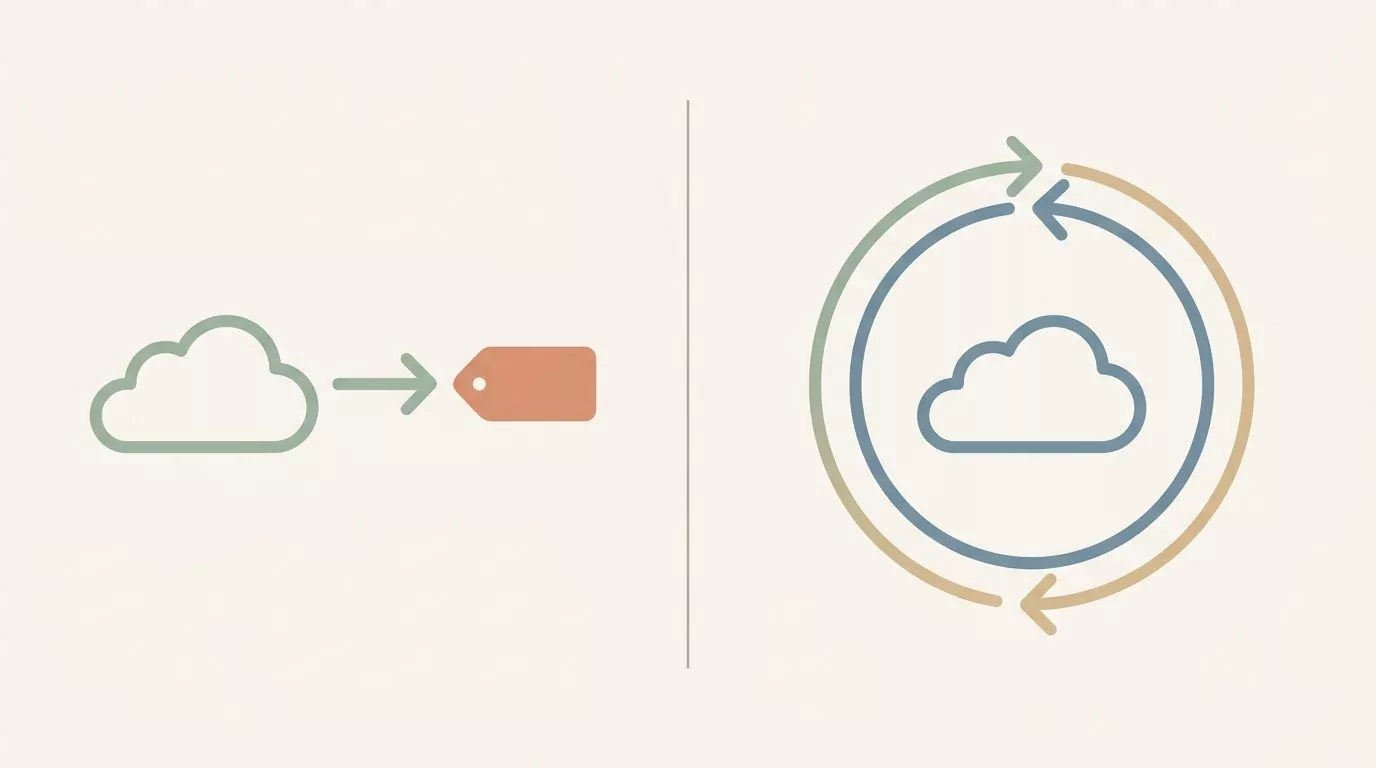
In psychology, affect labeling has a narrow meaning. Something stirs a feeling. You pick a word for that feeling. That is the whole move.
It is not analysis. It is not a story about why you are like this. It is not advice you give yourself. The researchers who named it drew that line on purpose, because putting feelings into words can also mean long searching accounts of your inner life, and those are a different thing to study.
Here is the line in practice.
| What you do | Is this affect labeling? |
|---|---|
| You think, that landed as hurt. | Yes. One word placed on a feeling you have right now. |
| You say out loud, I am nervous about this call. | Yes. Same move, spoken. |
| You write one line: frustrated, and a bit tired. | Yes. Same move, written down. |
| You replay the conversation for the fifth time. | No. That is going round, not naming. |
| You tell yourself it is fine and nothing is wrong. | No. That is pushing the feeling away. |
| You ask yourself why you always do this. | No. A why question pulls you into a story. |
Where the Idea Came From
The advice to say how you feel is very old, and no research group invented it. What changed in the last twenty years is that a specific, narrow version of it became testable.
The version researchers test is small on purpose. Show someone something that stirs a feeling, ask them to pick a word for it, and compare that with a condition where they do something else instead. No talking it through. No trying to feel better. Just the word.
That narrowing is what produced the term. A group at UCLA led by Matthew Lieberman began publishing on it in the early 2000s, and "affect labeling" became the shorthand for the naming step on its own, separated from everything people usually bundle with it.
The framing that came out of that work is the interesting part. In a 2018 review in Emotion Review, Jared Torre and Matthew Lieberman gathered the evidence and argued that naming behaves like emotion regulation even though it does not feel like it. They call it implicit regulation: something that quietly does regulatory work while you think you are only describing.
That is why the research keeps coming back to a single word rather than a paragraph. The paragraph is a different behaviour with different results, and mixing them together is how a modest lab finding turns into a promise nobody can keep.
What Seems to Happen in the Brain
The best known study is a brain imaging one from UCLA, published in 2007. Thirty people looked at faces showing strong feeling. Sometimes they picked a word for the face. Sometimes they picked a name for the person instead.
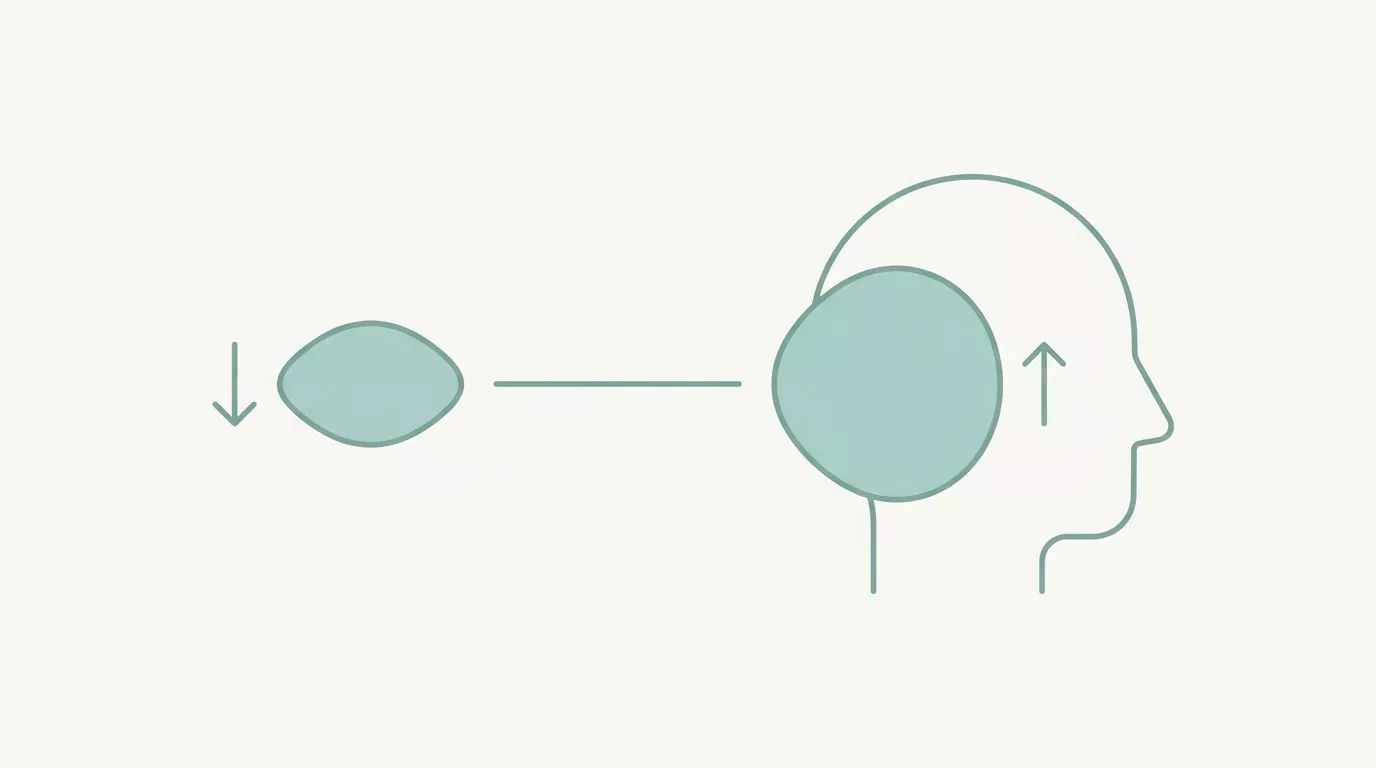
When they picked the feeling word, the amygdala, which acts like an alarm, responded less. A control area at the front of the brain responded more. In the UCLA release on the study, the lead author Matthew Lieberman said that you seem to be "hitting the brakes on your emotional responses".
A later scanner study checked whether that pattern was unique to naming. In a 2014 study by Lisa Burklund and colleagues, 39 adults viewed upsetting photographs under four instructions: watch, label, rethink the situation, or a non emotional shape task. Both labelling and rethinking lowered activity on both sides of the amygdala compared with simply watching, and both drew on overlapping regions at the front of the brain.
Two cautions belong right here. Scanner findings are group averages, not a readout of one person's inner life. And a change in a brain image is not the same as an hour that feels easier.
What the Studies Actually Asked People to Do
Most articles on this topic quote conclusions. The instructions matter more, because they show how small the tested move really was.
| Study | Year | What participants did | What was measured | What was found | What it does not prove |
|---|---|---|---|---|---|
| Lieberman and colleagues | 2007 | 30 people viewed faces showing strong feeling and chose either an emotion word or a name for the person. | Brain activity in the amygdala and in the right ventrolateral prefrontal cortex. | Choosing the emotion word went with less amygdala response and more activity in the prefrontal region. | It did not test whether anyone felt calmer, whether the change lasted, or whether faces on a screen behave like your own life. |
| Torre and Lieberman review | 2018 | Gathered existing studies rather than running a new one. | Effects across four areas: reported feeling, body arousal, brain activity, and behaviour. | The pattern across studies looks like emotion regulation, but one that runs without the person intending it. | A review inherits the limits of what it reviews. It adds no new evidence and settles no disagreement between studies. |
| Burklund and colleagues | 2014 | 39 adults aged 55 to 75 viewed upsetting photographs while asked to watch, label, rethink, or do a shape task. | Amygdala and prefrontal activity, plus a short unpleasantness rating after each block. | Labelling and rethinking both lowered amygdala activity against plain watching, and both lowered reported unpleasantness. Rethinking produced the lower rating of the two. | One session, one age group, one set of images. It does not say which strategy suits a real evening, or that anything held the next day. |
| Levy-Gigi and Shamay-Tsoory, experiment 1 | 2022 | 63 people viewed strongly arousing photographs and chose between two labels, either while looking, straight after, or after a 10 second gap. | Distress rated on a 9 point scale. | Distress dropped by about the same amount in all three timing conditions. | Three fixed gaps in a lab is not the same as naming something days later. It does not show timing never matters. |
| Levy-Gigi and Shamay-Tsoory, experiment 2 | 2022 | 79 people labelled while viewing, with the photographs split into lower and higher intensity sets. | Distress rated on the same scale, against a plain viewing condition. | Labelling lowered distress for the higher intensity images and raised it for the lower intensity ones. | A small rise in a rated score is not harm. It is one lab, one session, and pictures rather than your own afternoon. |
| Memarian and colleagues | 2017 | 111 people did a labelling task in a scanner, then wrote in four sessions over eight weeks, either about difficult personal experiences or about neutral topics. | Brain activity during labelling, and self reported wellbeing three months later. | Activity during the labelling task predicted who reported more improvement later, with the right ventrolateral prefrontal region the steadiest predictor. | Prediction is not cause. A brain response that goes with a later score does not show that naming produced it. |
Read down the last column and the shape of this field becomes clear. It is a set of short, careful lab findings, and the honest version of the advice is smaller than the version that travels.
Why It Works Without Trying to Change the Feeling
Most ways of handling a feeling ask you to want something. Rethinking a situation asks you to argue yourself into a different reading of it. Calming down asks you to aim at calm.
Naming asks for none of that. In the studies, people were not told to feel better. They were told to pick the word that fits. The change showed up anyway, which is why researchers describe it as incidental rather than deliberate.
The working explanation is that language and alarm draw on the same limited attention. Turning a wordless surge into a specific word gives it edges, and something with edges is easier for the rest of the brain to hold.
There is a practical consequence. You do not have to believe in this for it to be worth trying, and you do not have to be in a good state to do it. A word is available on the evenings when nothing else is.
Most People Do Not Think Naming Helps
This is the strangest finding in the whole area, and it changes how you should judge your own practice.
Across four studies published in 2011, people were asked to predict what naming a feeling would do. They expected it to make things worse. Distress actually went down. They were then asked again, after having felt the effect themselves.
They still predicted it would increase distress next time.
So your sense of whether this is working is not good evidence. If you try it for a week and conclude it did nothing, you are in the majority, and the majority in these studies was wrong about themselves. This is also why the researchers call affect labeling incidental. It does not need your belief, and it does not need you to want to feel better.
Does It Matter When You Name a Feeling?
Almost everyone assumes there is a window. Catch the feeling in the moment and you get the benefit. Miss it and you have missed it.
One study tested that directly. In the first experiment of a 2022 paper by Einat Levy-Gigi and Simone Shamay-Tsoory, 63 people saw strongly arousing photographs and picked between two labels for what they felt. The only difference between the three groups was when they picked: while the image was in front of them, immediately after it went, or after a 10 second gap.
Distress fell by roughly the same amount in all three. The timing did not decide the size of the effect.
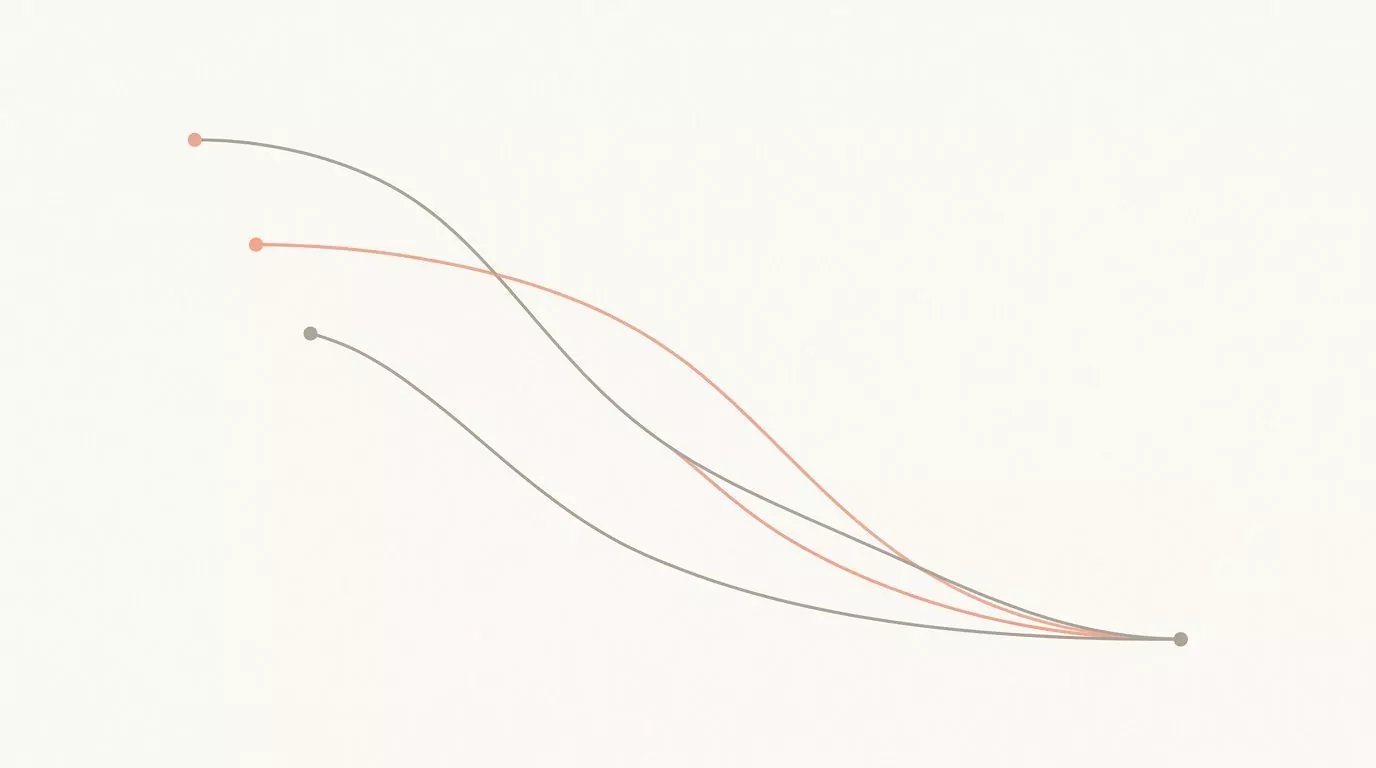
The authors point out that this sits oddly with the familiar advice to count to ten before you speak. If the gap does not change the outcome, the pause is not doing the work people assume it is.
For a reader, the useful version is quieter. You have not missed your window. Naming something on the walk home, or at the end of the day, or on Sunday when the week finally holds still, is still the same move. It is a lab result about three short delays rather than a promise about a delay of six hours, but nothing here suggests the door closes.
When Naming a Feeling Can Make It Louder
This is the part almost no general article mentions, and it is the most useful thing on the page.
The second experiment in that same 2022 paper split the photographs by intensity. Seventy nine people labelled what they felt while looking. For the stronger images, labelling lowered distress compared with plain viewing, which is the familiar result. For the milder ones, labelling raised it.
The authors suggest a reason from how words work. A strong feeling word can switch on a whole network of related feelings. When the feeling is already big, that network is already awake and the word gives it shape. When the feeling is small, the word may wake up more than was there.
Their own everyday example is a driver naming their irritation at the traffic. Saying it can end up feeling worse than simply letting the moment pass.
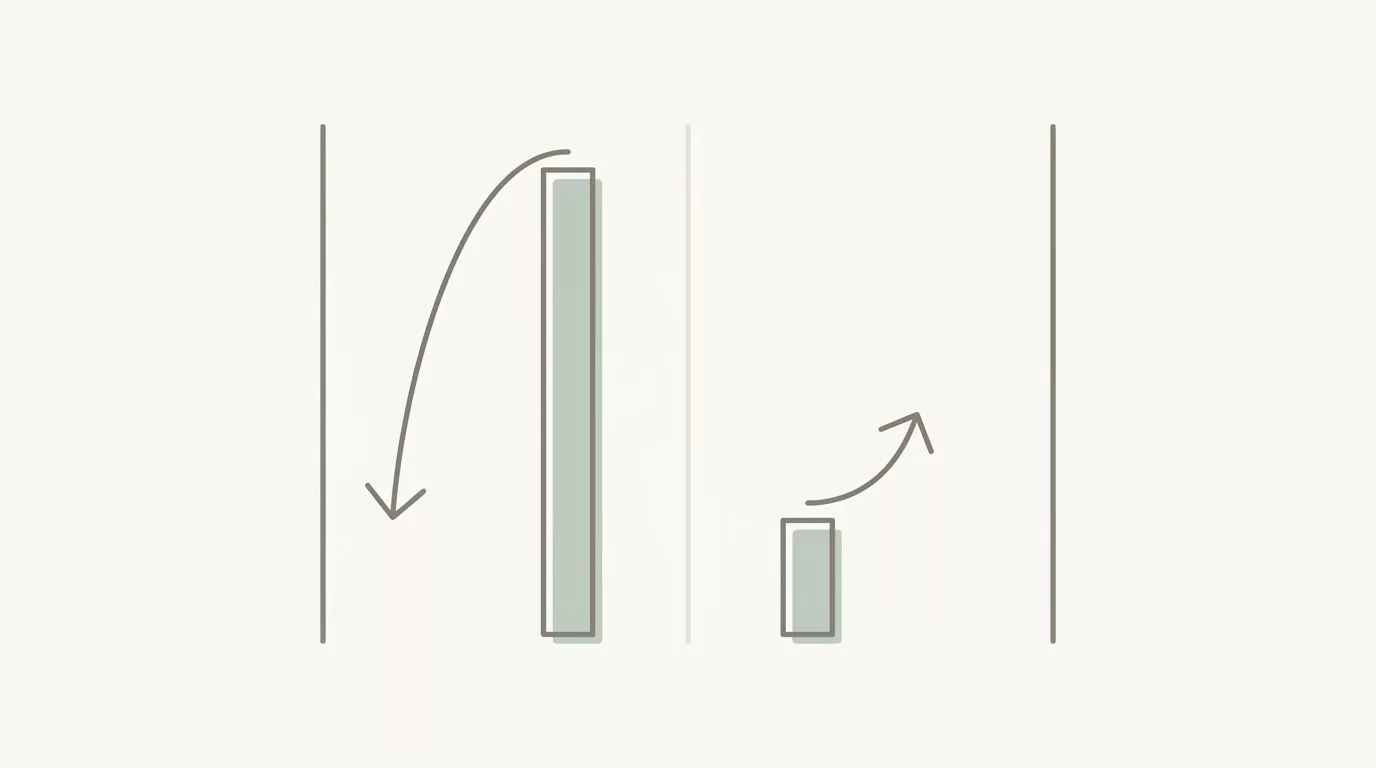
Framed gently: naming is most worth reaching for on the heavy days. On a mildly annoying afternoon it can enlarge the annoyance, and that is a normal result rather than a sign you did it wrong.
Big feeling or small one
A short guide, held loosely. This is one study with pictures on a screen, not a rule about your life.
- If it is loud. Something has landed and your body knows about it. Name it. One or two words, present tense, then stop.
- If it is middling. Name it if you were going to think about it anyway. A word gives the thought somewhere to land instead of circling.
- If it is small. You can leave it. A mild irritation on a Tuesday does not need narrating, and narrating it may make more of it than it was.
- If you cannot tell. Check the body first. A tight jaw or a held breath usually means loud. Nothing much usually means small.
There are a few other moments where naming does less than people hope.
- When one pass becomes twenty. Naming is a single act. If you have said the word five times and are still circling, you have left labeling behind and started somewhere else.
- When the word becomes a verdict. "I am angry" describes an hour. "I am an angry person" is a claim about your whole self, and it tends to stick around.
- When you reach for a heavier word than fits. Calling a small irritation rage makes the day sound worse than it was. A list of feeling words that runs from mild to strong makes the smaller word easier to find.
- When the hour is a good one. A 2011 set of four studies found that labelling also lowered reported pleasure when people looked at pleasant pictures. Naming appears to turn the volume down in general, so a nice evening may not need narrating.
None of these is a reason to avoid naming. They are a reason to keep it short, and to save it for the moments that are actually asking for it.
Affect Labeling Next to Other Ways of Handling Feelings
Naming is one option among several, and the differences are mostly about what each one asks of you. Venting in particular gets treated as the same thing, and it is not.
| Approach | What it asks of you | What it does to the feeling | Everyday example | One caution |
|---|---|---|---|---|
| Naming the feeling | One word. No belief, no effort, no wish to feel better. | Tends to lower measured arousal, and often reported distress, while leaving the situation untouched. | "I am dreading the 3pm call." | On a mild moment it can enlarge the feeling rather than settle it. |
| Reappraisal, or retelling the situation | Spare capacity and a deliberate effort to read the event differently. | Can lower distress further than naming when you have the energy for it. | "This call is a chance to sort it out, not a test." | Hard to reach on a tired evening, because it needs you to argue with yourself. |
| Distraction | Only that you move your attention somewhere else. | Parks the feeling. Nothing is processed, and nothing is named. | Putting on an episode of something instead of thinking about it. | Useful for getting through an hour, but the feeling is usually waiting afterwards. |
| Pushing it down | Continuous effort to keep the outside flat while the inside is not. | Changes what other people see more than what you feel. | Holding a neutral face for the rest of the meeting. | It costs attention to maintain, and the feeling is generally still there when you stop. |
| Venting | Time, heat, and usually a listener. | Keeps the situation in front of you and can keep arousal up while you retell it. | Going through the whole argument again for the third time tonight. | The lab work tested a short label, not an extended retelling. Results from one do not transfer to the other. |
That second row is where naming quietly wins. Rethinking a situation needs you to be in a state where you can argue with yourself, and on a flat evening you often are not. Naming still works when you have nothing left to give it.
The comparison between those two is still being worked out. In a 2026 two experiment study in Affective Science, Yael Ariely and colleagues found that labelling a feeling first made a later attempt to rethink the situation less effective, and that neither strategy held its short term effect a day or two later. Treat anyone who tells you one of these clearly wins with some caution.
Out Loud, On Paper, or Quietly to Yourself
The studies used all three channels, and none of them is the official one.
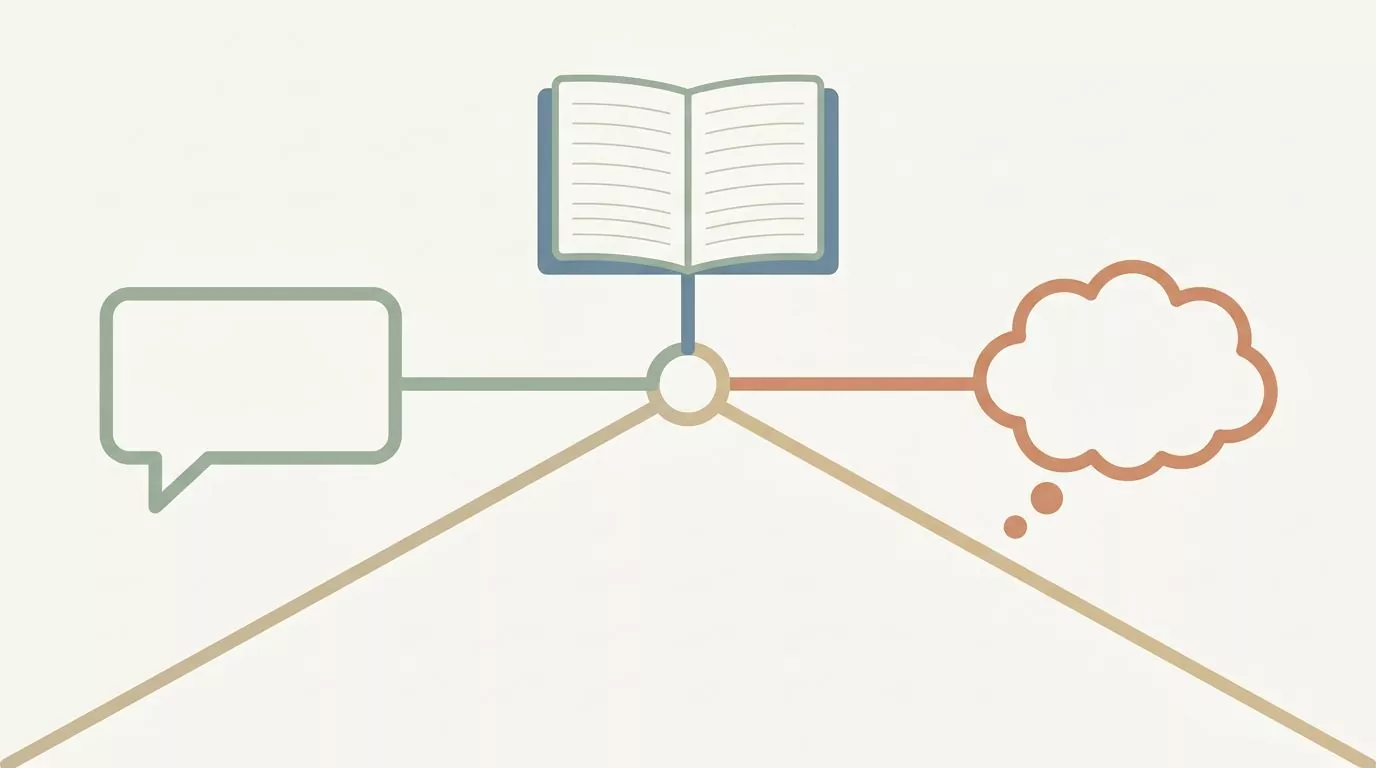
It is often claimed that saying the feeling out loud, or writing it down, is the crucial part. The research does not establish that. In most of these experiments people simply selected a word on a screen, silently, and the effects still appeared.
Out loud, to a person. The version most people already do. The risk is that it slides into telling the story, which is a different activity with a different effect.
Written down. Slower, which helps. Writing forces you to settle on a word instead of gesturing at one. A single line is enough, and long entries are not better.
Quietly, in your head. Works in a meeting, on a train, at two in the morning. Several of the lab studies were exactly this: pick the word that fits, silently, and move on.
So choose by circumstance rather than by rule. Privacy also shapes which words you can reach, and some things are easier to write when you know nobody will read them. Mood Check-In is a mood journal for iPhone, free on the App Store, and its entries stay in local storage on the device, with no account needed to keep a journal or look back at it.
You Do Not Need the Perfect Word
A lot of people stall here. They know something is going on, they cannot find the exact word, so they give up and carry the feeling around unnamed.
The research does not ask for precision. In the 2022 timing and intensity paper, distress levels did not track with how much difficulty people reported in describing their feelings. Whatever is happening, it does not seem reserved for people who are good with feeling words.
Here is what the three levels actually look like on the same afternoon.
- Rough: "bad". Almost no information, but not nothing. It marks that something is going on, which is more than an unnamed afternoon gives you.
- Closer: "tense". This is usually enough. It picks a direction, it rules out sad and flat and hurt, and it took you two seconds.
- Specific: "dreading the 3pm call". Precise, and sometimes the moment it clicks. But it needs you to already know the cause, and hunting for it is exactly where people give up.
The middle one is the target. It is reachable when you are tired, it carries real information, and it does not turn naming into a puzzle you can fail. Two rough words beat a long hunt for one perfect one.
More than one word can be true at the same time. Relieved and sad. Proud and embarrassed. Annoyed at someone you love. Naming both is more accurate than forcing a single answer.
Some people find that finer distinctions come easily after a while, and that is worth having. It is not the entry fee.
If a blank mind is the problem, start from a family rather than a single word. The free Feelings Wheel runs in a browser and walks you from a broad group down to a nearer shade, which is easier than staring at nothing.
Six Everyday Moments, Walked Through
The move is short, so most of the difficulty is in knowing what it looks like from the inside. Here are six ordinary hours, with the actual words.
After a hard conversation
You have just come off a call that did not go the way you wanted. Your first instinct is to replay it, sentence by sentence, editing what you should have said. That is the loop, not the naming.
Try stopping at the door instead. Notice the body: shoulders up, jaw set, a bit shaky. Then one line, present tense. "Stung, and defensive."
Notice what you did not do. You did not decide whether they were unfair. You did not plan the follow up message. You did not rate yourself on how you handled it. Those all belong to later, and none of them is the move.
If a second word turns up, take it. "Stung, and a bit relieved it is out in the open" is more honest than either half on its own. Then genuinely stop. Put the kettle on. The conversation is not resolved and naming did not resolve it. What tends to shift is how loudly your body is still arguing about it while you make tea.
The hour before something you are dreading
Something is at four o'clock and it is currently three. The hour has that particular texture where you cannot settle to anything and you also cannot start.
The unhelpful version is talking yourself out of it. "It will be fine, it is not a big deal, other people do this all the time." That is a debate, and you are losing it.
The naming version is smaller. "Hollow stomach. Dreading this." That is all.
What that tends to do is separate the hour from the event. Right now you are not in the difficult thing, you are in an hour of anticipating it, and those are different experiences that had blurred into one. The dread is still there afterwards. It is usually a bit more sized, and a bit less like weather.
If the word will not come, work backwards from the body. Held breath and a tight chest is nearly always nervous or dreading. Start there and adjust if it does not fit.
Lying awake at eleven at night
The eleven o'clock version has its own problem. There is no obvious trigger, the room is dark, and the mind has moved on to a list of unrelated things you have not done.
Naming here is not an attempt to sleep. If you make it one, you will check whether it worked every ninety seconds, and that will keep you up on its own.
Try naming the state rather than the cause. "Wired. Tired underneath it." Or "restless, and a bit anxious about tomorrow." One pass, silently, no follow up.
Then let your attention go somewhere unremarkable. The weight of the duvet, the sound outside. The naming is finished; the rest of the night is not a project.
Some people find this settles things. Some people find they are still awake at half past. Both are common, and the second is not evidence you did it wrong. It is a small move, and small moves have small effects.
A mildly annoying commute
This is the one where naming may not be the right tool, and it is worth walking through for that reason.
Someone cut across you at the roundabout. It was rude, it cost you four seconds, and you are now slightly irritated. Nothing has actually happened.
If you narrate it, "I am really annoyed, that was so inconsiderate", you may find the annoyance grows on the way to work rather than fades. That is roughly what the intensity experiment found for milder moments, and the authors' own example is exactly this: a driver naming irritation on the road.
The alternative is not suppression. You are not telling yourself you feel nothing. You are simply declining to hand the moment a microphone. Notice it, do not narrate it, let the roundabout stay four seconds long.
Then keep the naming for what it is for. If you arrive and find you are still carrying something, that is no longer a small feeling, and it is worth a word.
A heavy week where no single word fits
Some weeks are not one feeling. They are three or four, layered, and every candidate word feels like it is leaving out most of the truth.
The trap is deciding you need the one that covers everything, then finding nothing does, then abandoning it. That is the most common way naming fails: not because it did not work, but because nobody got to the word.
Stack them instead. "Tired. Sad about Dad. Quietly proud of getting the thing finished. Dreading Monday." Four short lines, no ranking, no attempt to reconcile them.
Contradictions are allowed to stand. You can be relieved and grieving in the same paragraph, and writing both down is more accurate than choosing.
What tends to help here is seeing the week as separable rather than as one undifferentiated weight. Four named things are four things. An unnamed heavy week is one large object with no handles.
A good day worth noticing
A caveat first. Naming appears to turn the volume down on lighter feelings too, so there is a real argument for leaving a good evening alone and simply being in it.
Where naming still earns its place is memory. A good day that goes unnamed is remarkably hard to recall two weeks later, while the difficult ones stay vivid without any help.
So keep it brief and keep it after the fact. Not during dinner. Later, one line: "Easy day. Warm, and unusually unhurried."
Notice how plain that is. No gratitude exercise, no counting of blessings, no attempt to make it mean something. Just the same move you would use for a hard hour, pointed at a good one.
Over a few weeks this is also the thing that corrects the record. People are poor judges of how their own weeks went, and a handful of short lines is a fairer account than a memory that keeps only the difficult parts.
Common Misunderstandings About Naming Feelings
Most of the confusion around affect labeling comes from a handful of assumptions that sound right and are not.
That "name it to tame it" means the feeling goes away. The first half is fair. Naming really is the move the research keeps pointing at. "Tame" is where it overreaches. The measured effects are modest, they show up most clearly in the body, and nothing here promises a feeling will shrink because you asked it to.
That it is a way of looking on the bright side. It is not. Reframing changes the meaning of the event. Naming leaves the meaning exactly where it was and only describes what is happening in you. You can name something while still thinking it was unfair.
That it is the same as working out why you feel that way. The why question is analysis, and analysis is a different activity with different effects. Naming is the two second part in the middle that most people skip on their way to the explanation.
That the moment has to be caught live. The timing experiment found no advantage for naming while the feeling was in front of you, compared with naming after a delay. There is no window you have missed.
That more must be better. Naming appears to dampen lighter feelings alongside heavier ones, and one experiment found it added to distress on the mildest moments. This is not a practice that improves with frequency.
That it is a substitute for support. It is not therapy, counseling or medical care, and it is not a stand in for any of them. It is a small, private habit that sits alongside whatever else you have.
A Small Practice to Try This Week
Four steps, and the fourth is the one people skip.
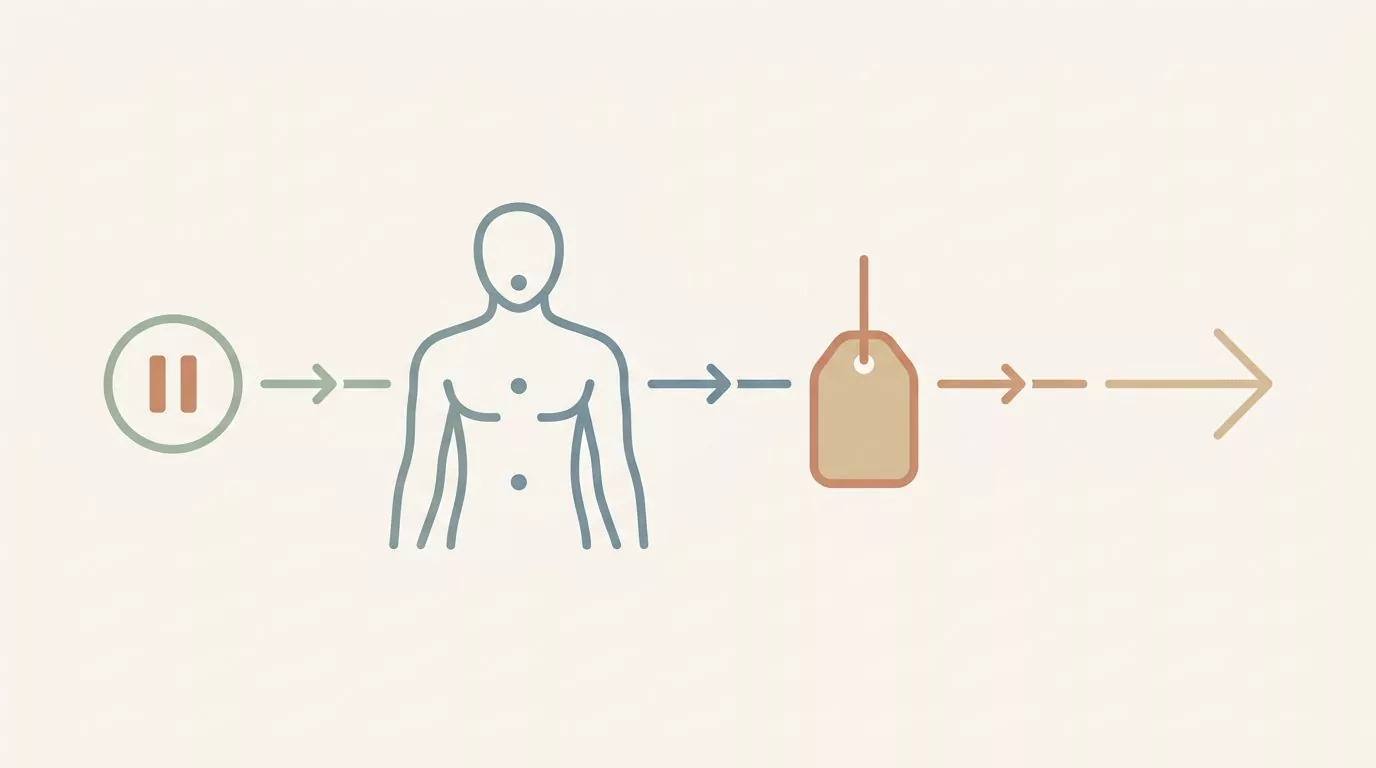
- Use a moment you already have. The end of the workday, the walk to the car, the minute after a call ends. Do not build a new ritual.
- Check the body first. Jaw, chest, hands, stomach, breath. A tight jaw is much easier to notice than a feeling is.
- Put one or two words on it. Short and present tense. "Wired." "Flat, and a bit resentful."
- Stop there. Do not explain it. Do not fix it. Move on.
If step two gives you a sensation but no word, this bridge covers most of it.
| What you notice in the body | Words worth trying |
|---|---|
| Tight jaw, clenched hands | irritated, braced, fed up |
| Heavy chest, slow limbs | sad, deflated, worn out |
| Buzzing, restless legs | anxious, keyed up, impatient |
| Hollow stomach, held breath | nervous, dreading, exposed |
| Warm face, loose shoulders | relieved, content, settled |
| Nothing much at all | flat, numb, tired, fine |
Try it for five days rather than thirty. Then read the words back and see whether any of them repeat. That is a fairer test than asking yourself whether each single check-in felt useful, given how badly people judge that.
If you get stuck on step three, the Feelings Wheel is a quick way to find a nearer word without hunting. And if you would rather just try the shape of a check-in today, the free Mood Tracker runs in a browser, takes a few seconds, and does not ask you to sign up.
What This Research Does Not Say
It does not say naming a feeling is therapy, counseling or medical care, and it is not a substitute for any of them.
Some of this work has also been run in clinical research settings, which is a different context from the everyday one this article is about.
It does not say naming is a fix. The meeting is still tomorrow. The conversation still went badly. Naming changes what your body does with that, a little, and leaves the rest where it was.
It does not say the effects are large or lasting. Most of these studies ran a single session with photographs on a screen, and the one that checked a day or two later found the short term effects had not held.
It does not say this is a rule or a streak. Skipping four days costs nothing, and there is no score to keep.
If something feels heavier than you want to carry on your own, talking to a professional is a reasonable next step.
Frequently Asked Questions
What is affect labeling in simple terms?
It is putting a feeling into words. You notice what is going on inside you and you pick a word for it, out loud, on paper, or silently. That is the whole thing. The term comes from research psychology, where it means the short act of naming rather than a long account of why you feel that way. The narrowness is deliberate. Researchers wanted to test the naming step on its own, separated from explaining, retelling, and trying to feel better, because those are different behaviours with different results.
Does naming a feeling really make it weaker?
Often, and modestly. In lab studies, labeling emotions to reduce stress shows up as lower arousal in the body and, in most experiments, a drop in reported distress compared with simply looking at the same thing. The effects are real but small, they come from single sessions with images on a screen, and one 2026 study found they had faded a day or two later. So the fair answer is that naming tends to take some heat out of a moment. It does not remove a feeling, and it does not change what caused it.
Is affect labeling the same as venting?
No, and the difference matters. Venting means telling the story at length, usually with heat and usually to someone. Affect labeling is picking a word. In the experiments, participants mostly chose between two labels on a screen, which is a very long way from recounting an argument for twenty minutes. Because the research tested the short version, its results do not transfer to the long one. Retelling keeps the situation in front of you, and the feeling often stays lit while you do it. Naming is meant to be one pass, then finished.
Do you have to say it out loud, or does writing it down count?
Writing counts, and so does thinking it. You will often read that speaking or writing the feeling is the crucial component, but the research does not establish that. In most of these studies people silently selected a word on a screen, and the effects still appeared. So pick by circumstance. Silent naming works in a meeting or at two in the morning. Writing is slower, which helps, because it makes you settle on a word rather than gesture at one. Saying it to someone works too, as long as it stays a name and does not slide into the whole story.
What if you cannot find the right word for how you feel?
Close enough is genuinely fine. In the 2022 timing and intensity study, distress levels did not track with how much difficulty people reported in describing their feelings, so the benefit does not appear reserved for people who are good with feeling words. Two rough words beat a long hunt for one exact one. "Tense" is usually enough. If your mind goes blank, start from the body instead, since a tight jaw or a held breath is easier to notice than a feeling, and a wheel or a short word list helps on the days nothing comes.
Can naming a feeling ever make it feel worse?
Yes, and one experiment shows when. In the second experiment of the 2022 paper, labeling lowered distress for the more intense images but raised it for the milder ones, compared with just looking. The authors suggest a strong feeling word can wake up a whole network of related feelings, which is useful when the feeling is already big and unhelpful when it is small. Their everyday example is a driver narrating irritation in traffic. Naming can also backfire when one pass turns into circling, or when the word chosen is heavier than the moment.
How is affect labeling different from reframing a situation?
Affect labeling describes. Reframing, which researchers call reappraisal, reinterprets. Naming asks you for a word and nothing else, while reframing asks you to argue yourself into a different reading of the event. That is why naming still works on a tired evening when arguing with yourself is out of reach. Labeling also works without you wanting it to, which reframing does not. Research comparing the two is genuinely mixed. One 2026 study even found that labeling first made a later reframe less effective, so neither is simply the better tool.
How often should you name your feelings?
Less often than you would think. Once a day, at a moment that already exists in your routine, is plenty, and five days is a fairer trial than thirty. Naming appears to dampen lighter feelings as well as heavier ones, and one experiment found it added to distress on the mildest moments, so there is no reason to narrate a pleasant evening or a small irritation. Use it when something is genuinely loud, leave the quiet hours alone, and treat any missed days as nothing at all.
If you would like a small place to start, pick one moment tomorrow, notice what your body is doing, and give it a word. That is the whole practice, and it is allowed to be that small.