Journaling for Self Awareness: What Your Entries Reveal Over Time
Journaling for self awareness works when you read your entries back, not only when you write them. A single entry captures one mood on one day. Across weeks, your own words start to repeat, and those repeated words are the pattern: the situations, people and times of day that keep showing up.
Most journaling advice stops at the writing. It tells you what to put on the page and says little about what to do with the pages afterwards. This is about the second half: what a re-read is looking for, which patterns only appear over time, and a short monthly review you can keep on a tired evening.
What self awareness means when you are journaling
Self awareness has two halves, and a journal treats them very differently. The first is what you feel right now: the mood you are in, the thought that keeps circling, the tightness you noticed after a phone call. The second is how you tend to behave across many situations, such as what you reach for when you are tired.
A journal is very good at the first half. You are inside the moment already, so the details are easy to write down.
The second half is harder, because a tendency is made of repetition. No single evening can show you a tendency. It only appears when several evenings sit side by side and something in them matches.
So self awareness journaling is not really one activity. It is a habit of writing, plus a much smaller habit of looking back. A self reflection journal collects the evidence. The looking back is where the pattern shows up.
Why one entry cannot show you a pattern
Every entry is written from inside the mood it is describing. That is what makes journaling honest, and it is also its blind spot. On a heavy evening the whole week reads heavy on the page, because the mood you are in is doing some of the writing.
Read it back a month later and it still sounds like a hard week. It is not lying to you. It is a snapshot, taken in whatever light was available that day.
A pattern is not a snapshot. A pattern is a sequence. You need several entries in a row before anything can repeat, and repetition is what separates a pattern from one bad day.
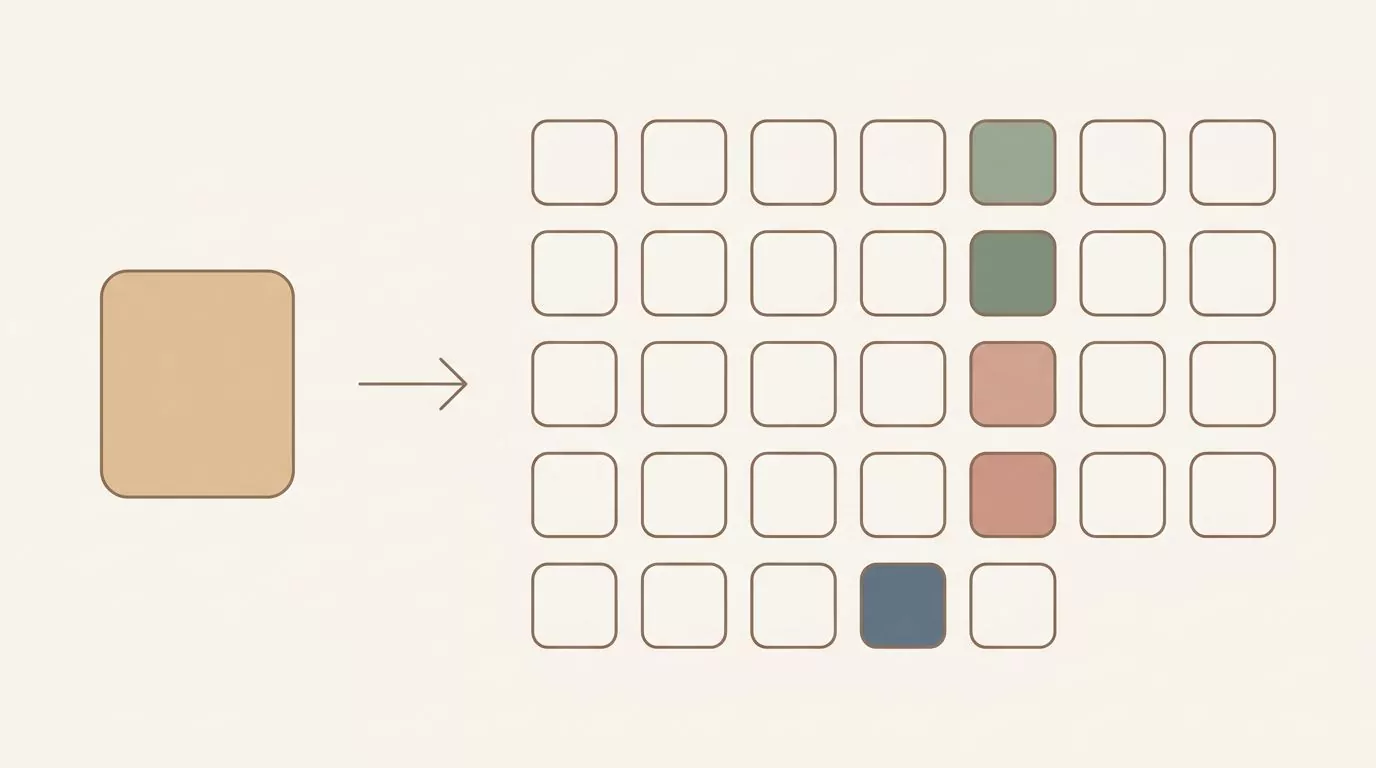
Here is what that looks like. Three entries across six weeks all open with some version of "a bad week at work". Read one at a time, they are three bad weeks. Laid out together with their dates showing, they are all Tuesday evenings, and two of them follow the same recurring meeting.
Nothing in any single entry could have told you that. The dates did the work, not the prose. This is why it helps to see many days at once instead of one page at a time. The free mood calendar lays a month out in your browser, with no account, if you want the whole month in front of you.
The step most journaling advice skips: reading your entries back
It is tempting to assume that keeping a journal makes a person more self aware. The evidence is less flattering. Reporting her research, organizational psychologist Tasha Eurich found that people who keep journals are generally no more self aware than people who do not.
That finding is worth sitting with rather than arguing away. It does not say journaling is useless. It says the writing on its own is not what produces the insight.
There is a simple reason, and most journal keepers half know it already. Writing empties: you put the day somewhere so you can stop carrying it, and that release is worth having on its own. But emptying is not the same as noticing. When you close the notebook, the day closes with it, and mostly nobody opens those pages again.
That is the honest version of the gap. Plenty of journaling guides mention that revisiting old entries is worthwhile, usually in a single line. Far fewer say what you are looking for, or how often, or what to do with what you find.
So the benefits of journaling for self awareness are real, but they are not automatic. This is where journaling increases self awareness, if it does at all: in the reading, not the writing. Four weeks of entries is enough to find one repeat.
Four patterns that only show up over time
Words you keep reaching for
You have a small set of words you use when things are hard. Maybe it is "swamped". Maybe every difficult week is "fine, just tired". You will not notice the word while writing it, because it feels like the accurate word every time.
Read six weeks in one sitting and it stands out at once. One person finds "should" in almost every heavy entry and almost never in the lighter ones. That is a pattern about pressure, invisible one page at a time.
Timing and rhythm
Moods often have a shape in the week rather than a cause in the day. Sunday evenings. The first hour after a commute. The stretch between four and six in the afternoon.
Dates make this visible in a way memory cannot. If four of your five hardest entries in a month landed on the same two weekdays, that is a rhythm, and a rhythm is easier to plan around than a mood is.
The gap between what you planned and what you did
Journals hold intentions. "I am going to sort this out this week." Six weeks later you can read what you meant to do and compare it with what happened, without the softening memory applies.
The useful part is not the telling off. It is the shape of the gap. If the same intention turns up five times, the question worth asking is what sits between you and it.
What keeps showing up next to a tough day
Look at what sits beside a hard entry rather than only inside it. A short night of sleep. One particular meeting. A conversation with the same person. Three days without going outside.
None of that proves cause. Days are complicated and rarely have one reason. But a companion that turns up next to four heavy entries out of five is worth knowing about.
What long entries reveal, and what short check ins reveal
Long writing and short logging get treated as rivals. They are not. They answer different questions, and they fall down in different places.
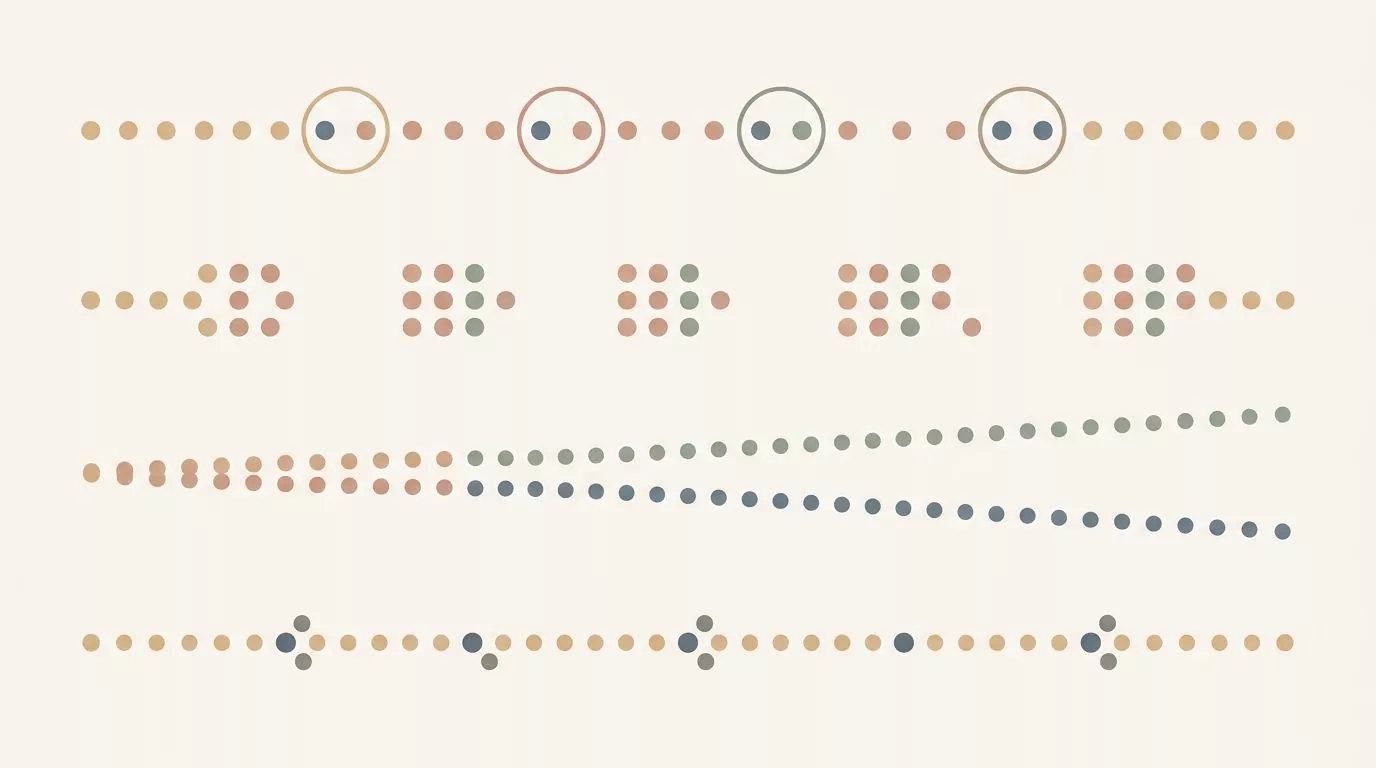
Long reflective journaling gives you texture: the reasoning, the caveats, the sentence you would never say out loud. A short tagged check in gives you coverage, which is a mark on nearly every day, including the days you had nothing to say.
Coverage matters more than people expect, because the days you skip are rarely random. The heaviest and the dullest days go unwritten, and those are the days a pattern needs.
| Question | A long written entry | A short tagged check in |
|---|---|---|
| What it captures | Reasoning, context, and the exact words you used | A mood, a few tags and a date. Thin but consistent |
| What it costs on a tired day | Ten to twenty minutes and some willingness. Often skipped | A few seconds, even with nothing to say |
| How easy it is to review later | Slow. Reading it pulls you back into the mood | Fast. A month fits on one screen |
| Where it goes blurry | Gaps. The hardest and dullest days never get written | Nuance. Two different days can wear the same tag |
Most people want both. Write long when you have something to work out. Mark the day when you do not. The long entries explain, and the short ones keep enough on the record to be worth explaining.
Ask what, not why, when you look back
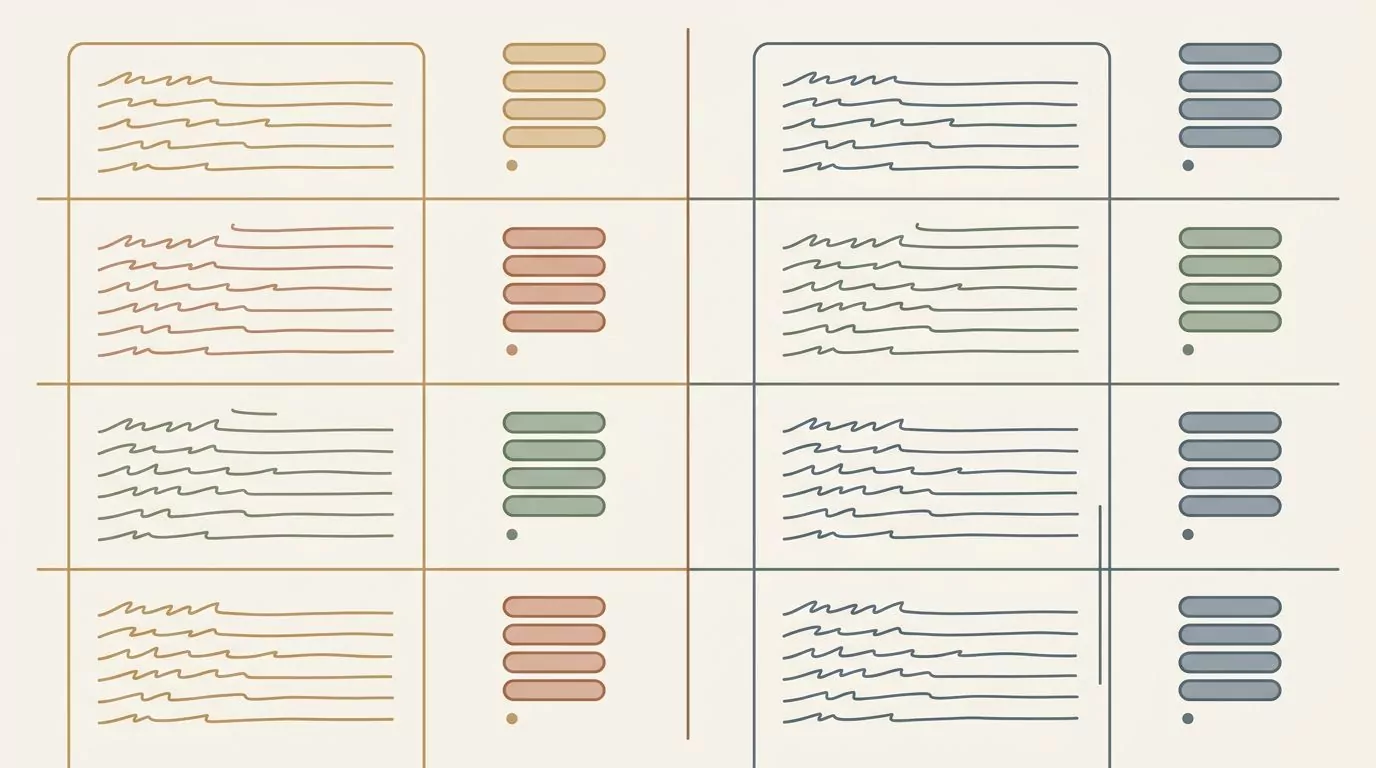
The question you bring to a re-read decides what you get out of it. "Why" questions sound like the deep ones. In practice they invite a story, and the story will either flatter you or accuse you.
In her book Insight, organizational psychologist Tasha Eurich argues that "why" questions pull you toward an explanation you cannot check, while "what" questions send you back to the evidence.
Most journal prompts for self awareness are written for a blank page. These three are different, because you ask them of entries you already have.
- "Why am I like this" becomes "What was happening in the hour before I wrote this".
- "Why do I always fall apart on Sundays" becomes "What did the last four Sunday entries have in common".
- "Why can I never stick to anything" becomes "What did I write down as a plan, and what did I write afterwards".
The second version of each can be answered by reading. The first can only be answered by guessing.
One more thing, and it matters more than the technique. If looking back starts pulling you in circles, close the journal and do something ordinary. Wash up, walk to the end of the road, put music on. Stopping is allowed.
A monthly review you can actually keep
A review only helps if it happens. Twenty minutes, once a month, with a finish time you actually set, will beat an ambitious system you abandon in March.
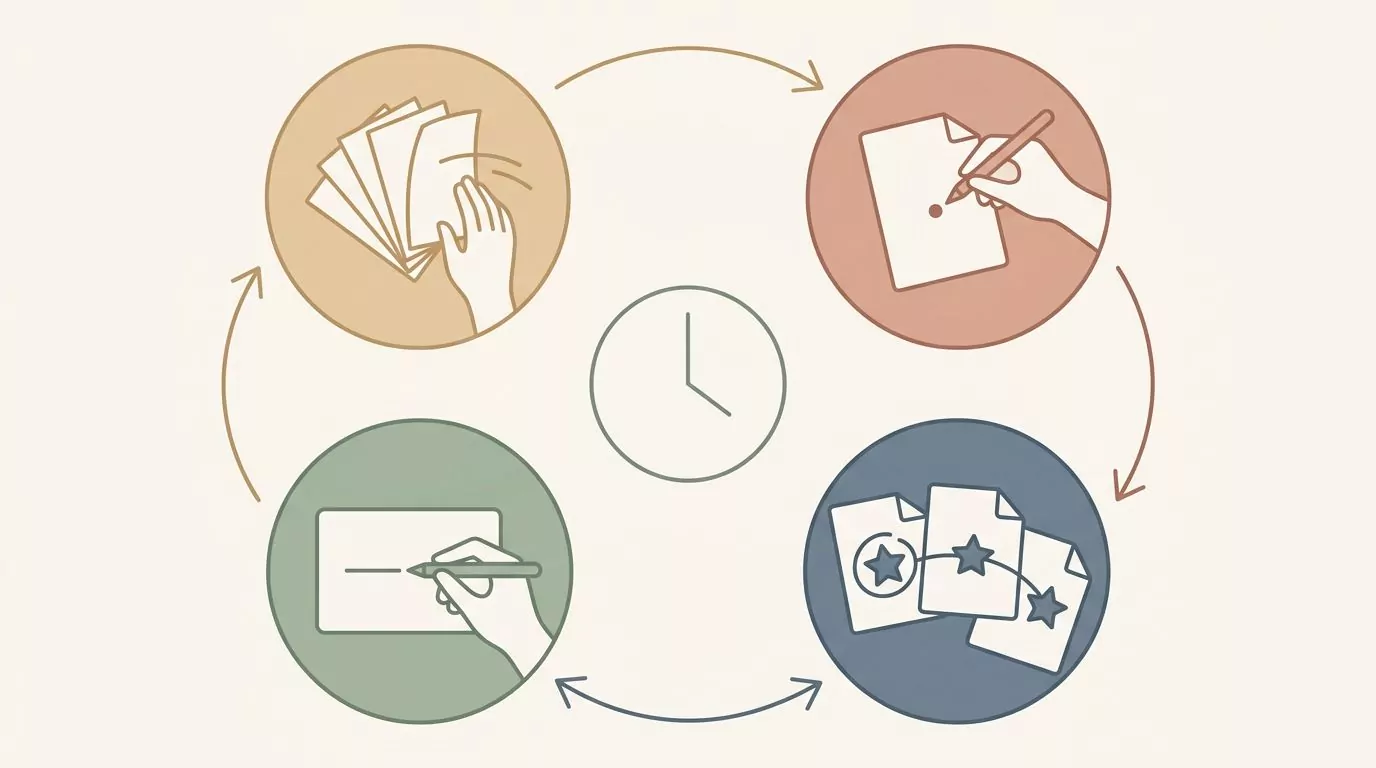
Pick a quiet evening near the start of a month and look back at the one that just ended. Here is how to reflect on journal entries in four steps, about five minutes each.
- Skim without editing. Read the month straight through and change nothing. No tidying, no adding, no explaining what you meant. You are reading, not writing. This is the step people skip, and it is the one doing the work.
- Mark the entries that still have a charge. Some land flat now. Some still tug at something. Put a small mark next to the ones that tug, and do not analyse them yet.
- Look for the repeats. Now read only the marked entries, with their dates showing. Ask what they share: a word, a weekday, a person, a time of day, an intention that keeps returning. Two matches is a coincidence. Four is worth noticing.
- Write one plain sentence. Describe what you saw, in one line, at the bottom of the month. If you are not sure what to ask your own entries, the free journal prompt generator will hand you a question to start from.
That sentence is a description, not a verdict and not a score. "Most of my hard evenings this month came after days with no time outside" is a description. "I am bad at looking after myself" is a verdict, and verdicts are where a review quietly turns into scorekeeping.
Next month, read last month's sentence first. Over a year, those twelve sentences become the shortest and most useful thing in the journal.
When what you find is uncomfortable
Sometimes a review turns up something you would rather not have seen. A pattern you have been avoiding. A person who appears in most of the hard entries. A plan you have now written down eleven times.
Meet it the way you would meet it in a friend's journal. Mixed feelings are allowed here. You can be relieved and disappointed about the same month.
It also helps to remember what a journal is. It is a private place to notice things. It is not therapy, counselling or medical care, and it is not a substitute for any of them. If what surfaces feels heavier than reflection can hold, talking to a professional is a reasonable next step.
You are allowed to close the notebook, too. Noticing something is enough for one evening.
Start with the entries you already have
You do not need a new system to get more out of journaling for self discovery. You need the entries you already have, twenty quiet minutes, and one question you can answer by reading.
If you would like somewhere small to begin, the free browser tools include a month view and a prompt generator, and neither asks for an account. The Mood Check-In app is being prepared for iPhone, and the journal it keeps stays on the device.
Frequently Asked Questions
How long before journaling shows you anything about yourself?
Roughly four to six weeks, because a pattern needs repeats. You may notice something useful on day two, but that is usually relief rather than insight. The patterns that only show up in aggregate, such as a weekday rhythm, need a stack to sit on.
Do I have to write every day for this to work?
No. Daily writing is not the point, and writing every single day can flatten entries into a chore. What helps more is coverage: a short mark on the ordinary days so the record has fewer holes, and longer entries only when you have something to work out.
What if I read my entries back and see nothing?
That is a normal result, and it usually means the stack is too small or the question was too big. Try something narrower, such as what your four hardest entries had in common. If there is still nothing, leave it. A quiet month is a real answer.
Is it better to journal by hand or on a phone?
Handwriting slows you down, which suits long reflective entries. A phone is nearly always with you, which suits short check ins on the days you would otherwise skip. A phone also makes review faster, since a month fits on one screen.
Can journaling replace therapy?
No. A journal is a private place to notice things, and that is genuinely useful, but it is not therapy, counselling or medical care and it is not a substitute for any of them. If what you carry feels heavier than reflection can hold, speaking to a professional is a reasonable step.
What do I do with entries I would rather not keep?
Delete them, or tear the page out. Nothing about self awareness journaling asks you to keep everything forever. If you use an app, check where entries live first. With a local-first journal like Mood Check-In they sit in storage on the device, so deleting on the phone is the whole job.