How to Be More Self Aware Without Overthinking It
To be more self aware, watch what you actually do rather than reasoning about why you are the way you are. Notice one moment at a time, ask what happened instead of why, look back across weeks rather than one hard evening, and let a few trusted people tell you how you land.
Most advice on how to be more self aware asks you to think harder about yourself. That rarely helps.
What being self aware actually means
Self awareness is usually treated as one skill. It is closer to two.
The first is inward: what you feel, what you want, and how you react when something lands badly. The second is outward: how you come across to other people, which you cannot work out from the inside. Organizational psychologist Tasha Eurich argues in her book Insight that these are separate skills, and strength in one does not bring the other. Her Harvard Business Review article on self awareness makes the same point.
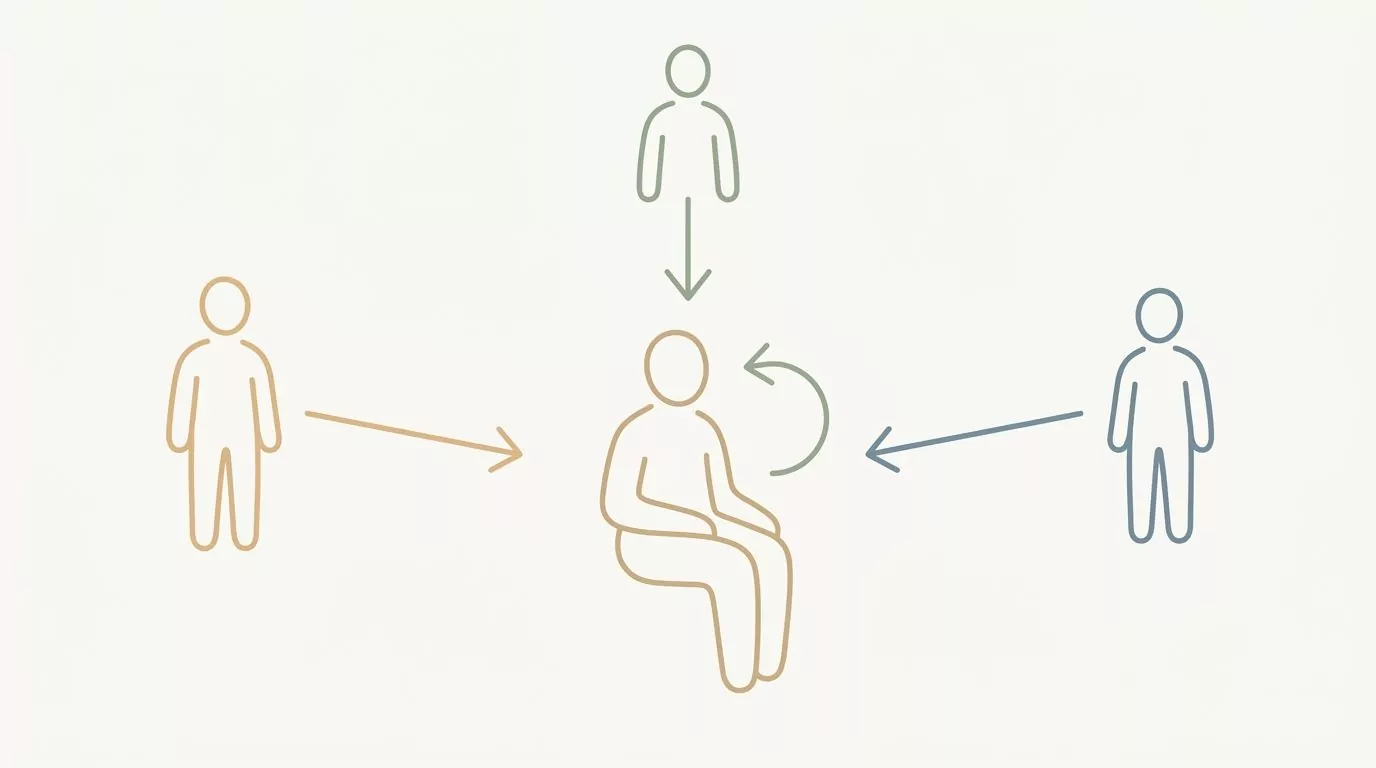
Most people are better at one than the other. This guide stays with the inward kind, because that is the part you can practise alone. It is a skill that grows with practice, not a trait you have or lack.
Noticing is not the same as overthinking
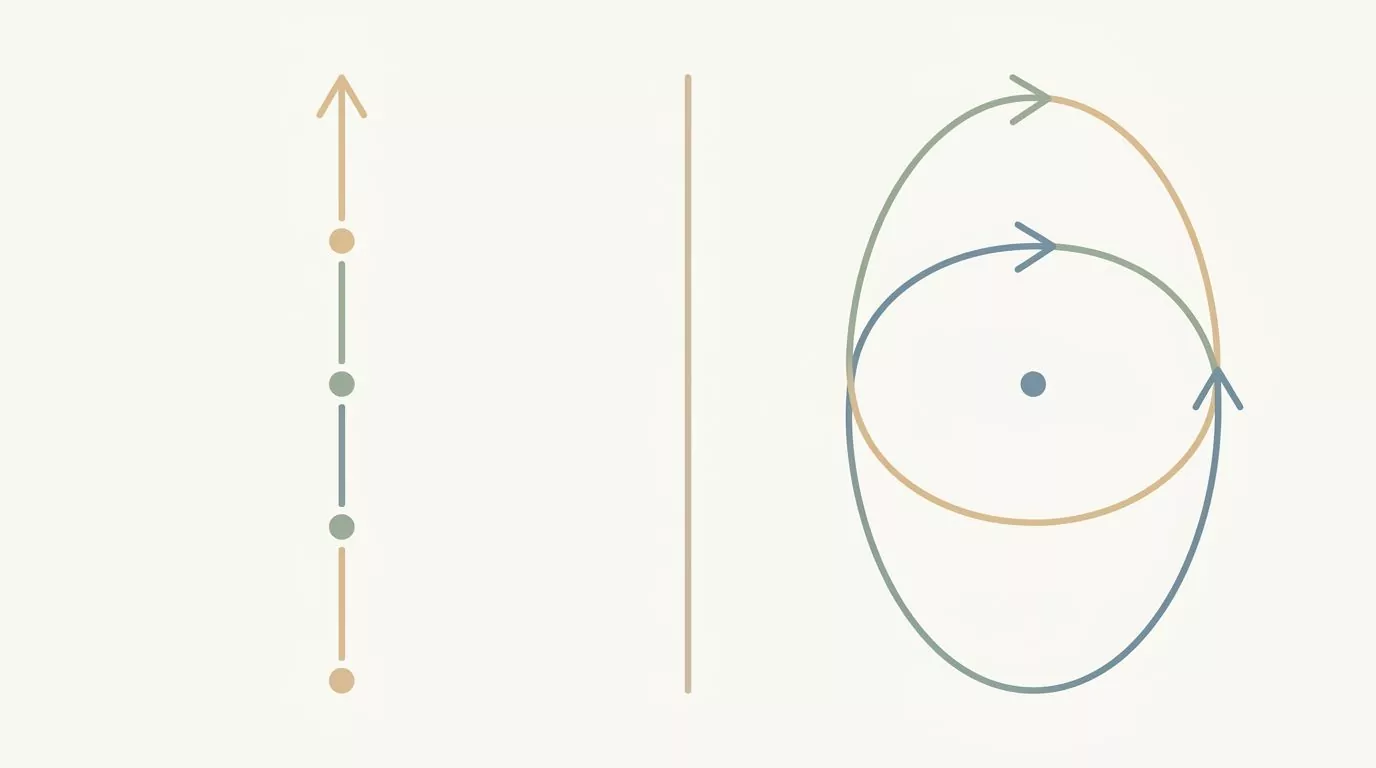
Introspection feels like effort, and effort feels like progress. So an evening spent asking what is wrong with you seems productive while it lasts, and usually ends where it started.
| Looking back | Going in circles |
|---|---|
| Asks what happened, and when | Asks what is wrong with me |
| Produces a detail you can check | Produces a verdict about who you are |
| Ends somewhere small and specific | Ends back at the beginning |
| Happens on purpose, for a minute | Happens at 1am, for as long as it lasts |
| Gets more specific each time | Gets louder each lap |
If reflection leaves you feeling worse each round, that is a signal to stop the loop, not to try harder. Close the notebook and do something physical, or talk to someone you trust.
Start with what is happening right now
The smallest unit of self awareness is one honest moment, not a life review.
Where you feel it. Harvard Health's guidance on self awareness suggests locating a feeling physically before you explain it: a tight jaw, a heavy chest.
Which mood is closest. One word will do, and an exact word beats a strong one. "Bad" tells you nothing. "Rushed" or "left out" points somewhere. When only "bad" comes, a list of feeling words can offer a closer one.
What was going on. The hour, the room, who had just spoken. Context is the part you forget first.
Noticing is easier when the reflection is not written for anyone else. People quietly tidy themselves up when what they write could be read, so the plainest version of a check in usually happens somewhere private. The browser tools need no account, and neither does the Mood Check-In iPhone app, which keeps journal content on the device.
If you want somewhere to put those moments as they happen, there is a free mood tracker you can use in your browser. Ten seconds a few times a week beats an hour of analysis on Sunday.
Ask what, not why
Why questions pull you toward a story, and a story slides into the loop above. What questions stay specific and forward looking.
| Why question | What question |
|---|---|
| Why am I so stressed? | What shows up just before I feel stressed? |
| Why do I always do this? | What was different on the days I did not? |
| Why am I so tired? | What did the last three good nights share? |
| Why do I fall apart on Sundays? | What was I doing in the hour before? |
| Why am I so bad at this? | What did I actually do in that meeting? |
Every answer on the right is checkable, and only checkable answers give you something to do.
When no what shaped question comes to mind, a free journal prompt generator will hand you one.
The words you reach for by default
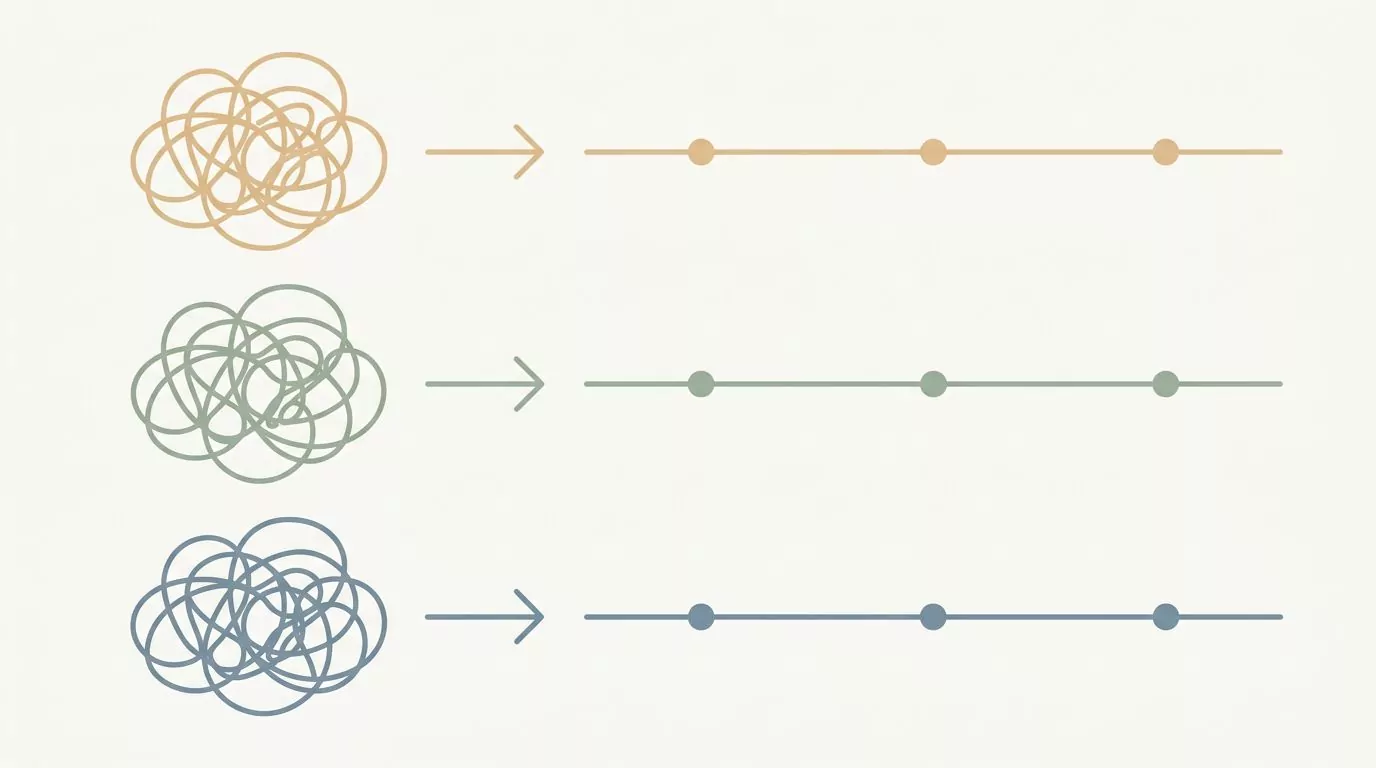
Most of us run on two or three words. Fine, tired, stressed, busy. They are comfortable precisely because they are blurry, covering a wide range of days without committing to any of them.
The trouble is that a blurry word gives you nothing to look at later. Six weeks of tired tells you six weeks happened, not whether tired meant flat, restless, or quietly fed up.
So the small move is this. When you catch a default word, look for a more exact one, then see whether it changes what you want to do next. Flat and restless point in different directions. Telling them apart like this is sometimes called emotional granularity.
If the more exact word will not come, a feelings wheel is a quick way to find it.
A gentle week of noticing
Here is what a first week can look like. The times are honest and small, and one of the days is deliberately empty.
| Day | What a check in might look like | Roughly how long |
|---|---|---|
| Monday | One word for the morning, before you open anything else. | 20 seconds |
| Tuesday | Notice where the afternoon sits in your body, then name it. | 30 seconds |
| Wednesday | Nothing much surfaces. Write flat, or nothing to report, and move on. | 10 seconds |
| Thursday | A tough evening. One line on what happened just before it turned. | 2 minutes |
| Friday | Missed it. Catch it at bedtime, or leave it. | 0 to 20 seconds |
| Saturday | A lighter day. Note that too, since easier days go unrecorded. | 20 seconds |
| Sunday | Optional. Read the six lines back and see what repeats. | 5 minutes |
Notice what that week is not. It is not seven insights, seven tidy entries, or a record anyone could grade. Most days give you one word and nothing else, and those days are doing their job.
What you are collecting is a handful of honest moments, so a pattern has somewhere to appear later. One week is too short to show you anything real, and long enough to find out whether this fits your actual days. If a sheet helps, the free weekly mood tracker has room for seven days of moods and short notes.
What to do when a pattern shows up
A pattern is a repeated pairing you can say in one sentence. Most heavy evenings come after days with no break. It is not a diagnosis or a verdict about your character.
Here is one in practice. Someone has three separate memories of a rough week, none of them unusual.
Laid out with dates side by side, all three turn out to be Tuesdays. No single memory said Tuesday. It appears only once the days sit together. Reading your entries back once a month is a simple way to lay them out like that.
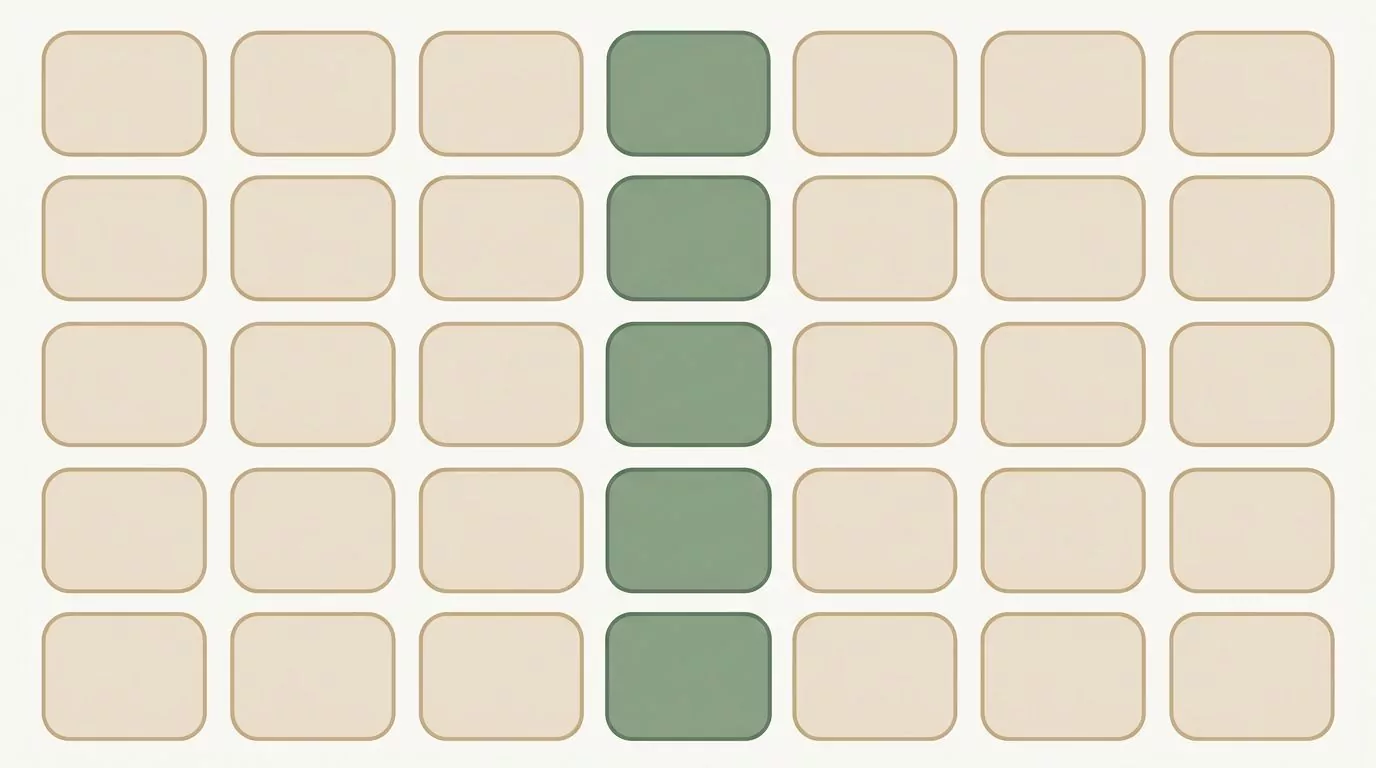
There are three calm things to do with a pattern. Sit with it another week and see whether it holds. Change one small thing and keep noticing. Or let it be known.
What not to do is turn it into a scoring system. Dots lining up is not proof of a cause, and a repeat is a place to look.
When what you notice is uncomfortable
Sometimes looking back turns up something you would rather not have found. Mixed feelings are allowed here, and Kristin Neff's self compassion resources cover being fair to yourself.
A journal or a mood tool is a place to notice things. It is not therapy, counseling or medical care, and it is not a substitute for any of them. If what surfaces feels heavier than reflection can hold, talking to a professional is reasonable.
When you check in and feel nothing
Some check ins come back empty. You look for the word and there is nothing there, or nothing true enough to write down.
That is ordinary, and it usually means one of three things. The answer is genuinely neutral, a real state rather than a failure to notice. Or the moment is too close. Or you are tired.
Write flat, or unclear, or nothing much, and move on. Come back later in the day if you want to. A blank check in is still a check in, and it counts toward the shape of a week.
Frequently Asked Questions
What is the difference between internal and external self awareness?
Internal self awareness is knowing what is going on in you: what you feel, what you want, how you react. External self awareness is knowing how you land on other people, which you cannot work out from the inside. Most people are noticeably stronger at one.
Is self awareness the same as overthinking?
No. Noticing ends somewhere specific: a time, a situation, a word you keep reaching for. Overthinking loops back to the same verdict about who you are. If ten minutes leaves you stirred up and no clearer, you have crossed over.
How long does it take to become more self aware?
There is no set timeline, and it is not something you finish. Single moments of noticing start straight away. Patterns are slower, because they need a run of weeks before repeats become visible. One entry can only ever show you one day.
Can you become more self aware on your own?
Mostly, yes. The inward part you can practise alone, in a minute a day. The outward part is harder, because other people notice things introspection cannot. Asking one trusted person about one recent situation is an option, not a rule.
What should I do first if I have never reflected before?
Pick one moment today and give it one word. That is the whole first step, and it is meant to feel too small. Do it a few more times this week before you make anything of it. Patterns need days behind them.
How to be more self aware, starting this week
Pick one and leave the rest. Name one feeling on Tuesday. Write a line after a hard conversation. Or run the seven days above.
If you would like a small place to begin, you can put a first check in into the free browser mood tracker, no account needed. The Mood Check-In app is also free on the App Store for iPhone.