Emotional Granularity: What It Is and What It Changes
Emotional granularity is the ability to describe what you feel in precise words instead of broad ones. It is noticing the difference between disappointed, lonely and resentful, rather than settling for bad. Researchers also call it emotion differentiation. It is a skill you build through practice with emotion words, not a fixed trait.
That difference sounds small. What it changes is the part most explanations leave out: what you do next. This guide covers what the idea means, where it came from, how researchers actually measure it, and some gentle ways to practise it.
What Emotional Granularity Means
Emotional granularity is the level of detail in how you describe a felt experience. It is not about how many words you can recognise. It is about how well the word you pick matches what is actually going on.
Picture two people at the end of the same rough day. One says the day was bad, and if you push, the day is still bad. The other says the morning was frustrating and the evening was lonely.
Both are telling the truth about their own experience. The second description simply carries more information.
Researchers describe the low end as using words like angry, afraid and sad more or less interchangeably. The words are all there in the vocabulary. They just get used to mean one thing, which is: I feel bad.
The high end is not a bigger word bank. It is the same words used to mark genuinely different experiences. Angry means something happened that seems unfair. Afraid means something ahead looks risky.
Once those two stop being shades of unpleasant, they start being two different pieces of information.
It is worth clearing up what this is not, right at the start. Emotional granularity is not the same as being articulate, or well read, or comfortable talking about feelings out loud.
Plenty of people who write beautifully still run their whole inner life on three words. Plenty of people who would never use the word introspection can tell you exactly which kind of tired this is.
It is also not a fixed badge you either have or lack. It moves around. You may be very precise about work and very vague about family, or sharp in the morning and blunt by ten at night.
The same three moments, described two ways
| The broad version | The version that fits better |
|---|---|
| After a hard conversation: I feel bad about that. | I feel guilty about that. I said something I do not think was fair. |
| After a plan is cancelled: it is fine, I am fine. | I am relieved. I had been quietly hoping it would not happen. |
| After finishing something big: that was good. | I am proud of that. It was harder than I expected and I did it anyway. |
Notice what changes in the right hand column. Each one names something you could act on. The left hand column names a weather report.
This is why the fit between word and experience matters more than the size of the vocabulary. A word that fits tells you what the feeling is responding to. A word that almost fits tells you very little, however impressive the word is.
Where the Idea Comes From
The term comes out of the research of Lisa Feldman Barrett, a psychologist and neuroscientist. She first wrote about the pattern in 1995, calling it differentiation. She named it emotional granularity in 2004.
It sits inside a wider view of how feelings work. On that view, an emotion is not a fixed object waiting inside you to be found. It is built in the moment, out of what your body is doing and out of the concepts you have for making sense of it.
That is why concepts matter so much here. If your only concept for the whole heavy, unpleasant corner of experience is bad, then bad is the only shape the experience can take.
You will meet two names for the same idea. Research papers often say emotion differentiation. A 2022 review by Tan, Wachsmuth and Tugade gives the working definition used here, describing granularity as the level of specificity in the words a person uses for a felt experience.
One detail is worth knowing, because most articles skip it. Barrett's early framing treated granularity as a matter of picking precise labels. Later work led her to describe it more broadly, as the experience itself being built with precision and not only named with it.
The labelling version stayed popular anyway. It is still the version most of us meet first, and it is a reasonable place to start, as long as you know it is a simplification.
Keep the rest of the theory light. Underneath the words, a lot of what you feel can be placed on two rough dials: how pleasant or unpleasant it is, and how activated or settled you are. Two feelings can sit in nearly the same spot on both dials and still be entirely different experiences. Granularity is what tells them apart.
Both names are still in use, so do not be thrown when you meet them side by side. The measure researchers calculate is usually called a differentiation index, while the readable articles almost always say granularity.
The idea travelled fast for a simple reason. It names something people recognise the moment they hear it, which is the experience of knowing that a word is not quite right without knowing which word would be.
It is often discussed as one of the parts that makes up emotional intelligence, though it is narrower than that. Emotional intelligence covers reading other people too. Granularity is specifically about how finely you describe what is happening in you.
Umbrella Words and What They Hide
Some words work like umbrellas. They are broad enough to cover several different situations at once, which is exactly why they are so easy to reach for.
Stressed is the clearest example. Said out loud on a Tuesday, it can mean a diary problem, an avoidance problem, a boundary problem or a sleep problem. All four feel roughly the same from the inside. None of them wants the same thing from you.
That is the real cost of an umbrella word. It is not that the word is wrong. It is that the word ends the search early, just before the part that would tell you what to do.
The table below takes eight ordinary umbrella words. The middle column is not a list of better words. It is a list of the situations that word often turns out to be sitting on top of. The right hand column is the part that matters, because each situation asks for something different.
| The word you reached for | What might actually be going on | What that would change |
|---|---|---|
| Stressed | More booked into the day than fits in it, one specific task you have not started, a request you agreed to and did not want to, a short night's sleep. | The packed day points at the calendar, the unstarted task points at spending ten minutes on it, the unwanted request points at a conversation, the short night points at tonight. |
| Tired | Four short nights in a row, three hours of back to back calls with no gap, the same task carried all week and never closed, nothing on the calendar for two weeks that is not work. | The short nights point at an earlier bedtime, the unbroken calls point at a gap between two of them, the open task points at finishing one small piece of it, the empty calendar points at putting one thing in it. |
| Fine | Nothing has happened that you can point to, something happened that you have not told anyone, you are in a room where the full answer would take twenty minutes, you genuinely have not checked yet. | The quiet day may need nothing at all, the untold thing points at telling one person, the wrong room points at answering properly later, the unchecked answer points at thirty seconds of looking. |
| Off | You skipped lunch and it is now late afternoon, a message you sent has been read and not answered, you are on the third day of a changed routine, the room is too warm and too loud. | The missed meal points at eating, the unanswered message points at waiting or asking, the changed routine points at giving it a few more days, the loud room points at moving. |
| Bad | A conversation ended badly two hours ago, you agreed to something you cannot deliver by Friday, you read the news on your phone before you got out of bed, you have not been outside since Sunday. | The conversation points at a phone call, the deadline points at telling someone early, the phone before breakfast points at leaving it until after, the days indoors point at twenty minutes outside. |
| Anxious | A meeting on Thursday you have not prepared for, a letter you have not opened, a person waiting on an answer you owe them, four coffees before noon. | The meeting points at an hour of preparation, the unopened letter points at opening it, the owed answer points at sending it today, the coffee points at stopping at two. |
| Overwhelmed | Eleven things on one list with no order to them, two people waiting on the same afternoon, a decision you keep re-reading and not making, a room you cannot see the floor of. | The unordered list points at picking the first three, the two people point at giving one of them a time, the re-read decision points at a deadline for making it, the floor points at ten minutes and a bin bag. |
| Upset | Something said on Tuesday that you have not mentioned since, a plan you booked weeks ago that got moved, news you heard second hand that you expected to hear directly, four times you said yes this week. | The unmentioned comment points at mentioning it, the moved plan points at rebooking it, the second hand news points at asking the person directly, the four yeses point at one no. |
The table tells you where to look. It cannot tell you what you will find, because the word that fits comes out of your own situation and not out of a chart.
If you want somewhere to do that looking, the feelings wheel takes the broad word you reached for and helps you find a closer one.
Why Precision Changes What You Do Next
Here is the plainest version of the case for precision, and it comes from the research literature rather than from self help writing.
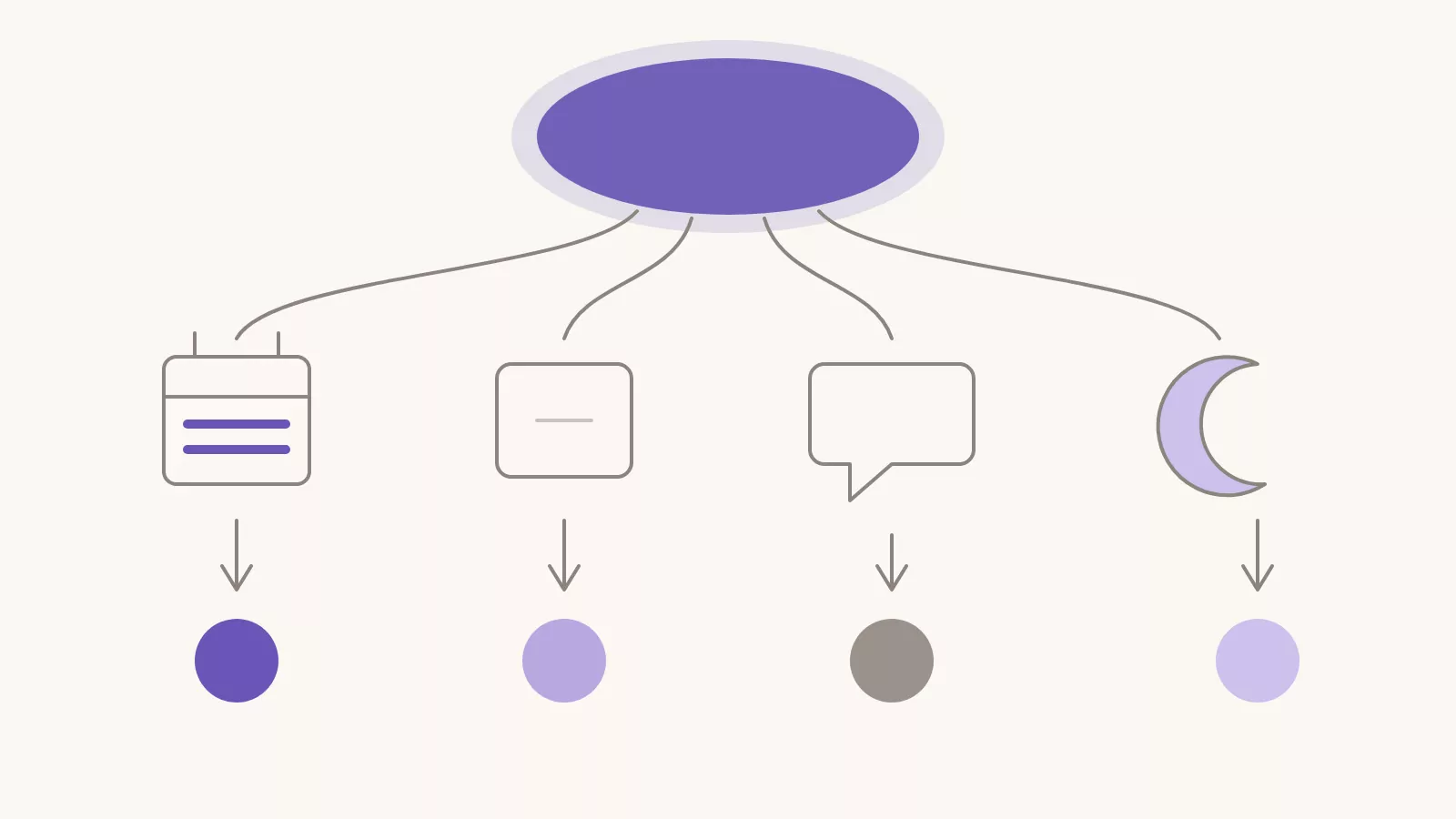
Imagine a conversation with a friend that ended badly. Afterwards you can feel vaguely bad about it. Or you can feel guilty about it.
The first version leaves you with an unpleasant evening and nothing to do with it. The second version points somewhere specific. Guilt is about something you did, so the obvious next move is a phone call and an apology.
The 2022 editorial by Erbas, Gendron and Fugate uses that exact example, and makes the point simply: labelling the feeling with that much specificity is what helps you deal with the situation.
The general principle has a name in psychology. Feelings are treated as information. They carry something about your circumstances, and the more specific the feeling, the more specific the information.
Compare two feelings that often get filed together. Anger tends to be about something that seems unfair, and it pulls you toward doing something about it. Fear tends to be about something ahead that looks risky, and it pulls you toward getting ready or getting out of the way.
Those are opposite instructions. If both land in your head as bad, you lose the difference, and the difference was the whole message.
This is the part worth sitting with. A broad word is not merely vague. It merges instructions that point in opposite directions, and then hands you the average of them, which is no direction at all.
A specific word also tells you roughly where the thing lives. Guilt points at something you did. Resentment points at something you agreed to. Disappointment points at something that did not turn out.
Knowing which of those three you are in changes who the next move involves. One is a conversation with yourself, one is a boundary you set badly, and one is nobody's fault at all.
Be careful about what this does and does not promise, because a lot of writing on this topic overreaches. A precise word does not make a feeling smaller. It does not fix the situation, and nobody should tell you it will settle you down.
What it gives you is better information about your own circumstances, and usually a clearer sense of the next thing to do. That is a modest claim. It is also the honest one.
One more thing is worth saying. A next step is not the same as an obligation. Sometimes the fitting response to a precise word is to do nothing about it today, and simply to know what it was.
Granularity for Lighter Feelings Too
Almost everything written about this topic is about tough feelings. That is a gap, because most of us carry far fewer words for the good days.
Try it on yourself. A difficult afternoon can be sorted into a dozen shades without much effort. A genuinely good afternoon usually gets one word, which is good. Sometimes great.
Researchers have a name for this side of the skill: positive emotion differentiation. There is a whole review devoted to it, and it argues that the lighter feelings are as distinct from each other as the heavy ones.
Take six good days and watch how differently they behave.
Content is the one where nothing needs changing. It tends to arrive when the room is quiet and the day is finished, and the fitting move is to not add anything to it.
Proud is about something you did, especially something that was harder than it looked from outside. The move there is to name what you actually did, out loud or on paper, because that part fades fast.
Grateful points outward. Someone or something made this possible, and the move is often a message you have been meaning to send for a while.
Relieved is the one people miss most. It means something you had been braced for did not happen. The useful part is not the relief itself, it is noticing how long you had been braced.
Amused is small and easy to lose. It asks almost nothing of you, except to notice that you would like more days with that in them.
Awe is the odd one out. Researchers describe it as what happens when you meet something bigger than your current understanding of the world. It does not ask for a next step at all. It asks you to update.
Researchers have gone as far as proposing taxonomies of distinct pleasant feelings, with awe as one entry among several. You do not need the taxonomy. You need to notice that good was doing the work of six different things.
The imbalance is not an accident. Tough feelings interrupt you and demand a name, because something has to be dealt with. Easier feelings tend to let you carry on, so they rarely get examined at all.
Which is a shame, because they are the ones you would most want a record of. Nobody looks back through a year of notes hoping to find more detail about the difficult Thursdays.
There is a practical reason to care about this. If every easier day gets the same word, then every easier day looks the same in your memory later.
You lose the ability to tell which good days you would want more of. That is a real loss, and it is quietly the strongest argument for the whole practice.
What Emotional Granularity Is Not
It is not a vocabulary contest. This is the part that gets lost, and losing it turns a useful idea into a slightly stressful one.
A rare word that does not fit is worse than a plain word that does. If you reach for something literary because it sounds more precise, you have made the description less accurate, not more.
Sad is a good word when sad is the word. The test is fit, never rarity.
Which words fit is also shaped by the language you speak and the culture you grew up in. The review mentioned earlier makes this point with a word as ordinary as happiness. It notes that happiness is understood as a calm, balanced state in some cultures and as something far more charged in others.
So there is no universal set of correct words waiting to be learned. There is only the set that describes your own experience well.
It is not a performance either. This is a private description, written for one reader, and it does not have to survive being said out loud to anyone.
The right word can also change. A word that fit last Tuesday may not fit this Tuesday, even if the two days look the same from outside. You are describing an experience, not filing it under a heading.
Not a level, and not a score
Granularity is not a ladder with rungs on it. You are not at level two working toward level four, whatever a quiz might tell you.
It is also not something to optimise. The moment a feeling becomes a number to improve, you have quietly changed what you are doing. You are no longer describing the day. You are grading it.
That is worth resisting, because grading is the habit that makes people stop journaling.
Some days bad is the honest answer
If the true answer is that you feel bad and you have no idea why, then that is the answer. Write it down and close the book.
Sitting there hunting for a better word when there is not one is not precision. It is homework.
There is a difference between looking at a feeling and circling it. Looking has a stopping point. You find a word that fits, or you find that none does, and either way you are finished.
Circling has no stopping point. Here is a concrete cue for it: if you are on the third rewrite of the same sentence and it is not getting closer, stop. The next word is not going to arrive by force.
One last thing. This is a self reflection practice, not therapy and not medical care. Some things are worth talking through with a professional, and describing them more precisely is not a substitute for that.
How Emotional Granularity Is Actually Measured
This is the most interesting part of the research, and almost no consumer article covers it. It also quietly corrects a misunderstanding most of us are carrying.
Researchers do not measure granularity by asking how many emotion words you know. There is no word test. A big vocabulary is not the thing being measured.
There is a good reason for that. Answering a question about yourself in general is a different task from answering a question about right now, and people are much better at the first one than they are accurate about it.
Experience sampling
The main method is experience sampling. People are prompted several times a day, for a week or more, and each time they rate how much they feel each of a set of emotions right now.
That produces a lot of small snapshots. The measure comes out of the pattern across all of them.
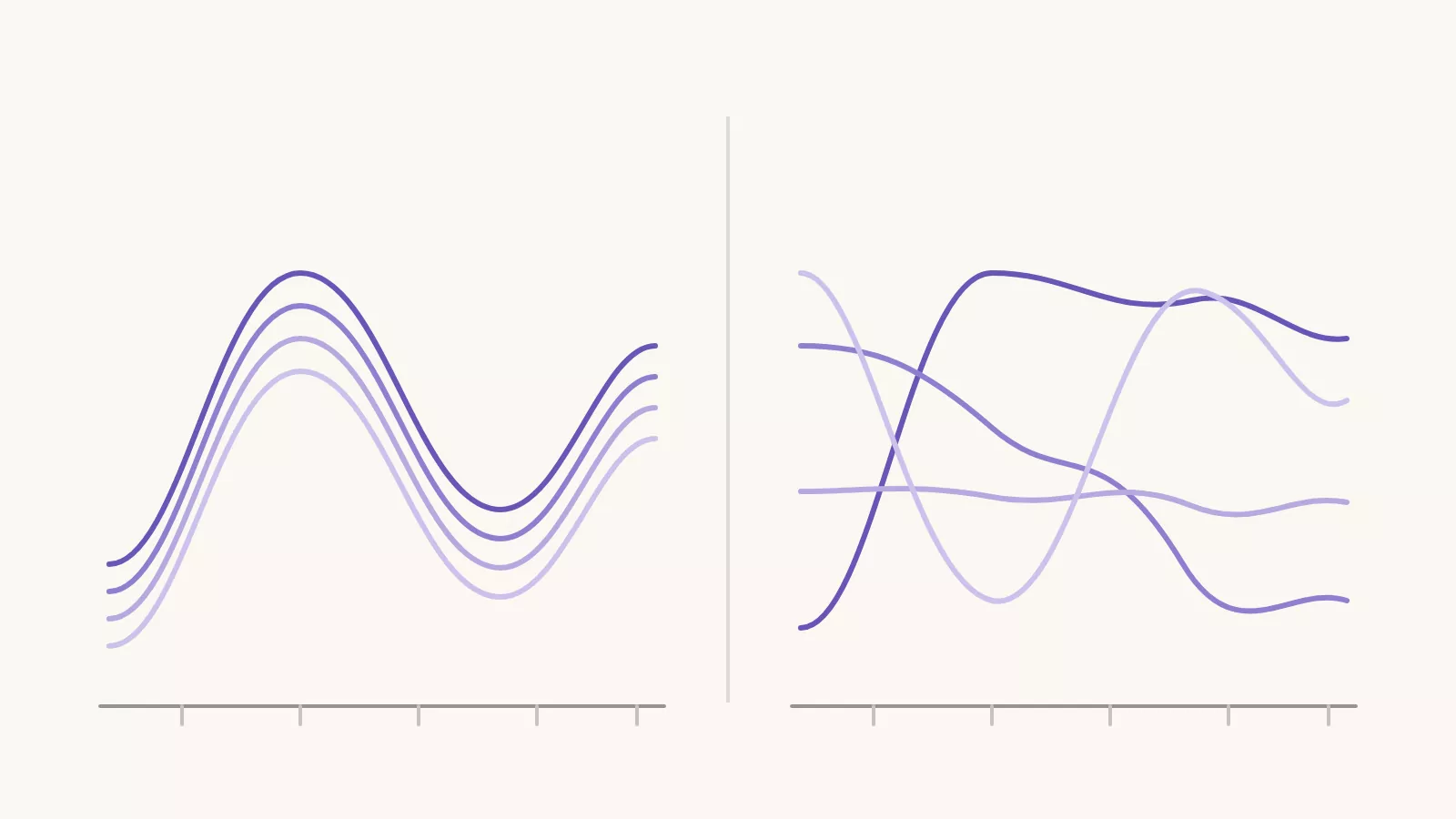
Researchers look at how much the ratings for similarly toned words move together. If your ratings all rise on a hard morning and all fall by the evening, moving as one block, that pattern indicates lower differentiation.
If one rating climbs while another stays flat and a third drops, the words are doing separate jobs. That pattern indicates higher differentiation.
The index is built from exactly that: how interrelated the similarly toned ratings are. High interrelatedness means the words are being used more or less interchangeably.
Scenes and vignettes
There is a second approach. People read a set of short scenes and rate how they imagine they would feel in each one, and the same logic is applied to those ratings.
One published scale of this kind is built entirely around the lighter feelings, with eight scenes and eight feelings to rate for each of them.
Why this changes how you read your own vocabulary
Here is the payoff, and it is the reason this section exists.
Because the measure comes from behaviour over time rather than from a survey, it can disagree with what you believe about yourself. The editorial cited earlier says this plainly: survey answers about emotion vocabulary are not always closely related to granularity as measured by experience sampling.
Which means a person can know a great many emotion words, feel quite confident about it, and still use three of them for everything on an ordinary Tuesday.
Two guardrails before you get ideas. This is a research method, not a self test. Nothing here is a checklist to run on yourself on a Sunday night.
It is also worth knowing what the number describes. It describes a stretch of time, not a person. Somebody measured over a calm fortnight and the same person measured over a chaotic one may not look the same at all.
And a mood journal does not produce a granularity score. It is not measuring you. It is holding the notes.
Ways to Practise Noticing More Precisely
None of this needs a course or a system. The practices below are small, and two of them come straight out of the research.
1. Check in closer to the moment
Most people describe their feelings once, at night, about a day that finished hours ago. By then the day has been flattened into a summary.
Checking in more often, closer to when something happens, gives you the raw material while it is still specific.
There is a striking finding behind this one. In the research, the act of repeated in the moment sampling itself raised people's granularity. The practice was also the intervention.
In practice: one check-in at two in the afternoon, right after the meeting that went sideways, rather than one summary of the whole Tuesday at eleven at night.
Two or three a day is plenty. This is not a task to be thorough about, and a day with one honest check-in beats a day with six done out of duty.
2. Learn two or three words at a time, and use them
Skimming a long list of feelings does very little. The words do not stick, because nothing attaches them to your own life.
Research on building emotion concept knowledge found that it raised differentiation for the tougher feelings, and that the change held up over time. That work was about knowing the concepts properly, not about recognising the words on a page.
Two or three new words a week is the honest scale of this. Pick them up, then go looking for the situations they actually describe.
In practice: you take on the word resentful this week. By Thursday you notice it is the right word for having said yes on Monday to something you did not want.
3. Start from the body, then reach for the word
Feelings show up physically before they show up in language. It is often easier to answer what is tight than to answer what is wrong.
So start there. What is tight, heavy, restless or warm, and where is it?
Then ask what word fits that particular pattern. The body narrows the search before you start guessing.
In practice: shoulders up, jaw tight, unable to sit still. That is a different starting point from a flat, heavy chest, and it points at a different word.
This one is especially useful when nothing obvious has happened. The body often noticed something several hours before you did.
4. Move from the broad word to a closer one
This is the move the umbrella table set up earlier. You start from the word you reached for, and you look at what sits near it until one of them fits better.
It takes about a minute, and it is the most direct way to practise any of this.
In practice: you start at stressed on a Wednesday afternoon and end up somewhere more specific, which turns out to be about one unanswered email rather than about the whole week.
5. Add one line of context next to the word
A word on its own ages badly. Three weeks later, anxious on a Thursday tells you almost nothing about that day.
Add one sentence: what happened just before, and what you wanted. That is what makes the entry readable later.
In practice: not anxious on its own, but anxious before the Thursday review, wanting to hear that it had gone well.
6. Let two words be true at once
Mixed feelings are ordinary. Picking one of them to keep the entry tidy throws away the interesting half.
If both fit, write both. The tension between them is usually where the information is.
In practice: proud and flat on the same evening, after finishing something you had been carrying for months. Neither one of them is the mistake.
Two words also stop you rounding a day off. Most days are not one thing, and forcing them to be one thing is where accuracy quietly leaks away.
7. Give the lighter feelings the same care
The easier days get skipped, because there seems to be less to say about them.
Give them the same minute you would give a hard afternoon, for the reason covered earlier. Otherwise every good day looks identical in hindsight.
In practice: on a genuinely good Saturday, ask which kind of good it was, and what made it that kind.
A Worked Example: One Vague Evening
It is a Wednesday and nothing happened. You cooked, you watched something, and at about ten you notice that you feel off.
Start where it is easiest, which is the body. Your shoulders have been up near your ears since the afternoon, and you have got up twice for no reason. Restless, then, and slightly braced.
Off is where most evenings stop. Push once more, and ask what happened today that you have not mentioned to anyone.
The answer arrives quickly, which is usually a sign it was already there. You sent a message to a colleague at half past eleven this morning, about a project you had put three weeks into, and there has been no reply.
Now two words are competing, and both of them nearly fit.
Annoyed fits. There is something a bit rude about a message left sitting all day.
Hurt also fits, and it is the one you would rather not pick, which is worth noticing on its own.
The detail that decides it is this. You checked the thread three times before lunch. Annoyance does not check three times. Annoyance checks once and gets on with the afternoon.
You were not waiting for an answer about the project. You were waiting to be told it was good.
So the word is hurt, and once it fits, the evening changes shape. The chasing message you had half drafted would not have helped, because it asks for a status update when what you want is something else entirely.
What you actually do is smaller than that. You write two lines in your journal, put the phone down, and decide that tomorrow you will ask the one question you want answered, which is what they thought of it.
Nothing is fixed. The message is still unanswered, and you still go to bed with it.
But you go to bed knowing what the evening was about, and that is a different night from the one where you just felt off.
Look at how ordinary the whole thing was. No crisis, no breakthrough, and about four minutes of attention between the first word and the last one.
That is the size this practice usually is. Most evenings it produces nothing more dramatic than a slightly better sentence about a Wednesday.
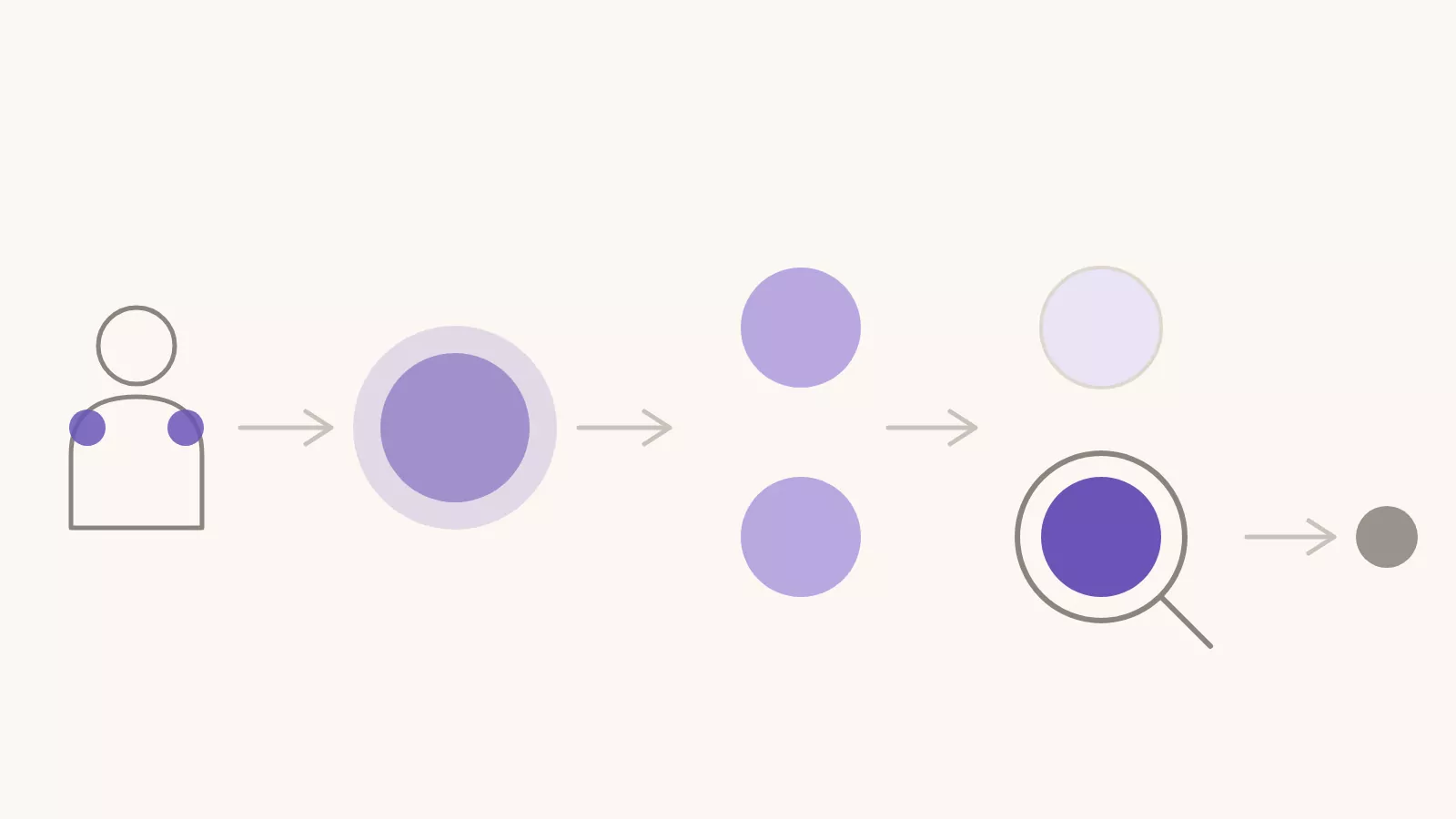
Where This Fits in a Daily Check-In
The practice does not need a system. It needs a shape small enough that you will still do it on a bad Tuesday.
The shape has three parts. A rough sense of the day. One or two words for the feeling. One line of context.
Thirty seconds, usually. Under a minute if the day was complicated.
Each part is doing a job. The rough sense gets you started without asking for precision you do not have yet. The one or two words are where the granularity lives, and allowing two of them is what stops you tidying a mixed day into a single word. The line of context is what makes the entry worth reading later.
Timing matters more than format here, for the reason in the practice section. Closer to the moment beats a summary at midnight.
The other thing that helps is keeping the bar low enough to clear on a poor day. A routine you only manage when you feel well is not a routine, and it collects the wrong sample of your life.
Written entries have one advantage worth naming. They can be read back weeks later, and reading back is where you start to see which words you actually use and which ones you only think you use.
If you would like to try that shape without installing anything, the mood tracker runs in your browser, takes a few seconds, and does not ask you to make an account.
Mood Check-In itself is a private mood journal, coming soon for iPhone. It keeps five simple moods for the rough sense of the day, optional emotion and context tags for the naming, and an optional note for the line of context. What you write stays in the app's storage on your device.
It is a place to notice things, not a place to be scored.
Frequently Asked Questions
What is emotional granularity in simple terms?
It is how precisely you describe what you feel. Low granularity means most feelings come out as one broad word. Higher granularity means the word you pick actually marks which experience this is. It is about fit, not about the size of your vocabulary.
Is emotional granularity the same as emotion differentiation?
In practice, yes. Emotion differentiation is the term you meet most often in research papers, and emotional granularity is the one that travelled into everyday writing. Both describe how specific a person's descriptions of their own feelings are.
What does low emotional granularity look like day to day?
It usually looks like a small set of words doing all of the work. Most hard days are bad or stressed, most easier days are good, and the words in between rarely get used. Nothing is wrong with that. It just means the description is carrying less information than it could.
Can emotional granularity be improved, or is it fixed?
It is treated as a skill rather than a trait. Research has found that reporting on feelings repeatedly, in the moment, raised people's granularity, and that building up emotion concepts raised differentiation for the tougher feelings, with the change lasting. Practice is the ordinary route.
How many emotion words do you actually need?
Fewer than the long lists suggest. What matters is that the words you use are attached to real situations, not that you can recognise a hundred of them. Two or three new words a week, actually used, does more than a list you skim once.
Does emotional granularity apply to good feelings too?
Yes, and it is the side most people neglect. There is a whole line of research on telling the lighter feelings apart, and it suggests they are as distinct from one another as the difficult ones. If every good day gets the same word, you lose the ability to tell which ones you want more of.
Is emotional granularity the same as naming a feeling to take the edge off it?
They are related, but they are not the same question. Granularity is about how well the word fits the experience. Whether putting a feeling into words makes it more workable is a separate topic, with its own research behind it, and it is worth reading about on its own.
None of this has to become a project. Pick one broad word you say too often, and the next time it turns up, spend a minute looking at what is underneath it.
Some days you will find a better word. Some days you will not, and the day was simply bad. Both of those are fine, and both are worth writing down.