List of Emotions: Feeling Words and What Each One Means
A list of emotions is a set of feeling words grouped by family, from broad ones like sad or angry to precise ones like discouraged or exasperated. Scanning a list helps when you know something is going on but the first word you reach for does not quite fit.
Most feeling word lists hand you hundreds of words in alphabetical order and stop there. That is fine for a crossword and not much use at nine in the evening when you want words to describe feelings you cannot quite pin down.
So this one is built the other way around. Every word below sits in a family, and every word comes with a short plain meaning, so you can tell the near neighbors apart.
How to use this list of emotions
You do not need to read it top to bottom. Find the family that feels closest, even if it is only roughly right, then read down the words inside it until one lands.
The landing is the point. A word fits when reading it makes something settle slightly, and it does not fit when you have to argue yourself into it.
Two habits make this easier over time. Start broad and narrow inwards rather than hunting for the perfect word straight away, and allow yourself more than one word when a moment genuinely holds more than one.
Close enough is fine. A word that is roughly right and arrives quickly is worth more than a perfect word you never find, and you can always revise it later in the evening.
A list like this one is simply the raw material for those two habits.
A flat list is hard to scan when you are already tired. If you would rather move from broad family to specific shade visually, the free feelings wheel is a shorter, family-first version of the same idea in your browser: eight families with a handful of words inside each, rather than the full list below.
The emotion families at a glance
Thirteen families, with a few sample words each so you can jump straight to the one that feels closest.
| Family | What it covers | Sample words |
|---|---|---|
| Lighter and happy | The easier end of the range | Glad, content, elated |
| Calm and settled | Quiet, nothing pulling at you | Relaxed, grounded, at ease |
| Loving and connected | The pull towards other people | Warm, tender, understood |
| Confident and capable | Feelings around doing things | Capable, determined, prepared |
| Curious and interested | Attention landing and staying | Intrigued, absorbed, open |
| Surprised | The world not matching your guess | Startled, astonished, rattled |
| Sad and low | Heaviness with no push behind it | Disappointed, wistful, grieving |
| Afraid and anxious | Something ahead might go badly | Uneasy, worried, dread |
| Angry and frustrated | Something is wrong or blocked | Annoyed, exasperated, resentful |
| Ashamed, guilty and embarrassed | Being seen, or falling short | Guilty, sheepish, mortified |
| Disgust and aversion | A strong no, often physical first | Put off, repelled, scornful |
| Tired and flat | Low fuel, or nothing much at all | Drained, numb, listless |
| Mixed and hard to name | Two things true at the same time | Torn, bittersweet, conflicted |
Full list of emotions and feelings, grouped by family
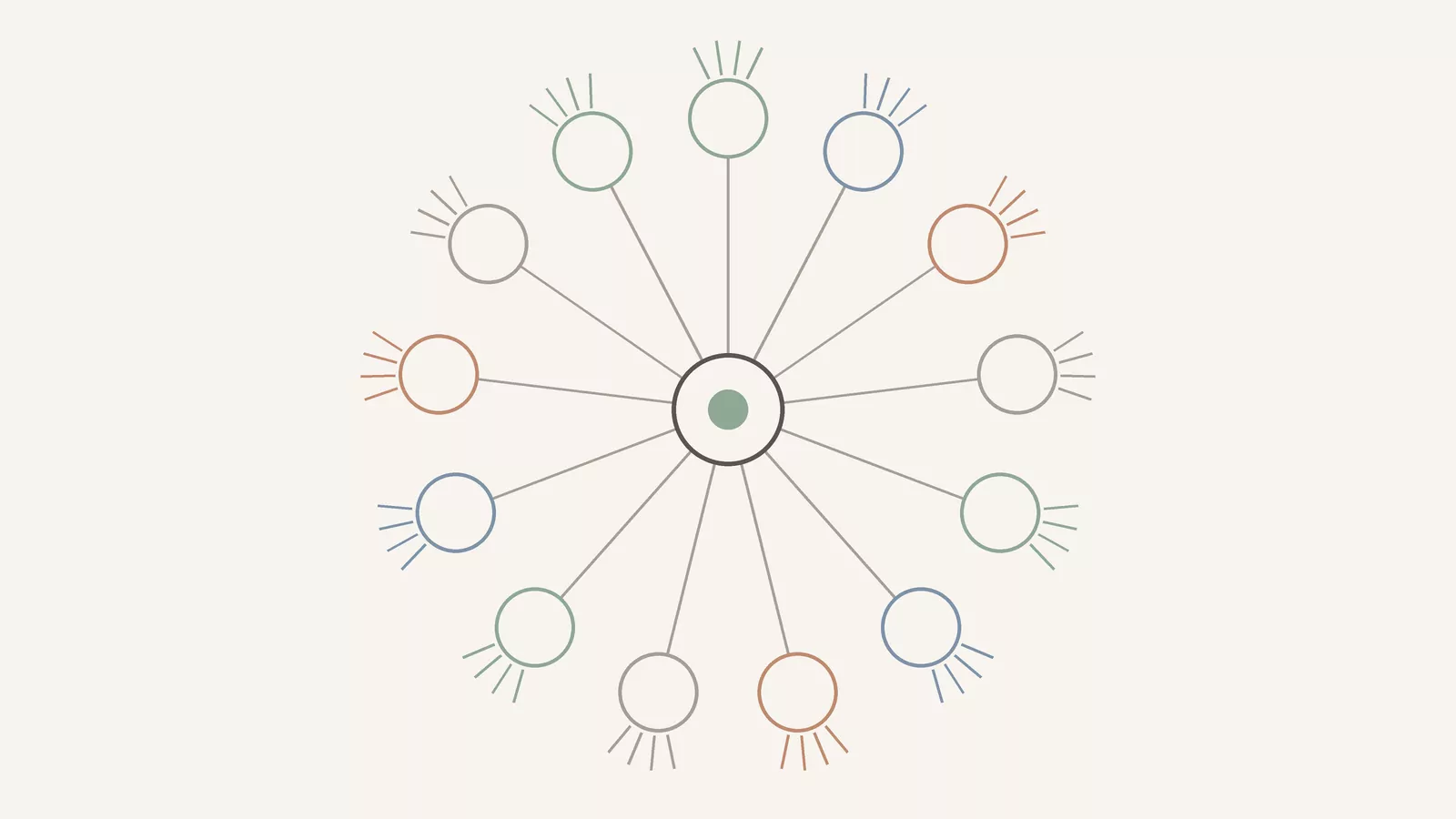
What follows is thirteen families of feeling words, each word with a plain meaning. The names of emotions inside a family are close relatives, not synonyms. The families overlap at the edges, which is normal, and a word appearing in one family does not stop it belonging somewhere else on a different day.
Lighter and happy
The easier end of the range, from small pleasures to the big lifted feelings. They tend to arrive when something went better than you expected, or when a small good thing landed at a moment you needed it.
- Happy: the broad lifted feeling that most of the words below sit under.
- Joyful: happiness with energy behind it, hard to keep quiet about.
- Glad: a small, plain pleasure about one specific thing.
- Delighted: pleased and a little surprised at the same time.
- Content: nothing is missing right now and nothing needs changing.
- Cheerful: lightness you carry into a room, where other people notice it.
- Pleased: quiet approval of how something turned out.
- Satisfied: what you got is enough, and you are not looking past it.
- Amused: something struck you as funny and the feeling is still there.
- Playful: ready to mess about, low stakes, no agenda.
- Grateful: aware that something good came to you and did not have to.
- Proud: you did something that took effort and you are letting yourself notice.
- Relieved: a weight you had been carrying has just been set down.
- Excited: energy running ahead of a thing that has not happened yet.
- Buoyant: light enough today that small setbacks bounce off you.
- Thrilled: excitement near the top of its range, hard to sit still with.
- Elated: very high and slightly unsteady, the feeling right after big news.
Calm and settled
Quiet feelings are easy to miss because nothing is demanding attention. They usually turn up when a demand lifts, when a room goes quiet, or when your body finally catches up with a slower pace.
- Calm: steady breathing, nothing pulling at you.
- Relaxed: your body has let go of tension it was holding.
- Peaceful: quiet inside as well as outside.
- Safe: no part of you is scanning for what might go wrong.
- Steady: not especially up or down, and fine with that.
- Grounded: your feet are under you and the day is not tipping you.
- Centered: attention has come back to one place instead of scattering.
- At ease: comfortable in a situation that could have been awkward.
- Comfortable: nothing is chafing, in your body or in the room.
- Settled: whatever was churning earlier has stopped moving.
- Unhurried: time feels like it belongs to you.
- Untroubled: nothing is asking anything of you right now.
- Rested: you have enough in the tank for what the day is asking.
- Reassured: a worry has been answered by something real.
Loving and connected
Words for the pull towards other people, which comes in more than one flavour. Most of them are set off by being seen accurately, being included, or watching someone you care about need something.
- Affectionate: warm towards someone and wanting to show it.
- Warm: open and friendly, without needing much back.
- Tender: gentle towards someone who seems fragile right now.
- Fond: a soft, long-running liking rather than a rush.
- Close: the distance between you and someone else feels small.
- Loved: someone holds you in mind and you can feel that they do.
- Understood: someone got the part you did not have to explain.
- Compassionate: moved by someone's difficulty and wanting to help.
- Protective: you want to stand between someone and a hard thing.
- Trusting: willing to be a bit unguarded with a person.
- Appreciated: someone noticed what you did and said so.
- Welcomed: you were let in without having to earn it first.
- Belonging: you are part of this without having to check that you are.
- Devoted: committed to someone over a long stretch, not just today.
Confident and capable
These are the feelings that show up around doing things rather than around people. They tend to follow evidence: a task that went well, preparation that held up, or a first step that turned out to be easier than the dread suggested.
- Confident: you expect this to go reasonably well.
- Capable: the task sits inside what you can do.
- Assured: doubt has gone quiet for now.
- Prepared: you have done the work and the work is behind you.
- Determined: you have decided, and you are not shopping for other options.
- Hopeful: you can picture a better version of this.
- Optimistic: you expect things to tilt the good way, without proof either way.
- Encouraged: something small went right and it moved you forward.
- Motivated: the pull to start is stronger than the pull to wait.
- Ambitious: you want more than what is in front of you right now.
- Brave: doing it while the fear is still there.
- Bold: willing to take the bigger swing and accept that it might miss.
- Accomplished: the thing is finished and it took something out of you.
- Focused: one thing has your attention and the rest has gone quiet.
Curious and interested
An easy family to overlook, because curiosity rarely announces itself. It is set off by a gap in what you know, or by something that almost makes sense and does not quite.
- Curious: you want to know more, with no particular use for it yet.
- Interested: your attention landed somewhere and stayed.
- Attentive: you are following closely and not drifting off.
- Intrigued: something does not add up and you like that.
- Puzzled: the pieces do not fit yet and you want to work out why.
- Absorbed: time has gone strange because you are inside the task.
- Engaged: taking part rather than watching.
- Captivated: held by something and not wanting the moment to end.
- Inspired: you saw something and now you want to make something.
- Enthusiastic: keen enough about this that other people can hear it.
- Eager: keen to start, slightly ahead of yourself.
- Anticipating: leaning towards something that has not arrived yet.
- Open: willing to be changed by whatever you find out.
- Alert: awake to what is happening around you.
- Fascinated: pulled in far enough that you forget to look away.
Surprised
Surprise is brief. It is set off by the gap between what you expected and what actually happened, and it usually hands off to another feeling within seconds, so catch it early.
- Surprised: what happened is not what you expected.
- Startled: a fast body reaction before you have thought anything.
- Taken aback: knocked slightly off balance by something that was said.
- Amazed: impressed past the point of having words ready.
- Astonished: surprise that stops you mid-sentence.
- Speechless: the reaction arrived well before any words did.
- Dumbfounded: surprised past the point of answering sensibly.
- Flabbergasted: surprise big enough to be slightly funny afterwards.
- Stunned: the news has landed and nothing inside you has moved yet.
- Shocked: surprise with a jolt of alarm inside it.
- Rattled: surprise that has left your hands unsteady.
- Disoriented: the ground moved and you are still finding it again.
- Awestruck: something is much bigger than you and being small feels good.
- Bewildered: too many pieces arrived at once and none of them line up.
Sad and low
Heavier words, and worth having in detail, because sad on its own covers far too much ground. The usual triggers are loss, distance, or the gap between what you hoped for and what turned up.
- Sad: the broad word for heaviness with no push behind it.
- Low: flatter and duller than sad, often without a clear cause.
- Downhearted: your outlook has dropped along with your mood.
- Disappointed: reality came in under what you had pictured.
- Crushed: the disappointment landed far harder than you were braced for.
- Discouraged: you tried, it did not work, and trying again feels far away.
- Lonely: you want company of a particular kind and do not have it.
- Hurt: someone's words or actions landed and left a mark.
- Wistful: gently sad about something that is over and was good.
- Melancholy: a slow, almost comfortable sadness with no clear cause.
- Homesick: missing a place, or a version of life, that felt like yours.
- Grieving: carrying a loss, which takes as long as it takes.
- Sorrowful: deep sadness that you can point at a cause for.
- Gloomy: the outlook has clouded over more than the facts require.
- Heavy: the feeling is physical, sitting in your chest or your shoulders.
- Resigned: you have stopped arguing with a situation you did not choose.
Afraid and anxious
Fear words differ mostly by how close the threat feels and how clearly you can name it. Nearly all of them are set off by something ahead rather than something happening now.
- Afraid: something specific might harm you.
- Scared: the fast, close-up version of afraid.
- Nervous: a small buzz before something that matters.
- Uneasy: no clear threat, but something is off.
- Wary: not convinced this is safe, and holding back until you are.
- Worried: your mind keeps returning to a future that has not happened.
- Anxious: worry with a body attached, a tight chest or restless hands.
- Tense: braced, as though waiting for a sound.
- Jumpy: small sounds and movements are landing harder than they should.
- Apprehensive: expecting the harder version of what is coming.
- Hesitant: something stops you a half step before you commit.
- On edge: small things are landing harder than they usually would.
- Dread: a heavy certainty that the thing ahead will be bad.
- Insecure: unsure of your footing with a person or a role.
- Alarmed: something just moved and you have not decided how serious it is.
- Terrified: fear at full volume, where the body takes over.
Angry and frustrated
Anger words carry different amounts of history. Some are about this minute and some are about years. What sets them off is usually a rule being broken or a path being blocked.
- Angry: the broad word for something being wrong and you wanting it put right.
- Annoyed: mild and specific, usually about one small thing.
- Grumpy: low-grade irritation that is not really about anything.
- Irritated: a repeated small friction that has worn a groove.
- Aggravated: the same small friction, arriving one time too many.
- Frustrated: you want to move and something keeps blocking you.
- Exasperated: frustration that has been going on far too long.
- Resentful: an old unfairness that never got settled.
- Indignant: anger on principle, often on someone else's behalf.
- Outraged: anger at something that crossed a line, not just a preference.
- Furious: anger at full volume, hard to sit still with.
- Hostile: ready for a fight before anyone has started one.
- Bitter: resentment that has gone cold and set.
- Impatient: the waiting is the part you cannot stand.
- Defensive: braced against criticism before it has fully arrived.
- Fed up: out of patience and ready to walk away.
Ashamed, guilty and embarrassed
These three get used as though they mean the same thing. They do not, and the difference matters. All of them involve being seen, or imagining being seen, in a way you would not have chosen.
- Guilty: you think you did something wrong.
- Ashamed: you think there is something wrong with you.
- Embarrassed: you were seen in a way you did not choose.
- Awkward: you are in the room and nothing you do feels quite right.
- Regretful: you would take a decision back if you could.
- Remorseful: regret with someone else's hurt at the heart of it.
- Self-conscious: aware of being watched and unable to stop noticing.
- Inadequate: you came up short against a standard you actually accept.
- Small: made to feel less than you were a minute ago.
- Humiliated: made small in front of other people.
- Mortified: embarrassment strong enough that you replay it for days.
- Sheepish: a light, almost funny version of embarrassed.
- Exposed: something private became visible before you were ready.
- Apologetic: wanting to repair something you affected.
Disgust and aversion
Disgust started as a food reaction and now covers ideas and behavior too. It is set off by something you want distance from, and the body usually decides before your reasoning catches up.
- Disgusted: a strong no, arriving in your body before your head.
- Repelled: you want distance and you want it now.
- Revolted: disgust strong enough to turn your stomach.
- Sickened: something you saw or heard has stayed in your body since.
- Grossed out: plain physical distaste, usually about something small.
- Put off: mild disgust, enough to make you lose interest.
- Averse: a settled no that does not need arguing about.
- Queasy: unsettled in a physical, low-level way.
- Disapproving: you have judged something and found it wanting.
- Scornful: dismissing something as beneath your attention.
- Contemptuous: looking down on someone, which is worth catching early.
- Offended: a line you hold was crossed and you noticed it being crossed.
- Uncomfortable: something is wrong here and you cannot yet say what.
Tired and flat
Tiredness gets blamed for a lot. Sometimes it is the right word and sometimes it is a stand-in. It follows effort, poor sleep, or a long stretch of low interest in what you are doing.
- Tired: you need rest, plainly.
- Sluggish: everything is taking longer today than it usually would.
- Drained: something specific took more than you had.
- Spent: whatever you had for today has already gone.
- Weary: tired across a long stretch, not just today.
- Worn out: used up by effort you can point to.
- Burnt out: emptied by a long stretch rather than by one hard day.
- Flat: nothing is wrong and nothing is bright either.
- Numb: feeling has gone quiet, which is itself worth noting.
- Apathetic: nothing in particular seems worth the effort right now.
- Bored: under-occupied and mildly uncomfortable about it.
- Restless: energy with nowhere to go.
- Listless: no pull towards anything in particular.
- Foggy: thinking feels like it is happening through gauze.
Mixed and hard to name
The most useful family, and the one most word lists leave out. These words turn up when a single situation holds two things you would normally feel separately.
- Overwhelmed: more is arriving than you can sort.
- Torn: two options, and both have something real in them.
- Conflicted: two things you want, and getting one costs you the other.
- Ambivalent: genuinely two ways about it, which is not the same as undecided.
- Vulnerable: open in a way that could go well or badly.
- Guarded: open enough to stay in the room and no further than that.
- Nostalgic: fond and sad about the same memory.
- Bittersweet: the good and the hard arriving together.
- Yearning: pulled towards something that is not available to you.
- Envious: you want something someone else has.
- Jealous: you fear losing something you already have.
- Frozen: fear and anger arriving together and cancelling out any movement.
- Confused: too many signals at once and no clear read on any of them.
- Sentimental: softened by memory more than by the present.
- Unsettled: something shifted and you have not caught up to it.
Mild, medium and strong versions of the same feeling
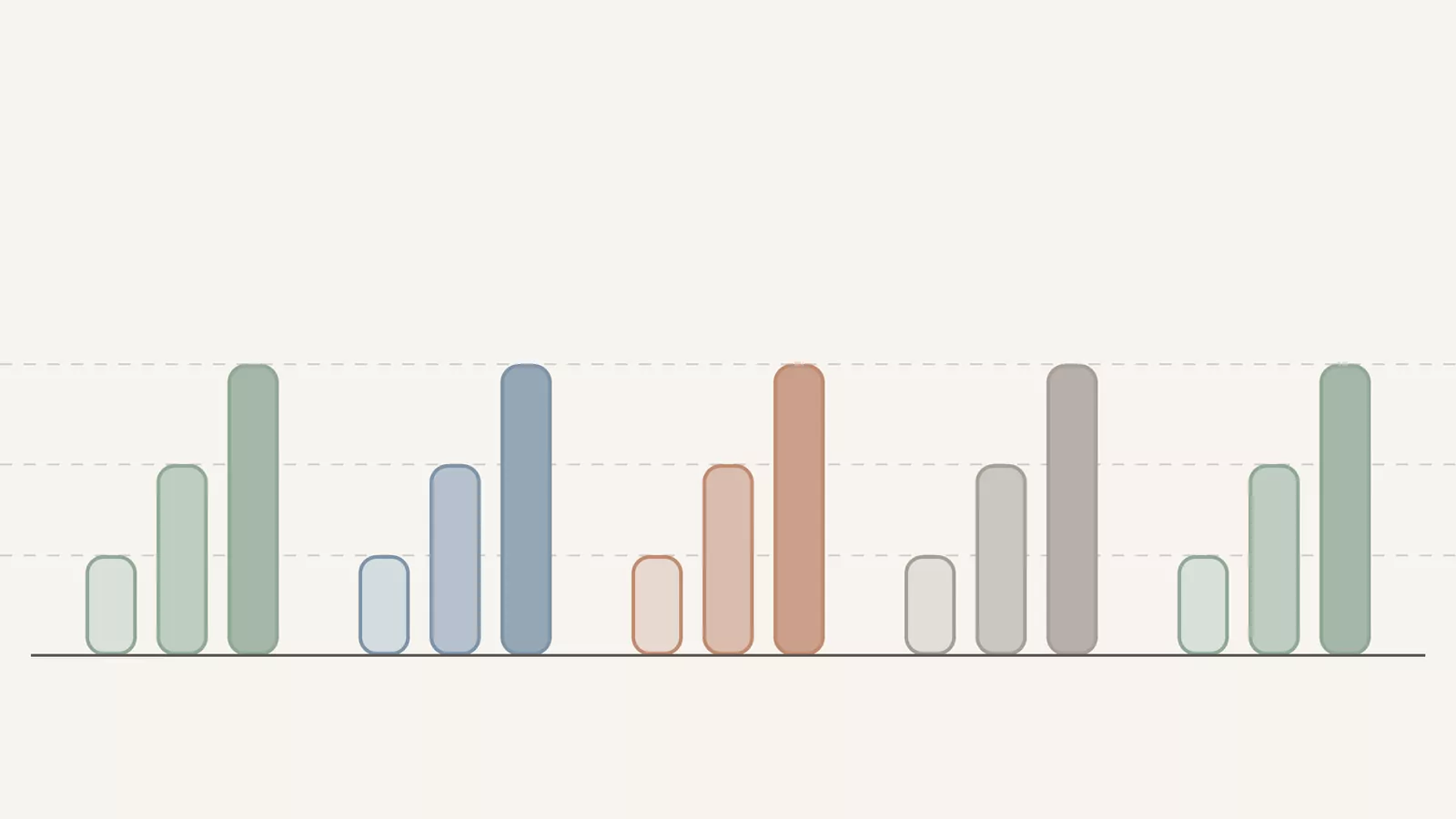
Many feeling words are not different emotions at all. They are the same emotion at a different volume, and picking the right volume is often more useful than picking a different family.
| Family | Mild | Medium | Strong |
|---|---|---|---|
| Anger | Annoyed | Frustrated | Furious |
| Fear | Uneasy | Anxious | Terrified |
| Sadness | Disappointed | Sad | Grieving |
| Lighter feelings | Pleased | Happy | Elated |
| Tiredness | Tired | Weary | Worn out |
| Surprise | Surprised | Astonished | Stunned |
| Shame | Sheepish | Embarrassed | Humiliated |
| Interest | Interested | Curious | Absorbed |
| Disgust | Put off | Disgusted | Revolted |
| Connection | Fond | Affectionate | Devoted |
Reading across a row is a quick sanity check. If you called it furious and the mild word fits better, the day may be less dramatic than it felt at the time.
It works in the other direction too. People often reach for the mild word out of habit, then notice that weary has been the honest answer for about three weeks.
Reaching for the strongest word every time has a cost. If everything is furious, you lose the language for the difference between a slow queue and something that genuinely hurt you.
Feeling words people mix up
Some pairs sit so close together that they get swapped without anyone noticing. Telling them apart is where a list of feeling words stops being trivia and starts being useful.
The feelings wheel groups its words into families rather than listing them flat, so where a word you are weighing appears there, you can see the rest of its family in one glance before you choose.
Guilt and shame
Guilt is about a thing you did. Shame is about who you are. The practical difference is what each one suggests next: guilt points at a repair you could make, while shame points at hiding. Ask yourself: am I unhappy with something I did, or with who I think that makes me?
Envy and jealousy
Envy is wanting something someone else has. Jealousy is fearing the loss of something you already have. They feel similar in the body and lead somewhere quite different, because one is about a gap and the other is about a threat. Ask yourself: am I missing something I want, or afraid of losing something I have?
Lonely and alone
Alone is a fact about who is in the room. Lonely is a feeling about the company you want and do not have. You can be lonely in a full house and perfectly content on your own all weekend, which is why swapping these two leads people to the wrong fix. Ask yourself: do I mind being on my own right now, or do I mind who is missing?
Anxious and excited
These share a lot of body: fast heart, restless hands, a light stomach. What separates them is the story attached. Excited expects something good and anxious expects something bad, and on the morning of something big you may honestly be both at once. Ask yourself: what am I expecting to happen here, something good or something bad?
Frustrated and angry
Frustration is about being blocked. Anger is about something being wrong. If a broken link in a process is the problem, frustrated is the accurate word, and calling it anger tends to send it towards the nearest person instead of the obstacle. Ask yourself: is something in my way, or has something been done wrong?
Sad and disappointed
Disappointment is measured against an expectation you were holding. Sadness does not need one. Naming disappointment usually surfaces the expectation as well, and seeing the expectation written down is often more interesting than the feeling itself. Ask yourself: was I expecting something else here, and what was it?
Overwhelmed and busy
Busy is a description of your calendar. Overwhelmed is a description of your capacity to sort what is arriving. A light week can be overwhelming and a packed one can feel fine, so treating them as the same word hides the thing that actually needs changing. Ask yourself: is there too much on my list, or too little room to sort it?
Numb and calm
Both are quiet, which is why they get confused. Calm feels open and numb feels shut. If you notice the quiet has a flat, distant quality rather than a settled one, numb is probably the more honest word, and it is worth writing down rather than talking yourself out of. Ask yourself: does this quiet feel settled, or does it feel far away?
Anxious, nervous and dread
All three point forward, and what separates them is how certain the bad outcome feels. Nervous still holds the possibility that it goes fine, anxious keeps circling without settling on an answer, and dread has already made up its mind. Ask yourself: do I think this might go badly, or have I decided it will?
Guilty, regretful and remorseful
Guilt is about breaking your own rule. Regret is about a choice you would make differently, even when nobody was harmed. Remorse is regret with another person's hurt at the center of it. Ask yourself: is there someone on the other side of this, and would an apology be the thing that helps?
Bored, restless and listless
Bored has energy and nothing interesting to point it at. Restless has energy and nowhere to put it at all. Listless has no energy to begin with, which is a different problem entirely. Ask yourself: if the perfect thing to do appeared right now, would I actually want to do it?
Content, happy and relieved
Content is the absence of anything missing. Happy is an active lift you would notice with your eyes closed. Relief is what is left when a weight comes off, and it always has a before attached to it. Ask yourself: is this good, or is it just no longer bad?
Hurt and offended
Hurt is about the mark something left on you. Offended is about a line being crossed, and it can happen on someone else's behalf entirely. Offense tends to reach for an argument while hurt tends to want acknowledgement. Ask yourself: do I want them to agree that it was wrong, or do I want them to know it landed?
Insecure and self-conscious
Insecure is about your footing: whether you are good enough here, or wanted here. Self-conscious is about being watched, and it can arrive even when you feel entirely capable. One is a doubt about you, the other is a doubt about the audience. Ask yourself: would this feeling still be here if nobody were looking?
Hopeful, eager and impatient
All three lean forward. Hopeful is happy to wait because the outcome is uncertain and could be good. Eager wants it to start. Impatient has already decided the waiting itself is the problem. Ask yourself: is the wait costing me something, or am I simply looking forward to this?
Grateful and indebted
Gratitude is light and asks nothing of you. Feeling indebted has a bill attached, whether or not the other person ever sent one. The same kindness can produce either, depending on what you think it now obliges you to do. Ask yourself: do I want to say thank you, or do I feel I owe something back?
Words that sound like feelings but describe a situation
A lot of entries in a feelings list are not feelings at all. They are descriptions of what you think someone else did, and they hide the actual feeling behind an accusation.
This matters because the two lead somewhere different. Ignored gives you a person to be annoyed with, while lonely gives you something you can act on tonight. Both may be true, and only one of them is a feeling.
| Word that describes a situation | Feeling often underneath it |
|---|---|
| Ignored | Lonely, or hurt |
| Rejected | Hurt, ashamed, or sad |
| Abandoned | Afraid, or lonely |
| Criticized | Defensive, or embarrassed |
| Misunderstood | Frustrated, or lonely |
| Left out | Sad, or envious |
| Pressured | Tense, or resentful |
| Rushed | Anxious, or irritated |
| Blamed | Angry, or guilty |
| Dismissed | Hurt, or indignant |
| Unappreciated | Resentful, or sad |
| Let down | Disappointed |
| Betrayed | Hurt, or outraged |
| Manipulated | Angry, or wary |
| Excluded | Lonely, or small |
| Overlooked | Discouraged, or resentful |
You do not have to banish the left column. It is often the quickest way in, and writing it down first is fine.
The useful move is to follow it with one more line. After ignored, add the word from the right column that fits, and you end up with something you can do something about rather than only something to argue with.
How to pick the word that actually fits
Finding a word gets easier with a small routine. Four steps are usually enough, and the whole thing takes under a minute once it is familiar.
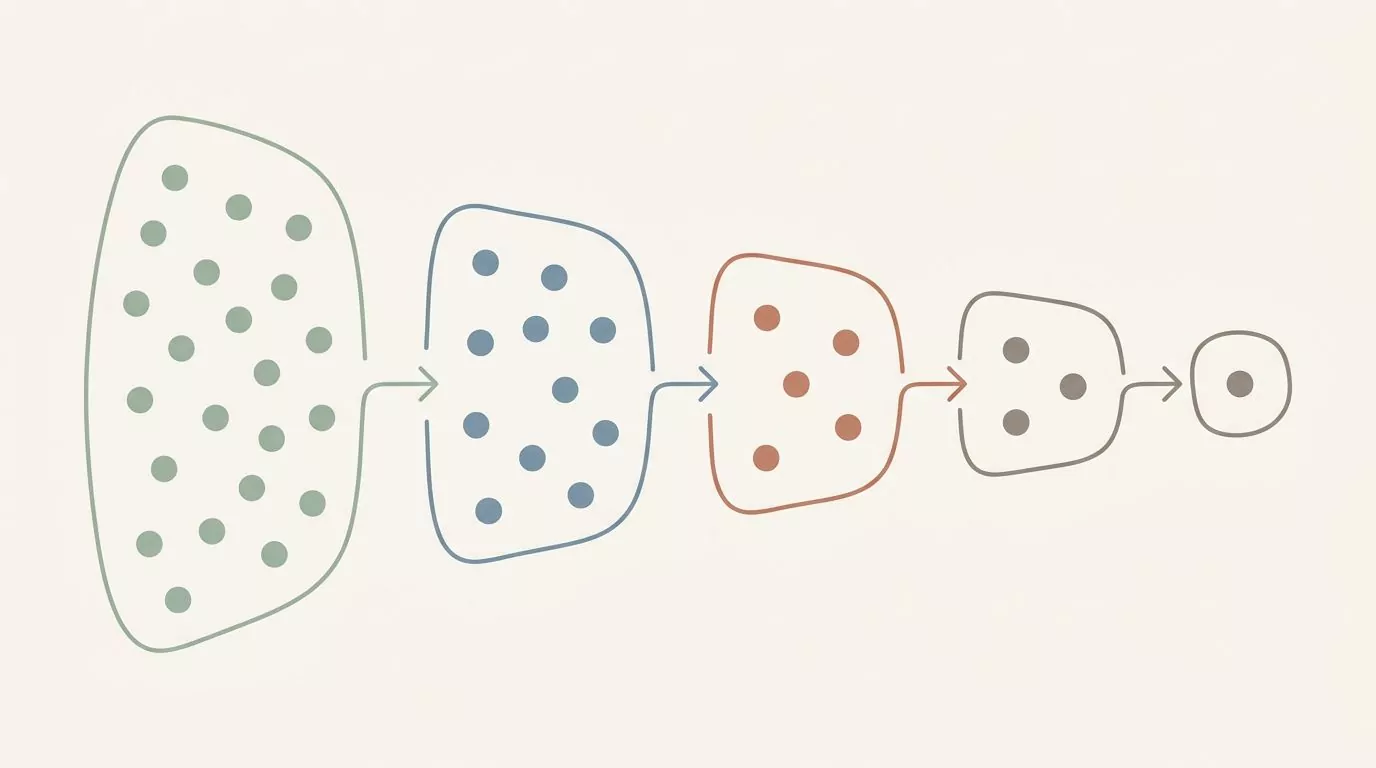
- Pick the family first. Do not hunt for the exact word yet. Heavy, tough, lighter or flat is enough to get you into the right neighborhood.
- Say what your body is doing. Tight chest, heavy shoulders, restless legs, a lump in your throat. Body notes narrow the family faster than thinking does.
- Try the word one rung up and one rung down. If you said angry, try annoyed and then furious. Whichever one you flinch away from is telling you something.
- Check it against the situation. A word fits when it explains the day rather than just labeling it. If the word does not explain anything, it is probably the habitual word rather than the true one.
Two words are allowed. Most real moments are a blend, and forcing a single label on a mixed afternoon usually loses the interesting half.
Why every list of emotions is a different length
Open four feelings lists and you will see four different numbers. One says there are six emotions, one says eight, one says twenty seven, and one runs to a hundred and fifty four. It looks like somebody must be wrong.
Nobody is. The lists were built by counting different things, for different purposes, and the number falls out of the method rather than out of nature.
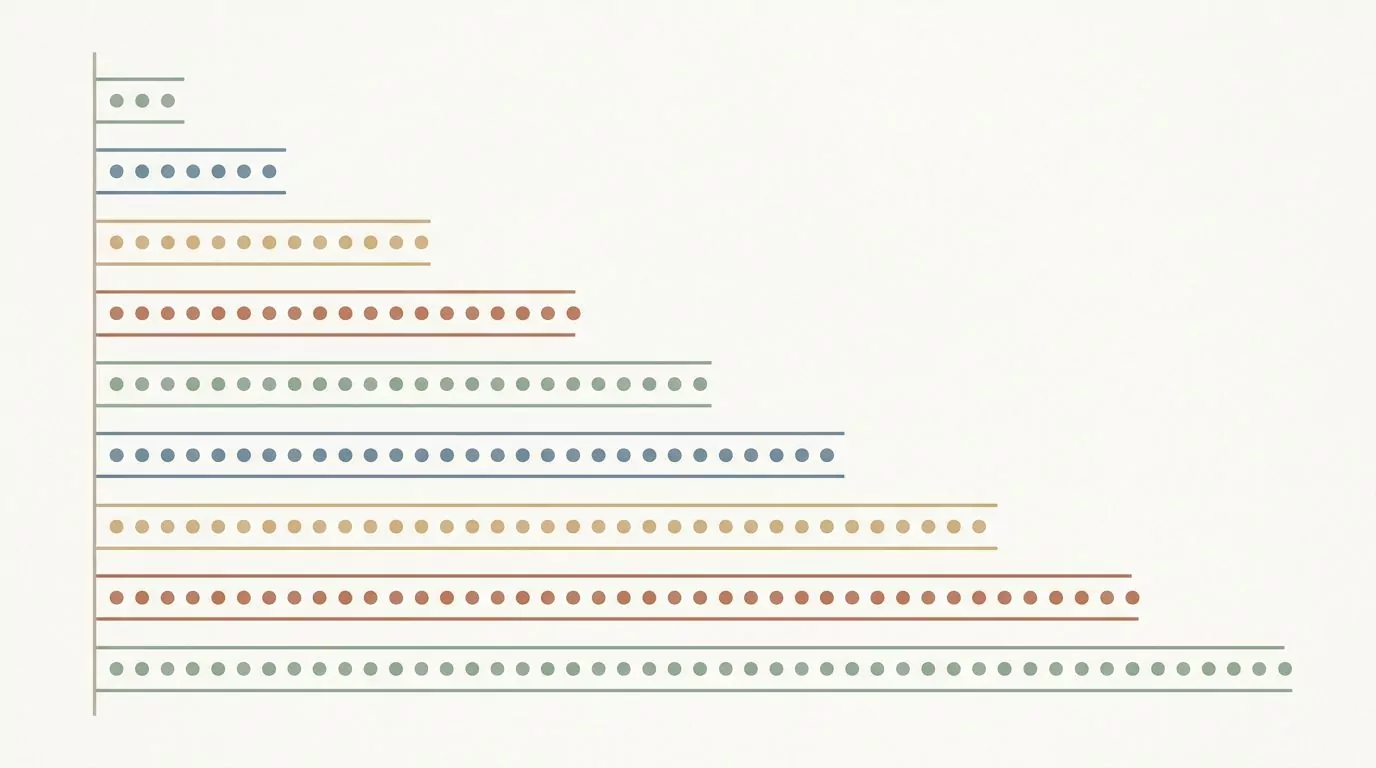
| Whose list | How many | What was counted, and what for |
|---|---|---|
| William James, 1890 | 4 | Fear, grief, love and rage, chosen because each one shows up strongly in the body. |
| Paul Ekman | 6 | Anger, disgust, fear, happiness, sadness and surprise, drawn from facial expressions that people recognized across very different cultures. |
| Paul Ekman, later work | 6 plus 11 more | Amusement, contempt, contentment, embarrassment, excitement, guilt, pride in achievement, relief, satisfaction, sensory pleasure and shame, added once he looked past the face alone. |
| Robert Plutchik | 8 | Joy, trust, fear, surprise, sadness, disgust, anger and anticipation, arranged on a wheel so that opposites sit across from each other and neighbours can be combined. |
| Richard and Bernice Lazarus | 15 | Emotions sorted by the kind of situation that sets them off, including anger, anxiety, compassion, envy, gratitude, hope, pride and relief. |
| Parrott, building on Shaver | 6 branching into many | A three tier tree with love, joy, surprise, anger, sadness and fear at the top, each splitting into secondary and then tertiary words. |
| Berkeley study | 27 | Categories that emerged when people reported their reactions to 2185 short video clips, then those reports were grouped by similarity. |
| HUMAINE EARL | 49 | A working vocabulary for labelling emotion in computing, grouped into sets such as negative and forceful, quiet positive, caring and reactive. |
| Tiffany Watt Smith | 154 | Emotion words collected from languages and histories around the world, including feelings English has no single word for. |
Look down the middle column and the pattern is obvious. The short lists counted reactions in the body or on the face. The middle lists counted the situations that produce a feeling. The long lists counted words.
Ekman's universal emotions page makes the method explicit: he started from expressions that people recognized whether or not they shared a language. Count faces and you get a handful, because faces do not have a hundred and fifty distinct settings.
The Berkeley number came out of asking people what they felt while watching clips and then grouping the answers by how similarly they were used. Count word similarity and you land in the twenties or thirties.
Watt Smith's number comes from going looking across languages and eras, which is a vocabulary project rather than a biology one. Count words and the number keeps rising for as long as you keep looking.
The overview of emotion classification holds all of these side by side, and reading it makes the disagreement look much smaller than it does from the outside.
So there is no correct count, and a longer list is not a better list. A list with two hundred words in it is only more useful than a list with twenty if the extra words come with meanings that help you choose between them.
None of this needs to slow you down tonight. The families in this article are a filing system for finding words quickly, not a claim about how emotions are built underneath.
When two feelings are true at once
Most of the time, one word is not enough. You can be relieved that something is over and sad that it is over, in the same breath, and neither half is a mistake.
Plutchik built this into his wheel deliberately. Neighbouring emotions combine, and the combinations have names, which means the mixed states people report most often already have vocabulary attached.
| Mixed state | Made of | What it looks like on an ordinary day |
|---|---|---|
| Bittersweetness | Joy and sadness | The last day of something good. You would not skip it and you cannot enjoy it cleanly either. |
| Ambivalence | Trust and disgust | Someone you rely on did something you do not respect, and both facts stay true. |
| Frozenness | Fear and anger | You want to push back and you also want to leave, so you do neither and go very still. |
| Confusion | Surprise and anticipation | Something unexpected happened and you are already bracing for what it means, before you understand it. |
Everyday blends work the same way even when they do not have a formal name. Proud but embarrassed after being praised in front of people. Angry at someone you love, where the anger does not touch the love at all.
Grateful and resentful at the same time is another common one, usually when help arrived with strings on it. So is relieved but guilty, when the thing that ended was also somebody else's loss.
Writing both words down is more accurate than picking a winner. If you keep only the louder one, the record you end up with is a record of volume rather than of the day.
Some days feel heavy and mixed, and that is allowed. A moment holding two things is the normal case, not a sign that you are reading yourself badly.
When none of the words fit
Sometimes the honest answer is flat, or fine, or too scrambled to read. Scanning a list in that state tends to make it worse, because nothing lands and the not-landing feels like another failure.
Start with the body instead. Physical sensations are usually easier to report than feelings, and they narrow the family for you without needing a word first.
| What your body is doing | Words worth trying first |
|---|---|
| Tight jaw, clenched teeth | Irritated, tense, resentful |
| Heavy chest, weight on the shoulders | Sad, heavy, discouraged, grieving |
| Buzzing hands, fast heart | Nervous, anxious, excited |
| Hollow stomach, a drop inside | Dread, lonely, homesick |
| Restless legs, cannot settle | Restless, impatient, bored |
| Held breath, shallow breathing | Afraid, apprehensive, guarded |
| Hot face, prickling neck | Embarrassed, ashamed, indignant |
| Nothing at all, distant and quiet | Numb, flat, drained, foggy |
Once the body has picked a direction, go back to that family and read down it. The word you could not find cold is often obvious once the search has been narrowed to fifteen candidates.
If the body gives you nothing either, describe the day instead of naming it. Write what happened, what you did, and what you wanted, and leave the label blank on purpose.
Writing a sentence about what happened surfaces the word far more often than scanning ever will. A journal prompt generator is useful here for exactly that reason, because a question is easier to answer than a blank page.
It also helps to start from the family rather than the word. The feelings wheel is built that way round, so you can pick a broad direction and let it show you the shades inside it.
Frequently Asked Questions
How many emotions are there?
There is no settled number. Ekman's model names six universal emotions and later added eleven more, Plutchik's names eight primaries, a Berkeley study found twenty seven categories, and Tiffany Watt Smith collected a hundred and fifty four words from around the world. The count depends on the counting method, so for everyday use it matters less than having enough words to tell close feelings apart.
What is the difference between a feeling and an emotion?
In casual use they are interchangeable, and this list treats them that way. Where researchers separate them, emotion usually refers to the fast reaction in body and behavior, and feeling refers to your conscious experience of it once you notice.
What are the basic emotions?
The most commonly cited basic emotions list is anger, disgust, fear, happiness, sadness and surprise, with contempt added in Ekman's later work. Every other name on this page can be read as one of those at a different volume, or as a blend of two.
How do I find a word when all I can say is that I feel bad?
Split bad into three rough directions first: heavy, tense or flat. Heavy points at the sad family, tense at the fear and anger families, and flat at the tired family. From there, read down that family until something lands.
Is it normal to feel two emotions at the same time?
Yes, and it is closer to the rule than the exception. Relief and sadness after something ends, or pride and embarrassment after being praised, are ordinary combinations. The mixed and hard to name family exists because those blends deserve their own words.
What if none of the words on the list fit?
Describe the moment instead of naming it. Write what happened, what your body did and what you wanted, and leave the label blank. Quite often the word turns up a day later when you read that description back.
Are some emotions bad?
Some are harder to sit with, which is not the same thing. It is also why this list is grouped by lighter and tougher rather than by good and bad. The sorting falls apart quickly: Plutchik's model counts anger as a positive emotion because it moves you towards a goal, and counts surprise as a negative one. If a serious model can disagree with everyday intuition that sharply, the labels are doing less work than they look like they are doing.
How often should I use a list like this?
As often as it is useful and no more than that. Many people reach for one only when the usual word is not fitting, which might be twice a week or twice a month. There is no schedule to keep up with here, and a list you open occasionally and find helpful is working exactly as intended.
Where to go from here
Keep this page as a reference rather than a reading task. Most people come back to a list like this in the middle of something, find one word, and close the tab, which is the whole intended use.
Mood Check-In is a private, local-first mood journal being prepared for iPhone, where entries stay on the device rather than being uploaded to an account. The free browser tools need no account and are there if you would like somewhere quiet to start.
One honest note on what this is and is not. A feelings list is a vocabulary aid and a journal is a place to notice things, and neither is therapy, counseling or medical care. If what comes up feels heavier than reflection can hold, talking to a professional is a reasonable next step.