Morning Pages Without the Pressure: A Gentler Version of a Classic Practice
Morning pages are three pages of longhand, stream of consciousness writing done first thing after waking. Julia Cameron introduced them in her 1992 book The Artist's Way as a way to clear mental clutter before the day starts. Nothing you write is wrong, and nothing is meant to be shared.
That is the practice as it was written. If you have tried it and stalled, this guide is the smaller version. Same idea, far less to carry.
What Morning Pages Actually Are
The instructions are short. Julia Cameron sets out three rules: write three pages by hand, write them first thing in the morning, and write them every day.
The writing is stream of consciousness. You put down whatever crosses your mind and keep the pen moving. Grocery lists, a dream you half remember, the thing you are dreading at eleven. It all counts.
Two more rules sit alongside those. The pages are for your eyes only, and you are asked not to reread them in the early weeks.
It helps to know the real size of this. Three letter size pages in normal handwriting come to roughly 750 words. Most people take about thirty to forty minutes to fill them.
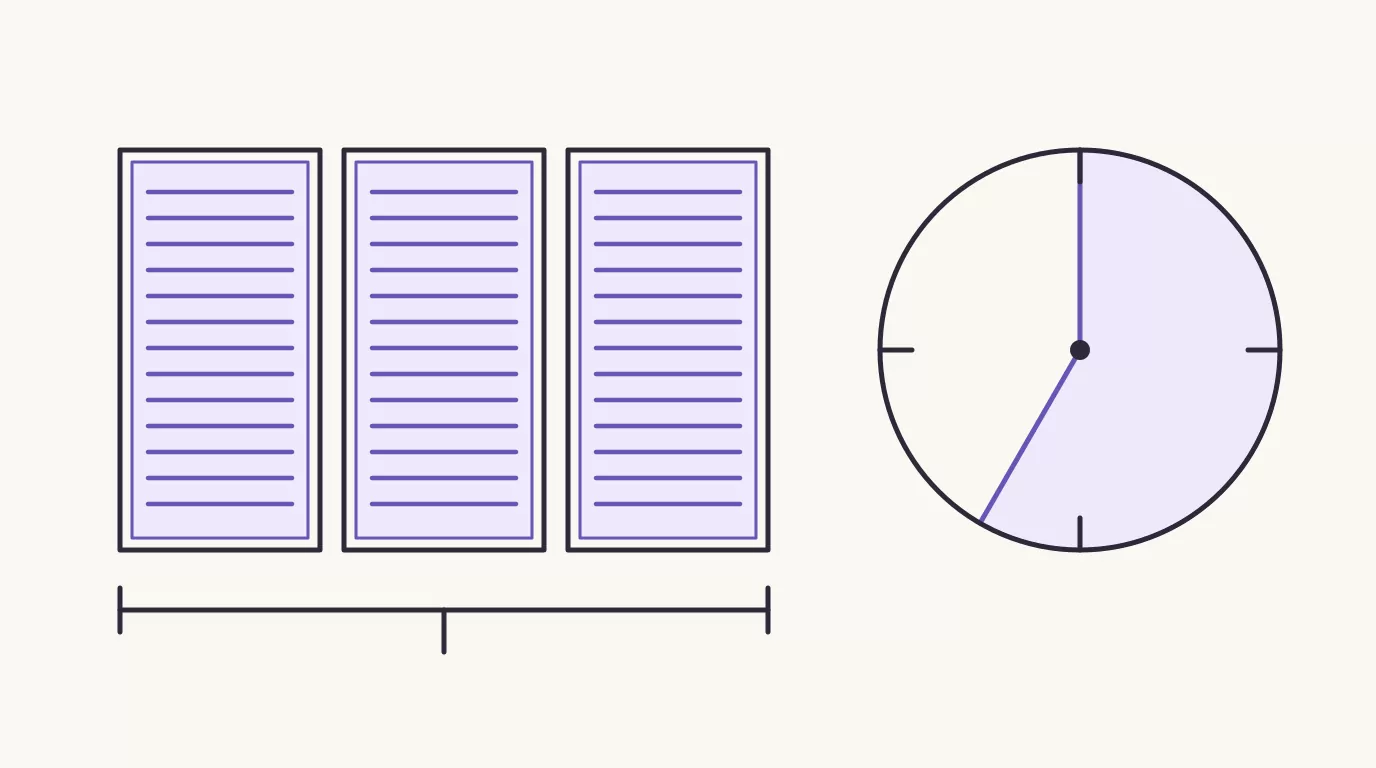
Cameron is clear about the point of all that writing. Morning pages are not meant to be good writing, and they are not meant to become anything. They are a way of moving the clutter out of the way so there is room for other thinking underneath it.
So there is no wrong content. There is no wrong mood to arrive in. If the page is dull, the page is dull, and that is still a page done.
Why the Classic Version Stops So Many People
Plenty of people love the full practice. Plenty of others try it, like it, and still cannot keep it. That second group rarely gets written about honestly.
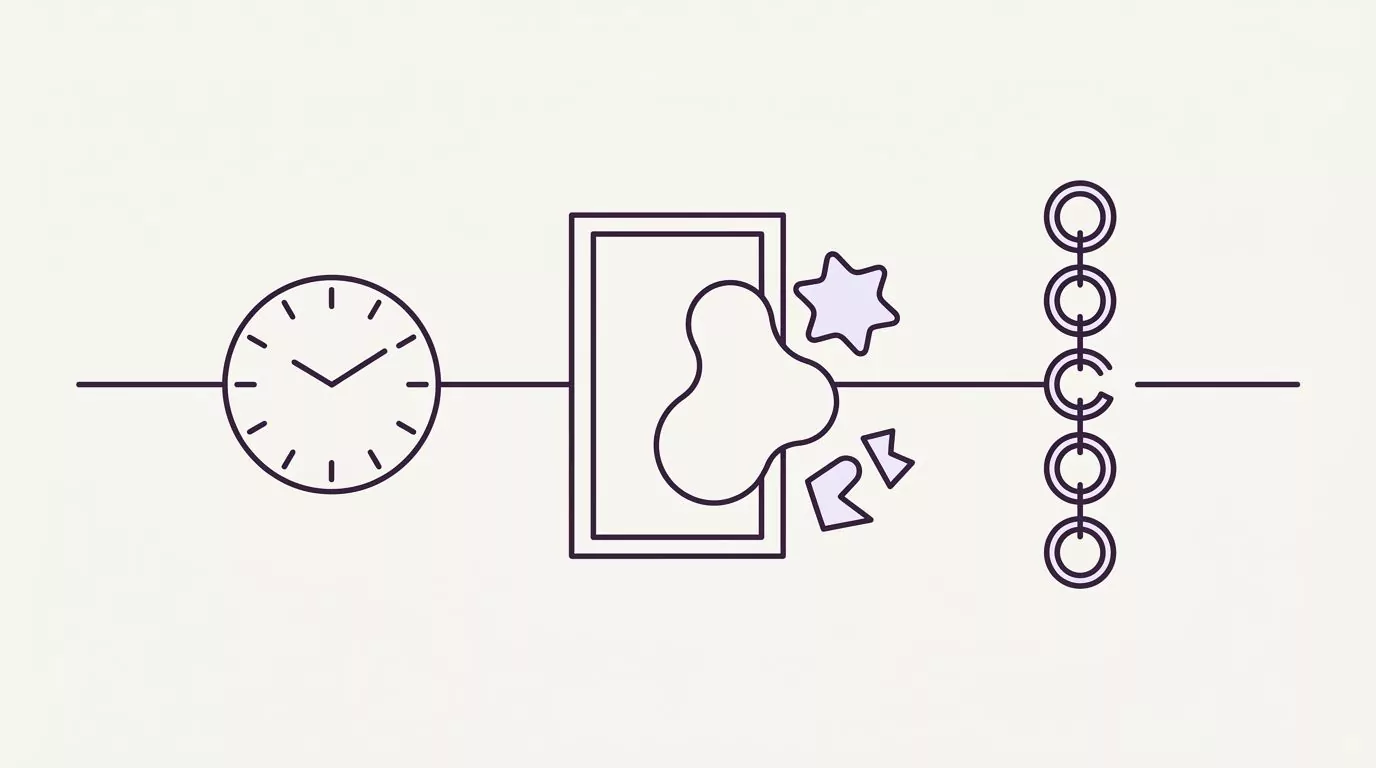
One writer at DIY MFA finished the full twelve week Artist's Way program and still could not sustain the pages. She names three reasons, and they are worth reading slowly.
First, she is not a morning person and cannot do much before coffee. The practice asks for your least functional hour.
Second, the fixed three page quota fights how much she actually has to say. Some days she has five or six pages in her. Some days she has half a page, and the quota turns that into a shortfall.
Third, the every single day rule is brittle. For anyone with a dutiful turn of mind, one missed morning does not stay one missed morning. It becomes proof the whole thing has collapsed.
Add the plain costs on top. Thirty to forty minutes is a real bite out of a weekday. Your hand tires. And the blank page in front of you at six in the morning is its own wall.
Which brings up the streak advice you will meet everywhere on this topic. One widely read guide recommends the do not break the chain method, borrowed from Jerry Seinfeld: mark each day you write and never break the run.
It is worth thinking about what a chain does. It makes a missed morning cost more than the morning itself, because you also lose the run. That is precisely the failure the DIY MFA writer describes.
Nobody in that group failed at anything. The format asked for more than the morning had.
A Lower Pressure Version You Can Actually Keep
The fix is not to try harder. It is to stop treating three pages as the only real version and to give yourself smaller ones that still count.

| Version | Length | Rough time | Best for |
|---|---|---|---|
| Classic, as Cameron wrote it | Three longhand pages, about 750 words | 30 to 40 minutes | A free morning and a long backlog of thoughts |
| Half set | One page, about 250 words | 10 to 12 minutes | A normal weekday |
| Quarter set | Half a page, about 120 words | About 5 minutes | A rushed or low energy morning |
| Three lines | Three sentences | 60 to 90 seconds | Days when anything longer will not happen |
| One line | One feeling word plus one line of context | About 20 seconds | Days you would otherwise skip entirely |
The rule that makes the ladder work is simple. Pick the rung the morning can carry, not the rung you wish you were on.
A short entry is a real entry. It is not a failed long one, and it does not need to be made up later.
One concrete instruction for choosing: decide the rung the night before. You already know roughly what tomorrow looks like. Choosing at the desk, when you are behind and the clock is running, almost always produces either an over ambitious page or nothing at all.
What to Write When the Page Is Blank
The standard answer to the blank page is to write "I don't know what to write" over and over until something arrives. The DIY MFA writer does exactly this, and admits a lot of what follows is repetitive.
That is honest, but it is not much help at six in the morning. Three concrete on ramps work better.
- Describe the last hour in flat detail. The alarm, the light, the cold floor, what the coffee tasted like. Plain description asks nothing of you, and the writing usually drifts somewhere more interesting on its own.
- Write the sentence you would not say out loud. The pages are private, so this is the one place it costs nothing.
- Write the thing you are avoiding today, and why. The why is where the page opens up.
If the blank page is where you stall most mornings, you do not have to invent the question yourself. A free journal prompt generator will hand you one in the browser, with nothing to install and no account to make.
One caution about morning pages prompts in general. A prompt is a starting push, not a permanent frame. Once the writing starts moving on its own, drop the prompt and follow the writing instead.
If You Are Not a Morning Person
The stated reason for the morning slot is that your inner editor is slower on waking. You have not fully assembled the version of yourself that tidies thoughts before they reach the page.
Move the pages to the evening and you trade that for the day's residue. What arrives is different material, not worse material. Evening pages tend to be more about what happened, morning pages more about what is loose.
The practical part matters more than the hour. Attach the writing to a fixed point that already exists in your day. The first coffee, the start of a lunch break, the ten minutes before bed. A morning journaling routine built on an existing anchor survives; one built on a new empty slot usually does not.
Longhand versus typing deserves the same honesty. One popular guide argues that velocity is the enemy, and that writing slowly by hand keeps you closer to how you actually feel. That is one writer's argument, not a finding. Typing is fine if typing is the difference between writing and not writing.
When Free Writing Turns Into Circling the Same Worry
Here is the thing almost no guide mentions. Free writing has no stopping point built into it, so on a hard morning three pages can become three pages of the same loop.
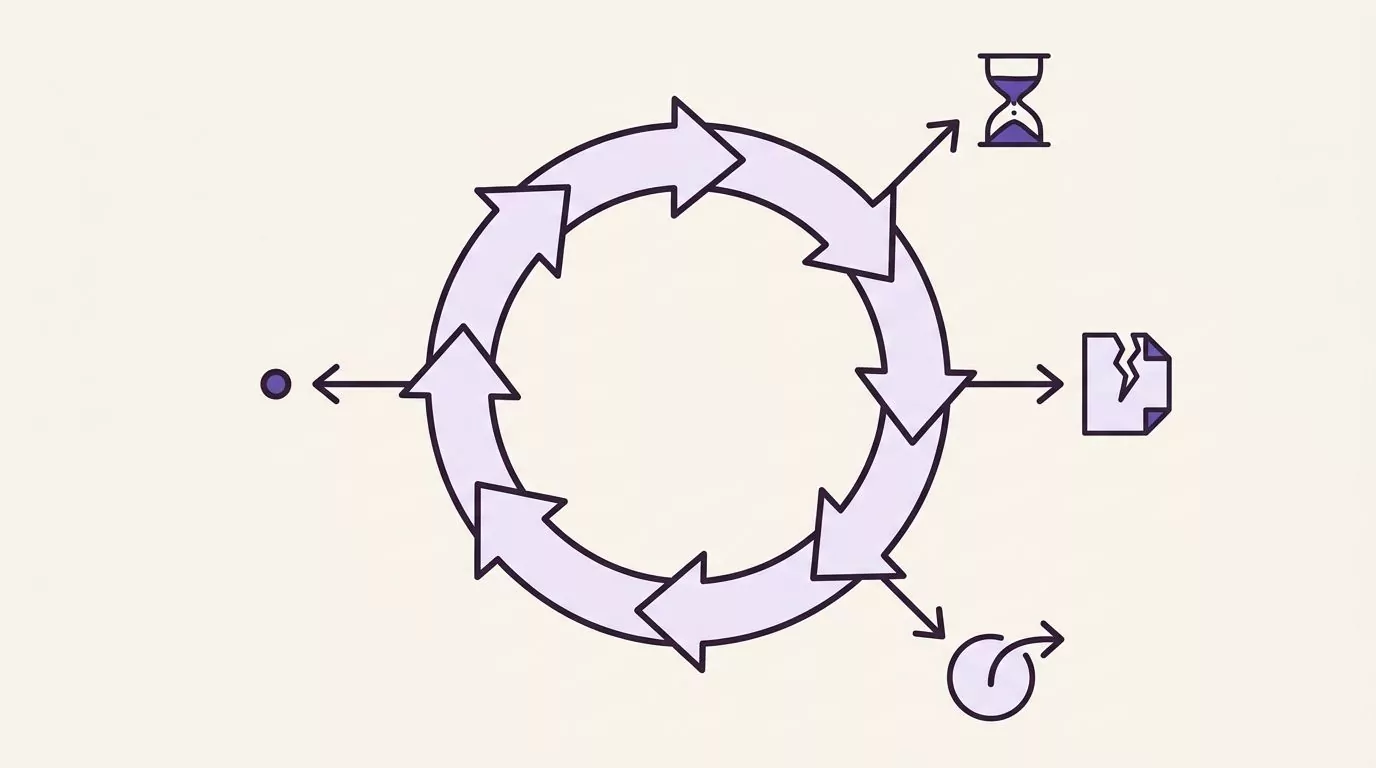
You come away from the page feeling worse rather than clearer, and the practice quietly starts to look like the problem. It is not. It just has no built in exit, so you add one.
- Set a timer instead of a page count. Ten minutes ends. Three pages does not, and a loop will happily fill them.
- Stop mid page on purpose. There is no rule that says a page has to be finished.
- Write the thought once more, then change subject deliberately. Say what you are switching to, and switch.
- Swap narrating for naming. Instead of another paragraph about it, put down one or two words for the feeling itself.
That last one is often the fastest way out, and it is the hardest to do cold. A free feelings wheel lays the words out for you when the right one will not come.
One calm note. A writing habit is not care, and it is not meant to be. If a worry keeps sitting heavily, talking to someone you trust, or to a professional, is a reasonable thing to do.
Should You Reread Your Morning Pages
Cameron says not to reread in the early weeks. The reasoning is that the value is in the writing, not in the record, and reading yourself back too soon reintroduces the editor you were trying to leave in bed.
People who have done this for years split on it. The DIY MFA writer has around forty notebooks and mostly leaves them shut. Dipping back in, she says, feels like snooping on a past self. The author of the other guide admits he breaks the rule, because otherwise he loses the occasional idea worth keeping.
The middle path handles both. Keep a separate one line capture spot, a note on your phone or the inside cover of the notebook, and copy anything worth keeping into it as you go. The pages themselves stay disposable, which is the point of them.
Then there is the lighter noticing move. Rather than rereading whole pages, notice which single word keeps turning up across a week. That is usually more useful than any full page you could reread.
A Two Week Starting Plan
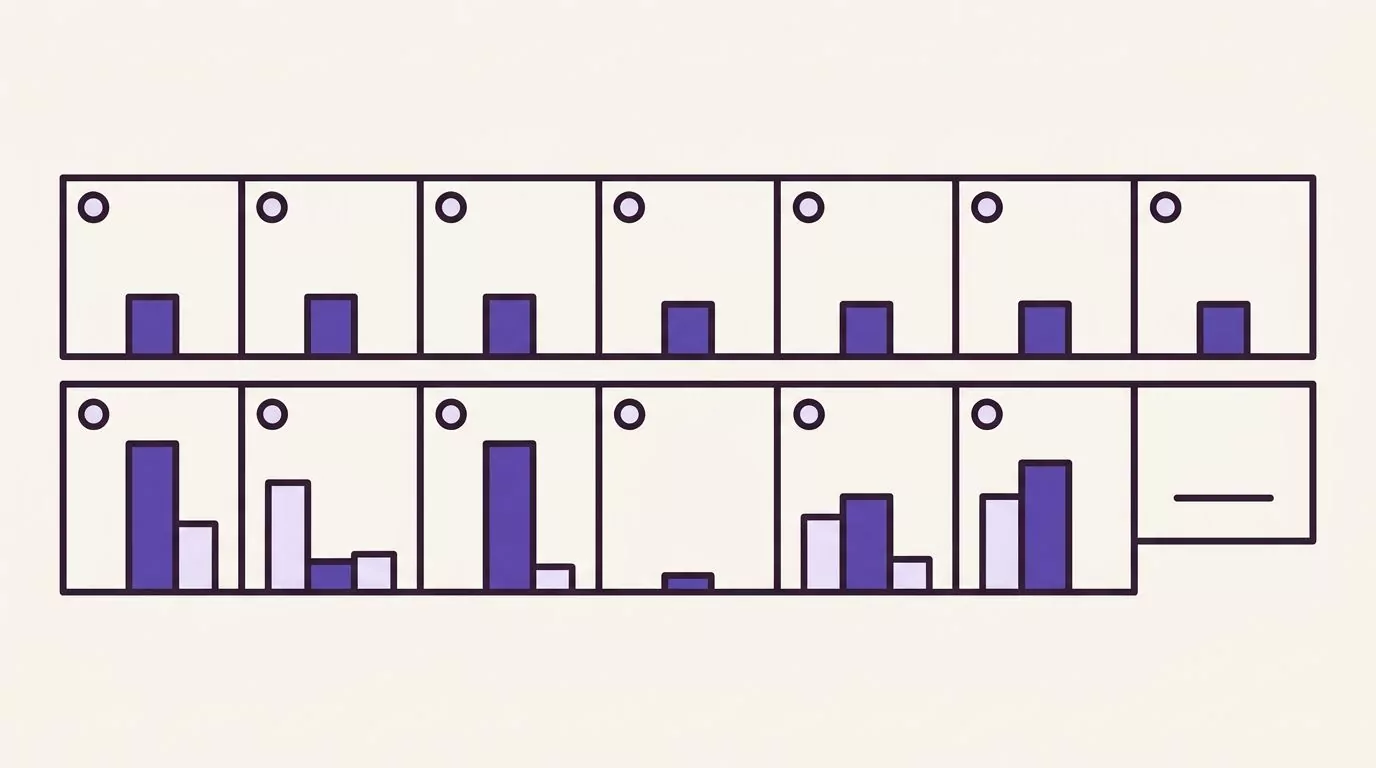
- Week one. Pick one rung from the table and stay on it. Set the notebook and pen out the night before, or open the page before you sleep. Keep the same anchor moment every single day. Do not change the rung mid week, even on a morning that could clearly carry more.
- Week two. Keep the same anchor. Now allow one step up or one step down per day, chosen the night before, depending on what the morning looks like. Add the one line capture spot for anything you want to keep.
What to do after a missed day: start again at the same rung the next morning. No repayment, no doubling up, no counting back from one.
And a fair expectation. The personal accounts behind most of the advice on this topic cover 241 days and 944 days of practice. Two weeks will give you a first impression of whether this suits you. It will not give you a result, and it is not supposed to.
It is worth adding what Oliver Burkeman notices about the practice: whatever good it does seems to arrive when you stop trying to get something out of it. Chasing an outcome is its own kind of pressure.
Keeping the Thread on Days You Do Not Write
Some mornings even three lines will not happen. That is normal, and it does not have to end the practice.
A few seconds of noticing how the morning feels keeps the thread intact. Not a page, not a sentence. Just naming it and moving on. What that removes is the all or nothing shape that ends most attempts at this, where a missed morning becomes a missed week.
If you want somewhere to put those few seconds, a free mood tracker runs in the browser and takes about as long as saying the word.
Mood Check-In is a private, local first mood journal coming soon for iPhone, built for exactly this kind of low pressure noticing. Journal content stays on your device.
Frequently Asked Questions
What exactly are morning pages?
Morning pages are three pages of longhand, stream of consciousness writing done first thing after waking. Julia Cameron introduced them in The Artist's Way. They are private, unedited, and not meant to be good writing.
How long do morning pages take?
The full three pages come to roughly 750 words and take most people about thirty to forty minutes. A one page version takes ten to twelve minutes, and a three line version takes under two.
Do morning pages have to be handwritten?
Cameron's version is longhand, and some writers argue the slower speed keeps you closer to how you feel. That is an argument, not a rule. Typing is fine if it is the difference between writing and not writing.
Do morning pages have to be three pages?
Three pages is the original instruction. If the quota is what stops you, use a smaller rung instead: one page, half a page, or three lines. A short entry is a real entry.
What if I miss a day?
Start again at the same rung the next morning. There is nothing to repay and nothing to count from one. Treating a missed day as a broken chain is what ends most attempts at this practice.
Can I do morning pages at night?
Yes. You lose the sleepy, slower editor of early morning and gain the day's residue instead. That is different material rather than worse material, and a slot you will actually use beats a better slot you will not.
Are you supposed to reread your morning pages?
Cameron asks you not to reread in the early weeks, because the value is in the writing rather than the record. If you want to keep the occasional idea, copy it into a separate spot as you go and leave the pages themselves alone.